
Renaissance wedding dresses bring a romantic, royal feel to bridal fashion. Think fitted bodices, flowing skirts, dramatic sleeves, delicate embroidery, rich colors, and beautiful lace details. These designs take inspiration from the clothing of the 15th and 16th centuries while adding modern touches that make them suitable for today’s weddings.
You do not need a full historical costume to enjoy this look. A square neckline, a velvet bodice, or a pair of statement sleeves can give your wedding dress a Renaissance-inspired style. Here are 20 ideas to help you find a look that feels elegant, personal, and timeless.
20 Renaissance Wedding Dresses for a Romantic Bridal Look
1. Classic Ivory Renaissance Wedding Dress

An ivory gown with a fitted bodice and a flowing skirt is a beautiful way to bring Renaissance style into a modern wedding. Add delicate lace around the neckline and small embroidered details along the sleeves for a soft, historic feel.
This look works well for a garden ceremony, a historic venue, or a romantic indoor celebration. Choose lightweight fabric if you want the skirt to move easily as you walk.
2. Burgundy Velvet Wedding Dress

A deep burgundy velvet gown creates a rich, royal look inspired by Renaissance court fashion. A fitted bodice, wide skirt, and subtle gold trim can make the design feel dramatic without adding too many decorations.
This style is especially suited to fall and winter weddings, castle venues, and candlelit receptions. Velvet can feel warm and heavy, so check the fabric weight before choosing it for a long celebration.
3. Romantic Puff-Sleeve Wedding Dress

Puff sleeves add a graceful historical touch to a bridal gown. Choose softly gathered sleeves at the shoulders with a fitted waist and a simple flowing skirt. This balance keeps the dress romantic rather than costume-like.
Ivory, champagne, and soft blush are lovely color choices. If you prefer more freedom of movement, look for sleeves with a comfortable lining and enough room around the upper arms.
4. Off-the-Shoulder Renaissance Gown

An off-the-shoulder neckline gives a Renaissance-inspired wedding dress a soft and feminine shape. A structured bodice can define the waist, while the neckline frames the shoulders beautifully.
Pair this design with a flowing A-line skirt and small lace details. Before choosing it, make sure the neckline stays in place when you raise your arms, sit, and move around.
5. Gold-Embroidered Bridal Dress

Gold embroidery can make a simple wedding gown feel regal. Look for delicate floral patterns along the bodice, cuffs, or skirt instead of heavy decoration across every part of the dress.
An ivory or champagne base helps the gold details stand out. This style suits formal weddings and elegant indoor venues. Keep jewelry simple so the embroidery remains the main feature.
6. Long Bell-Sleeve Wedding Dress

Long bell sleeves create one of the most recognizable Renaissance-inspired looks. The sleeves fit more closely near the upper arm and open into a wider shape toward the wrist, adding movement and drama.
A fitted bodice and soft A-line skirt help balance the volume. Bell sleeves are especially pretty for outdoor portraits, but check that they will not drag on the ground or get in the way during the reception.
7. Delicate Lace Renaissance Wedding Gown

Lace brings texture and romance to a historical-inspired bridal look. Choose a fitted lace bodice with a flowing skirt, or use lace panels along the sleeves and neckline for a lighter design.
Floral lace works beautifully with ivory, cream, and pale champagne fabrics. If the dress has several lace layers, check how they feel against your skin and whether the lining provides enough coverage.
8. Deep Green Renaissance Wedding Dress

A deep green gown offers a bold alternative to traditional white bridal fashion. Emerald, forest green, and muted olive can all create a rich, old-world appearance when paired with a fitted bodice and a full skirt.
Gold embroidery or a velvet finish can add extra detail. This color works particularly well for woodland celebrations, historic venues, and autumn weddings. Confirm that the wedding’s dress expectations allow a colored bridal gown.
9. Corset-Bodice Renaissance Wedding Dress

A corset-inspired bodice gives a wedding dress a defined shape and a strong historical influence. Look for visible lace-up details, structured seams, or decorative boning beneath the outer fabric.
Pair the bodice with a flowing skirt to keep the overall look balanced. A modern bridal corset should feel supportive rather than painful, so make sure you can breathe, sit, and move comfortably during fittings.
10. Blush Pink Renaissance Bridal Gown

A blush pink gown offers a gentle and romantic take on Renaissance fashion. A square neckline, softly gathered sleeves, and a full skirt can make the dress feel inspired by historical portraits without looking like a costume.
Choose a soft pink shade with subtle floral embroidery or lace trim. This look is lovely for spring weddings, garden ceremonies, and brides who want something different from ivory.
11. Renaissance Wedding Dress with a Long Train

A long train adds a grand finish to a Renaissance-inspired wedding gown. Choose a fitted bodice with a wide skirt that flows into a train behind you. Embroidered edges or lace details can make the train feel even more special.
This design is a natural choice for a formal ceremony or a large historic venue. Ask how the train will be bustled for the reception, and consider who will help arrange it before photographs.
12. Champagne Satin Renaissance Dress

Champagne satin gives a bridal gown a warm glow and a refined appearance. A structured bodice, gentle draping, and a full skirt create a look that feels both classic and modern.
This style can work beautifully in a ballroom or an elegant indoor venue. Satin may show creases and marks more easily than some textured fabrics, so ask about the fabric’s care needs before ordering.
13. White Floral-Embroidered Wedding Dress

Floral embroidery adds a delicate detail to a traditional white or ivory wedding dress. Look for small flowers across the bodice, scattered motifs on the skirt, or embroidered vines along the sleeves.
This design feels especially pretty for garden weddings and outdoor ceremonies. A simple veil and understated earrings can complete the look without competing with the embroidery.
14. Square-Neck Renaissance Wedding Gown

A square neckline is a lovely choice for brides who want a clear Renaissance influence. It creates a defined frame across the upper body and pairs naturally with a fitted bodice and softly gathered sleeves.
Try this neckline with an A-line skirt, a full ball gown, or a flowing satin design. Check the fit around the chest and shoulders so the neckline feels secure throughout the day.
15. Medieval-Inspired Renaissance Wedding Dress

A medieval-inspired gown can create a dreamy, storybook bridal look. Think long sleeves, a simple fitted bodice, a flowing skirt, and subtle decorative trim. A soft cape or a delicate veil can add another layer of romance.
This style suits castle weddings, historic buildings, and outdoor celebrations with a fairytale theme. Keep the details balanced if you want the dress to feel bridal rather than theatrical.
16. Detachable-Sleeve Renaissance Wedding Dress

Detachable sleeves let you enjoy two looks in one wedding dress. Choose a simple strapless or sleeveless gown with separate puff sleeves, lace sleeves, or long flowing sleeves that can be removed later.
This option is useful if you want a more covered look for the ceremony and a lighter outfit for dancing. Check how the sleeves attach and whether the fastening stays hidden when you move.
17. Royal Blue Renaissance Wedding Dress

A royal blue gown makes a striking statement while keeping the elegant shape of Renaissance-inspired fashion. A fitted bodice, flowing skirt, and gold or silver embroidery can create a regal finish.
This design can suit a formal evening wedding or a celebration in a historic venue. Choose accessories that complement the blue fabric rather than adding too many competing colors.
18. Boho Renaissance Wedding Dress

A boho Renaissance dress combines historical details with a relaxed, free-flowing shape. Look for soft lace, loose sleeves, a comfortable bodice, and a skirt that moves naturally as you walk.
Ivory, cream, and warm champagne are easy colors to style. This look is a lovely match for garden, woodland, and outdoor weddings. Choose shoes that work with the ground at your venue, especially if the ceremony is on grass.
19. Renaissance Wedding Dress with a Lace Veil
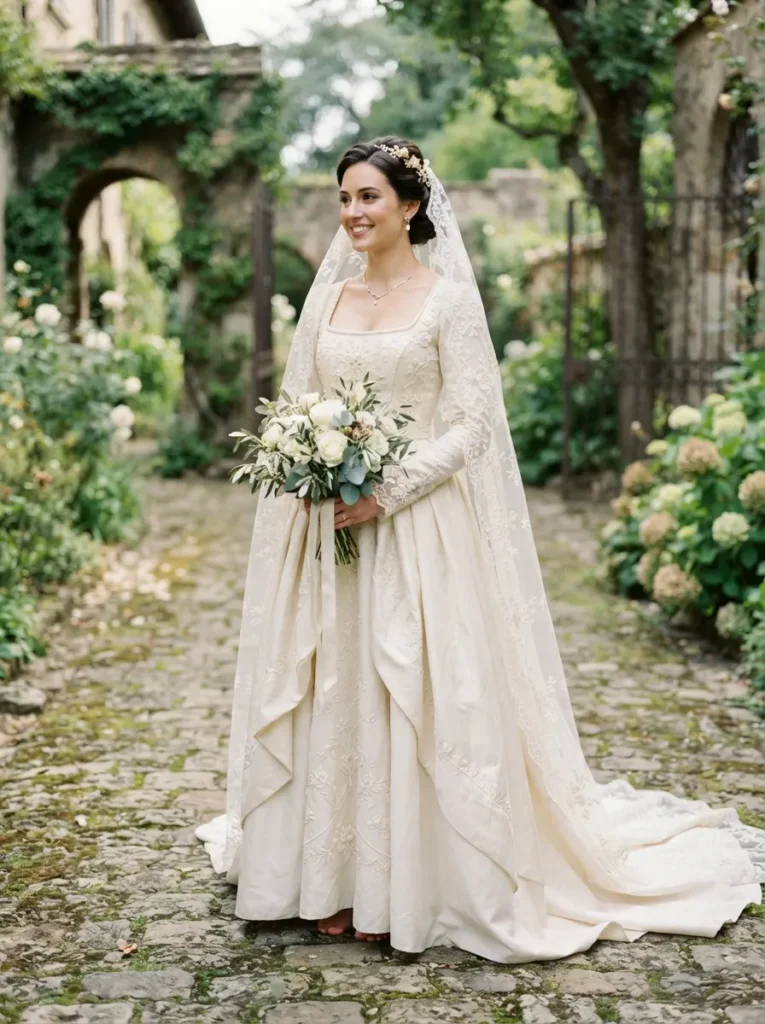
A lace veil can give a modern wedding dress a romantic historical finish. Pair it with a simple fitted gown, a square neckline, or a dress with delicate sleeve details. A soft lace edge adds interest without making the whole outfit feel too busy.
Consider the length of the veil in relation to your train. A long veil can look beautiful in ceremony photographs, while a shorter style may be easier to manage during the reception.
20. Regal Full-Skirt Renaissance Wedding Gown

A full-skirt gown is a dramatic choice for brides who love a royal bridal look. A fitted bodice, wide skirt, and subtle embroidery create a balanced shape inspired by historic formal clothing.
Choose a skirt with enough structure to hold its shape while still allowing you to walk comfortably. If the gown has several layers, check its total weight and make sure it is easy to manage when sitting and dancing.
What Makes a Wedding Dress Renaissance-Inspired?
Renaissance-inspired wedding dresses borrow design ideas from European clothing of the 15th and 16th centuries. Historical garments often featured fitted bodices, layered clothing, rich textiles, decorative sleeves, embroidery, and full skirts. The details varied across regions and decades, so there was no single Renaissance dress shape.
For example, Italian Renaissance clothing included richly decorated silk and velvet garments, while some late-16th-century European styles used wide skirts and elaborate sleeves. The Fashion History Timeline from the Fashion Institute of Technology offers a closer look at these historical details.
For a modern wedding, you can choose just one or two of these elements. A square neckline, embroidered bodice, velvet fabric, or flowing sleeve can create the mood without requiring a historically exact outfit.
How to Choose the Right Renaissance Wedding Dress
Think About the Silhouette
Start with the shape you enjoy wearing. An A-line dress offers a gentle flow from the waist, while a ball gown creates a fuller and more dramatic skirt. A fitted bodice with a flowing skirt is a flexible choice if you want a historical touch without a heavy costume-like design.
Choose a Fabric for Your Venue and Season
Velvet, brocade-inspired fabrics, and heavier satin can create a rich appearance for cool-weather weddings. Lace, chiffon, and lighter fabrics may feel easier to wear for spring and summer celebrations. Always check the actual fabric description, lining, and weight before buying.
Find a Neckline That Feels Secure
Square, sweetheart, and off-the-shoulder necklines can all work with Renaissance-inspired designs. The best choice is one that suits your personal taste and stays comfortable when you move. During a fitting, try sitting, walking, and lifting your arms.
Consider Sleeve Length and Movement
Puff sleeves, bell sleeves, and detachable sleeves can make a dress feel more historical. However, large sleeves may catch on chairs, bouquets, or table decorations. Make sure you can move freely and that the sleeves do not become uncomfortable during a long event.
Match the Dress to Your Wedding Setting
A dramatic velvet gown may suit a castle or ballroom wedding, while a soft lace dress may feel more natural in a garden. For an outdoor ceremony, consider the weather, ground surface, and length of the train before making your final choice.
Find a Renaissance-Inspired Dress That Matches Your Style
Still deciding which silhouette, neckline, or wedding look feels right? Try our Find My Dress quiz to explore dress inspiration based on your style and wedding preferences.
Accessories That Complete a Renaissance Bridal Look
- Delicate headpiece: A pearl, floral, or gold-toned headpiece can add a gentle historical touch.
- Lace veil: A lace-edged veil works well with simple gowns and embroidered bodices.
- Statement earrings: Choose a pair that complements the neckline without competing with detailed sleeves.
- Embroidered belt: A slim decorative belt can add detail around the waist of a simple dress.
- Bridal cape: A lightweight cape can create a dramatic ceremony look and may be removed later.
- Simple bridal shoes: Choose shoes that suit the venue and let you walk comfortably throughout the celebration.
Frequently Asked Questions
What colors work best for Renaissance wedding dresses?
Ivory, champagne, blush, burgundy, emerald, and royal blue can all work beautifully. Choose a color that suits your wedding setting and personal style rather than feeling limited to one historical shade.
Are Renaissance wedding dresses suitable for modern weddings?
Yes. You can use a few historical details, such as puff sleeves, a square neckline, lace, or embroidery, in a modern bridal design. This creates a romantic look without requiring a full historical costume.
What fabric is best for a Renaissance-inspired wedding dress?
Satin, velvet, lace, and brocade-inspired fabrics can all suit this style. The best option depends on the season, venue, and how much structure or movement you want from your gown.
Can I wear a colored Renaissance wedding dress?
Yes, if it suits your preferences and the expectations for your celebration. Burgundy, green, blue, and blush can create beautiful alternatives to traditional white or ivory.
Are puff sleeves and bell sleeves comfortable for a wedding?
They can be comfortable when the fit, fabric, and sleeve construction allow enough movement. Try raising your arms, sitting, and walking during a fitting to check for pulling or restriction.
How can I make a Renaissance wedding dress look less like a costume?
Choose one or two historical details and keep the rest of the design simple. For example, pair a square neckline or puff sleeves with a modern skirt, subtle jewelry, and a clean hairstyle.
Final Thoughts
Renaissance wedding dresses offer many ways to create a romantic and memorable bridal look. Whether you prefer velvet, delicate lace, dramatic sleeves, a fitted corset-style bodice, or a full royal skirt, you can find a design that reflects your own taste.
Focus on the details you love, then consider comfort, fabric, venue, and movement before choosing your gown. The right Renaissance-inspired dress should feel special while still allowing you to enjoy every moment of your wedding day.
Historical Reading
For more background on Renaissance clothing and its design details, explore the Fashion Institute of Technology’s Italian Renaissance fashion overview and its research on European clothing in the 1590s.
Join the Conversation