Some engagement rings are beautiful because they follow tradition. Others catch your attention because they do something unexpected. If you’ve been searching for unique engagement rings that feel personal, artistic, or a little unconventional, there are plenty of ways to move beyond the classic round diamond solitaire.
Think sculptural gold bands, unusual diamond shapes, colorful gemstones, and vintage details that tell their own story. These 15 distinctive engagement ring ideas explore different styles, along with practical tips for choosing one you’ll love wearing long after the proposal.
What Makes an Engagement Ring Unique?
A unique engagement ring doesn’t have to be oversized, expensive, or dramatically different. Sometimes, a small design choice makes the greatest impression.
An unexpected gemstone pairing, a horizontally set diamond, or an asymmetrical band can give a familiar ring style an entirely new personality.
Here are a few details that can make an engagement ring feel more individual:
- Unusual diamond shapes: Marquise, kite, hexagonal, and elongated stones create distinctive silhouettes.
- Creative settings: Bezel, east-west, bypass, and asymmetrical settings introduce a modern perspective.
- Colored gemstones: Sapphires, rubies, and other gemstones bring color and character.
- Vintage craftsmanship: Milgrain edges, engraving, filigree, and antique-inspired cuts add intricate detail.
- Personal design elements: Custom combinations of stones, metals, and meaningful accents make a ring feel individual.
The goal isn’t simply to choose something different. It’s to find a design that reflects your personal style and works comfortably with your everyday life.
15 Unique Engagement Ring Ideas That Feel Personal and Distinctive
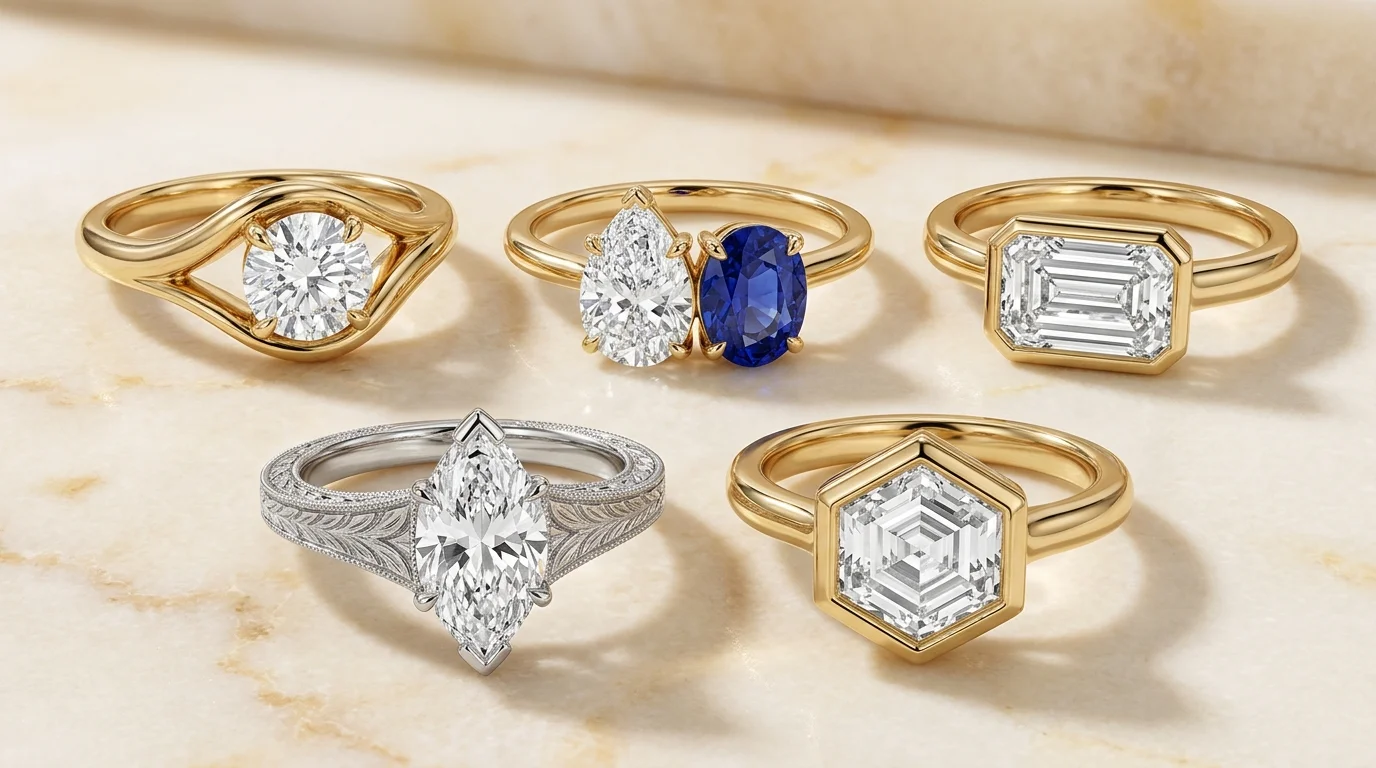
1. Sculptural Gold Engagement Ring With an Organic Band
A sculptural gold engagement ring transforms the traditional band into a miniature work of art. Instead of perfectly straight shoulders, the metal curves, twists, or flows around the center stone in soft, organic shapes.

A round brilliant diamond set into an asymmetrical yellow gold band feels especially elegant. The contrast between the stone’s precise facets and the gold’s fluid lines creates a design that is artistic without feeling overly elaborate.
Why it stands out: The band becomes part of the design rather than simply supporting the diamond.
Best for: Brides drawn to contemporary jewelry, artistic details, and understated statement pieces.
Choosing tip: Examine the band from every angle. Beautiful curves should still leave enough comfortable space between the ring and neighboring fingers, and the design may require a custom wedding band.
2. Toi et Moi Engagement Ring With Two Different Stones
A toi et moi engagement ring features two center stones placed side by side. The French phrase means “you and me,” making the design a lovely symbol of two people coming together.
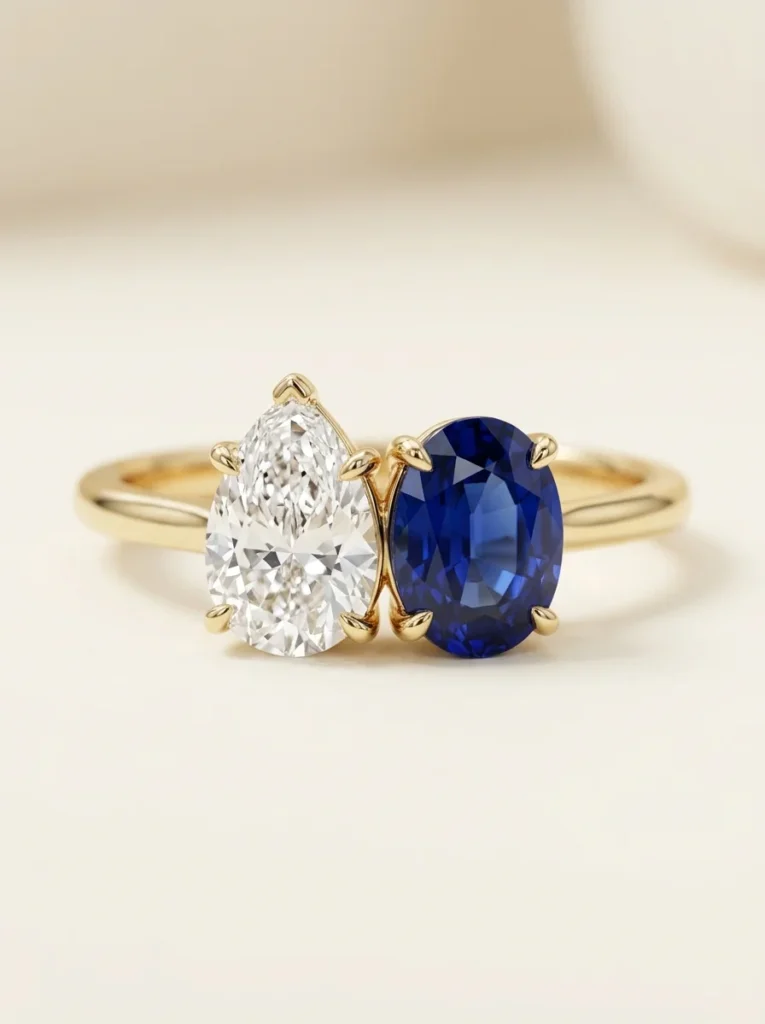
For something unusual, pair a pear-shaped diamond with an oval sapphire, or combine an emerald-cut diamond with a smaller round brilliant stone.
The contrasting shapes create a romantic, collected-over-time appearance. A gently curved gold band can make the arrangement feel even more graceful.
Why it stands out: Two distinct stones create a personalized design with meaningful symbolism.
Best for: Romantic brides who appreciate symbolism, asymmetry, and creative gemstone combinations.
Choosing tip: Check whether both stones sit at a comfortable height. Some two-stone designs need a curved wedding band to fit neatly alongside them.
3. East-West Emerald-Cut Diamond Engagement Ring
An east-west engagement ring places an elongated center stone horizontally across the finger instead of vertically. This simple change gives a traditional diamond shape a fresh, architectural appearance.
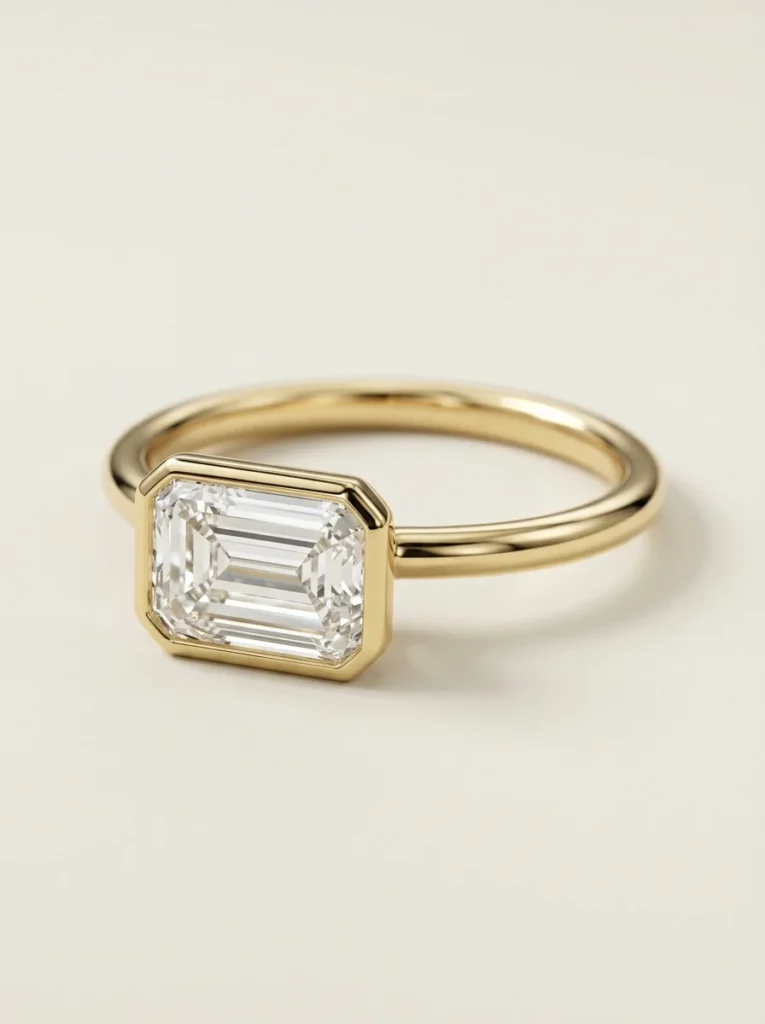
An emerald-cut diamond looks particularly sophisticated in this orientation. Its long, straight facets create a calm, mirror-like effect, while the sideways placement introduces a subtle unexpected detail.
Choose a polished yellow gold bezel for a minimal look, or delicate platinum prongs for a lighter appearance.
Why it stands out: A familiar diamond shape becomes contemporary through an unconventional orientation.
Best for: Minimalist brides who love clean lines, modern styling, and quiet luxury.
Choosing tip: Pay attention to the stone’s overall width across your finger. An elongated diamond may feel more substantial when worn sideways.
4. Vintage-Inspired Marquise Diamond With Milgrain Details
A marquise diamond has an elongated outline that tapers to a point at each end. Its graceful silhouette already feels distinctive, but vintage-inspired metalwork can add another layer of personality.

Imagine a marquise center stone framed by delicate milgrain edging, tiny accent diamonds, and intricate engraving along the shoulders.
The result blends antique romance with refined detail. Yellow gold creates a warm heirloom appearance, while platinum gives the same design a cooler, more understated finish.
Why it stands out: An elegant pointed diamond shape meets ornate, old-world craftsmanship.
Best for: Brides who love antique jewelry, romantic styling, and heirloom-inspired pieces.
Choosing tip: Marquise diamonds have vulnerable pointed ends. Ask a jeweler about protective V-shaped prongs or a thoughtfully designed bezel setting.
5. Salt-and-Pepper Diamond Engagement Ring
Not every diamond needs to look perfectly clear to be captivating. Salt-and-pepper diamonds contain visible dark and light inclusions that can create smoky, speckled, or almost celestial patterns.
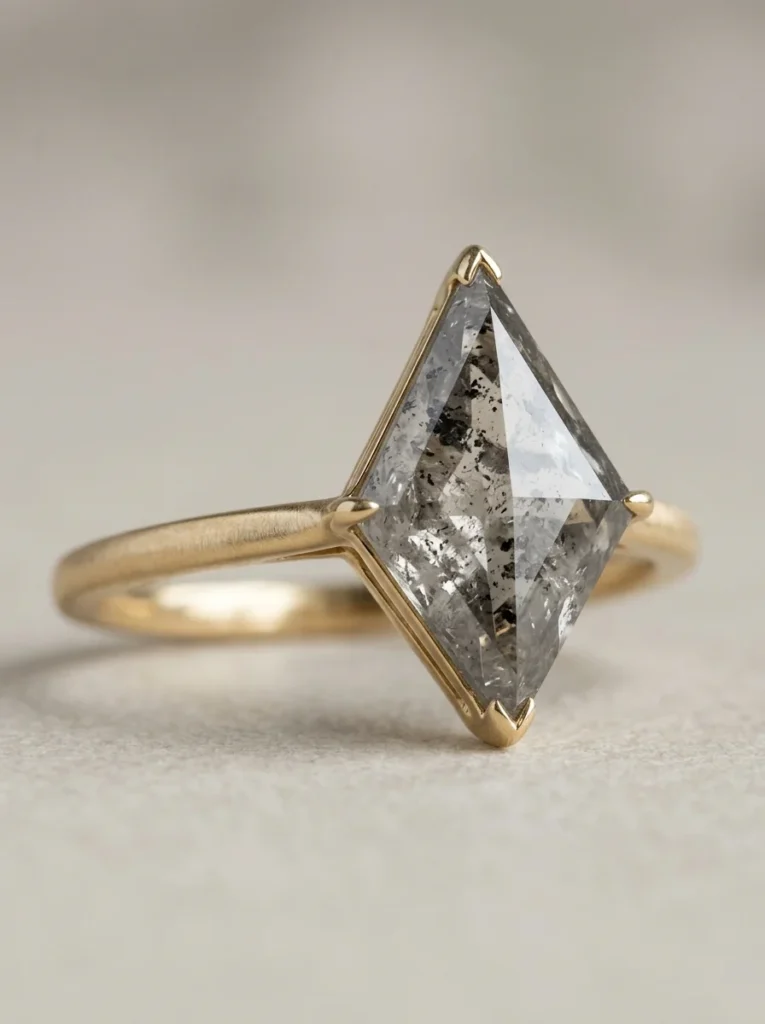
No two stones have exactly the same appearance, which makes this style particularly appealing to someone who values individuality.
A gray kite-shaped diamond set in brushed yellow gold can feel modern and slightly mysterious. Alternatively, a softly speckled oval diamond in rose gold creates a more romantic appearance.
Why it stands out: The stone’s natural inclusions become an important part of its visual character.
Best for: Brides who prefer unconventional gemstones, earthy aesthetics, or contemporary alternative jewelry.
Choosing tip: Not all inclusions are harmless. Have a qualified jeweler or gemologist assess the stone’s durability, especially if it contains surface-reaching fractures.
6. Pear-Shaped Diamond With an Asymmetrical Halo
A pear-shaped diamond combines a rounded end with a delicate point, creating a naturally expressive silhouette. Adding an asymmetrical halo makes the design even more unusual.
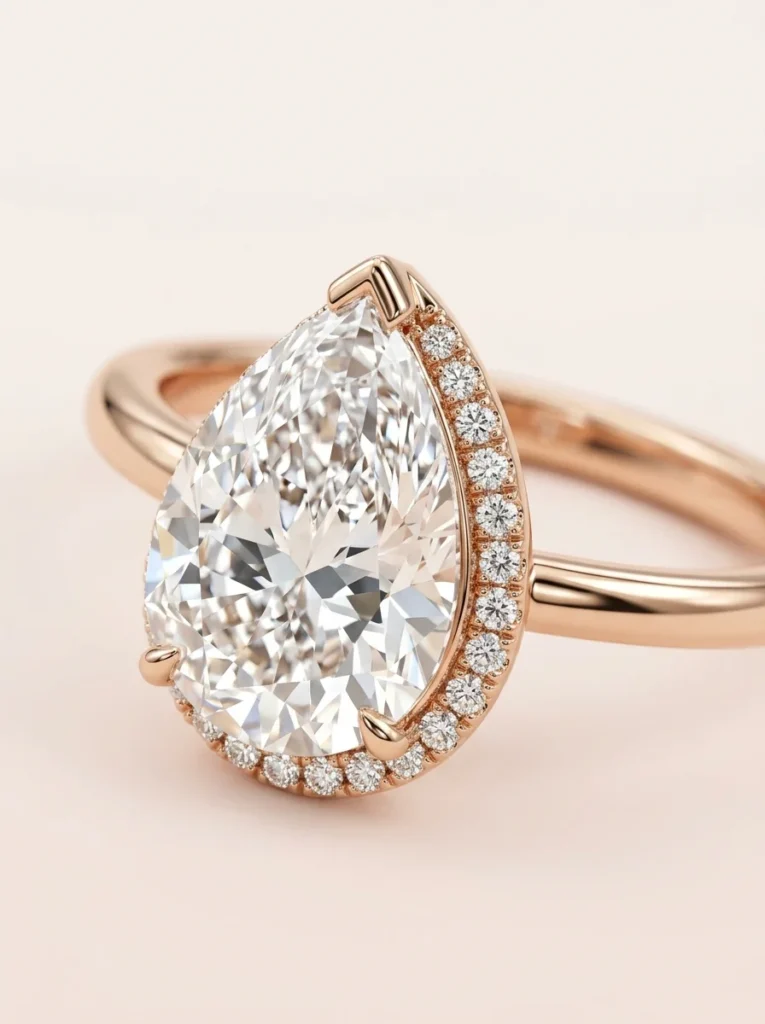
Instead of surrounding the center stone with a perfectly balanced circle of diamonds, the halo might extend along one side or graduate from tiny stones to larger accents.
The result feels graceful and artistic, especially when the diamond is positioned at a slight angle.
Why it stands out: The offset arrangement creates movement without requiring a complicated band.
Best for: Brides who love sparkle but want something less traditional than a standard halo engagement ring.
Choosing tip: Make sure the pear-shaped diamond’s point is well protected. Also consider how the uneven halo will sit next to a wedding band.
7. Hexagon-Cut Engagement Ring With a Geometric Setting
A hexagon-shaped center stone gives an engagement ring a striking geometric personality. Its six-sided outline feels structured, balanced, and a little unexpected.
For a distinctive look, choose a hexagonal diamond surrounded by a fine gold bezel. A knife-edge band, which rises to a subtle ridge along its center, can emphasize the ring’s architectural feel.
Alternatively, a hexagonal sapphire with delicate diamond accents can introduce color without losing the clean design.
Why it stands out: The unusual outline becomes the defining feature of the entire ring.
Best for: Brides who appreciate geometric design, Art Deco influences, and contemporary simplicity.
Choosing tip: Hexagonal stones can have different facet patterns. Compare real examples to find the balance of brilliance, symmetry, and visual depth you prefer.
8. Three-Stone Engagement Ring With Mismatched Diamond Shapes
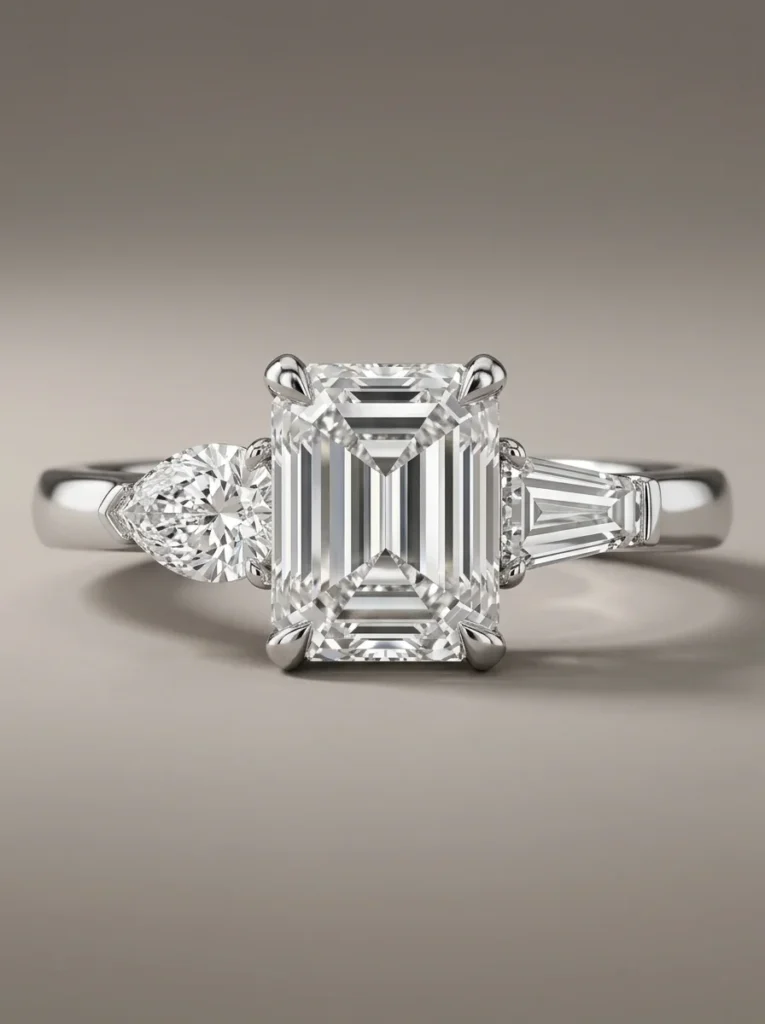
A traditional three-stone engagement ring usually features one center stone flanked by two smaller diamonds. Changing the shapes creates a completely different impression.
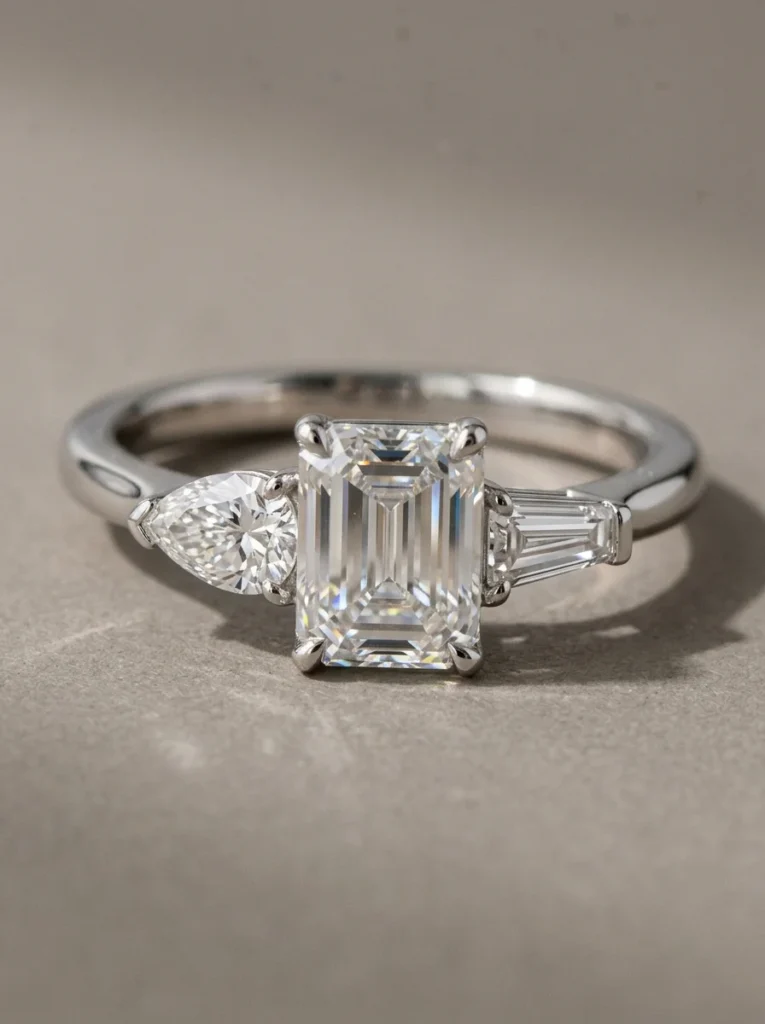
Try an emerald-cut center diamond with delicate pear-shaped side stones, or pair a cushion-cut diamond with tapered baguettes.
For a more unconventional appearance, select two intentionally different side stones while keeping the overall proportions visually balanced.
Why it stands out: The design preserves the romance of a three-stone ring while introducing an individual combination of shapes.
Best for: Brides who want meaningful symbolism with a fresh design direction.
Choosing tip: Compare the stones’ face-up dimensions rather than relying only on carat weights. Different shapes can look noticeably different in size.
9. Blue Sapphire Engagement Ring With Diamond Accents
A blue sapphire engagement ring offers rich color without losing the elegance associated with traditional bridal jewelry.

A deep blue oval sapphire surrounded by delicate diamonds creates a romantic, regal appearance. For a more contemporary interpretation, place an emerald-cut sapphire into a slim yellow gold bezel with tiny diamond accents along one shoulder.
Blue also pairs beautifully with platinum and white gold, which can make the gemstone color appear especially striking.
Why it stands out: The colored center stone immediately distinguishes the ring from conventional colorless diamond designs.
Best for: Brides who love classic elegance but want color, personality, and a timeless feel.
Choosing tip: Sapphires are a practical gemstone to consider for frequent wear, but their durability still depends on the stone and setting. Ask about any gemstone treatments before buying.
10. Art Deco Engagement Ring With an Asscher-Cut Diamond
Art Deco-inspired engagement rings are known for confident geometry, symmetry, and intricate details.

An Asscher-cut diamond makes an excellent centerpiece for this aesthetic. Its square outline, cropped corners, and step-cut facets create a dramatic, architectural look.
Frame the diamond with baguette side stones, a geometric halo, or carefully arranged platinum details to emphasize the vintage influence.
Why it stands out: Strong lines and decorative symmetry create a statement without relying entirely on a large center stone.
Best for: Brides who love 1920s-inspired glamour, structured designs, and vintage sophistication.
Choosing tip: Step-cut diamonds can make inclusions more noticeable than many brilliant-cut stones. View the actual diamond carefully before choosing.
11. Floral Cluster Engagement Ring Inspired by Nature
A floral cluster engagement ring uses several gemstones arranged like petals around a center stone. The result can resemble a tiny flower resting on the finger.
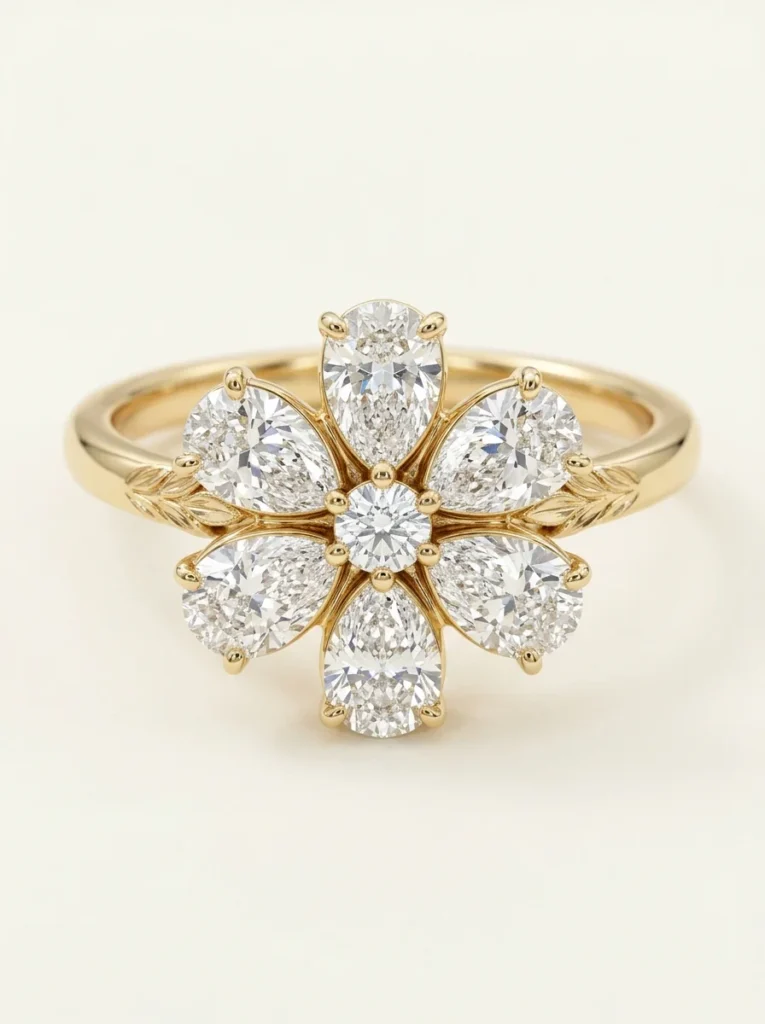
For a delicate design, combine a round diamond with small pear-shaped diamonds forming the petals. A warmer interpretation might use a champagne-colored center stone surrounded by smaller white diamonds.
Fine leaf-shaped accents or softly engraved shoulders can complete the botanical feeling without making the design look too busy.
Why it stands out: Multiple stones work together to create an expressive, nature-inspired silhouette.
Best for: Romantic brides who love gardens, floral motifs, and whimsical jewelry.
Choosing tip: Cluster settings can contain numerous small prongs and narrow spaces. Consider cleaning, maintenance, and stone security before purchasing.
12. Bypass Engagement Ring With a Floating-Style Diamond
A bypass engagement ring features a band that curves around the center stone rather than meeting in a conventional straight line.
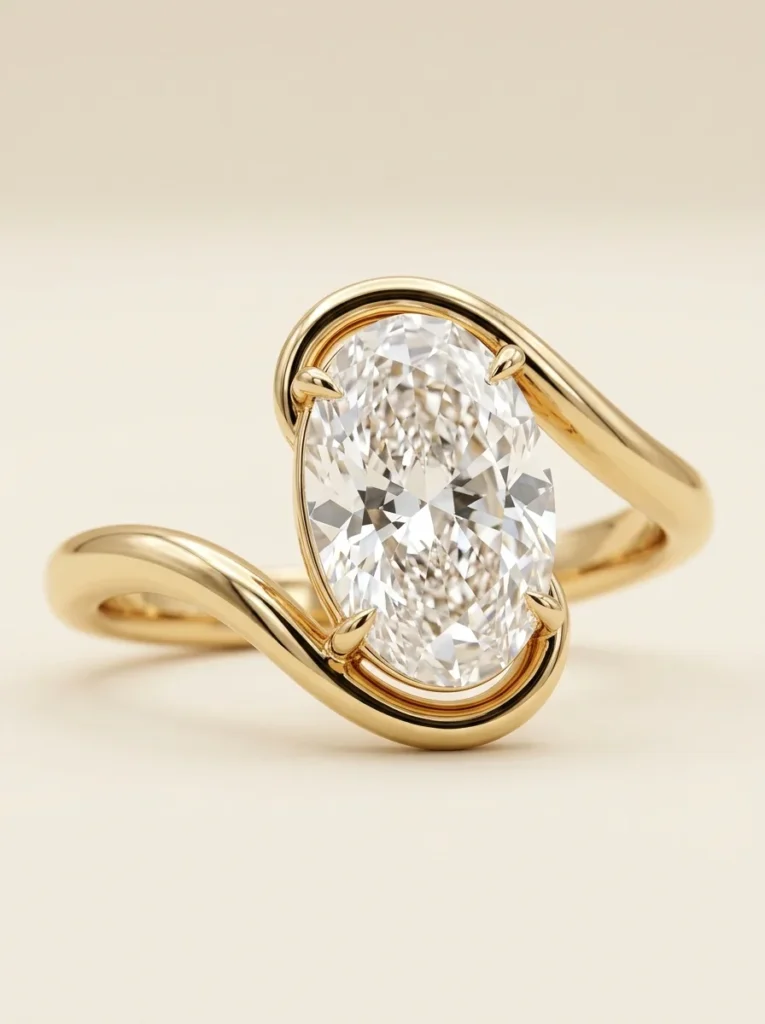
For a modern look, choose an elongated oval diamond framed by two sweeping gold shoulders. The stone can appear suspended between the curves, giving the design an open, airy personality.
A polished yellow gold band emphasizes the sculptural silhouette, while platinum creates a sleek, futuristic appearance.
Why it stands out: The flowing band changes the ring’s overall structure and creates a beautiful sense of movement.
Best for: Brides who appreciate contemporary art, sculptural jewelry, and unconventional silhouettes.
Choosing tip: A floating appearance does not necessarily mean a ring uses a true tension setting. Ask how the gemstone is secured and whether the construction suits everyday wear.
13. Champagne Diamond Engagement Ring in Warm Yellow Gold
Champagne diamonds bring soft golden, honey, or brownish tones to engagement ring designs. Their warmth can feel especially appealing when paired with polished yellow gold.
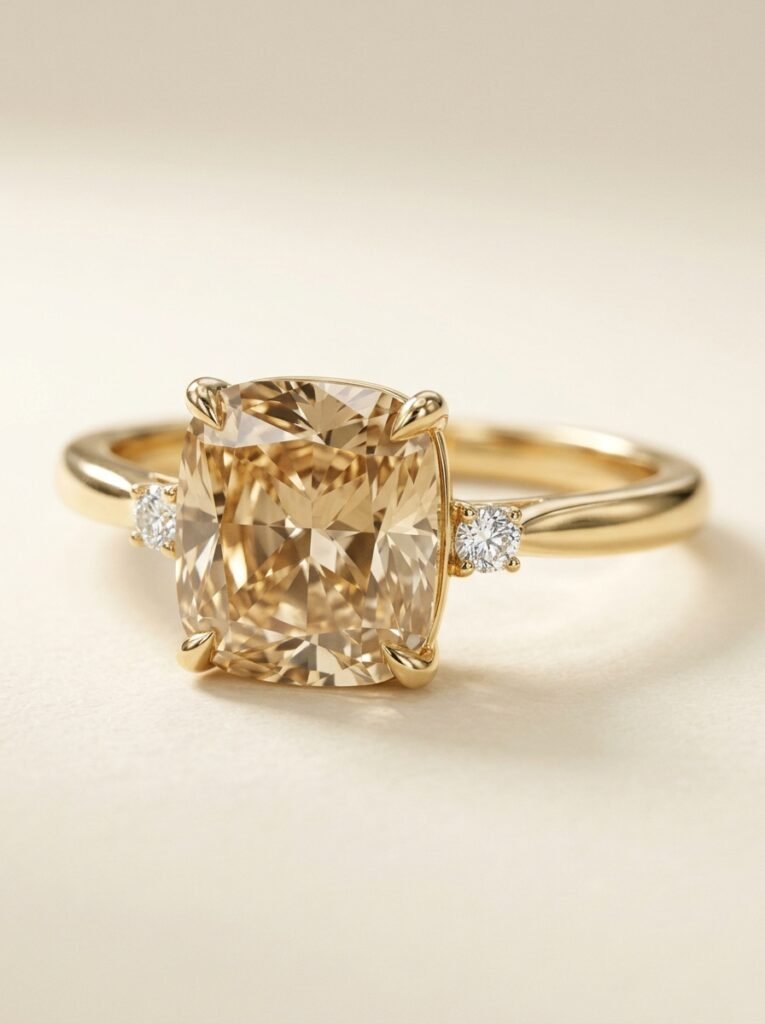
A cushion-cut champagne diamond set on a gently tapered gold band creates an understated, vintage-inspired appearance. Small white diamonds on either side can provide contrast without overwhelming the center stone.
For a slightly bolder look, choose an elongated radiant-cut champagne diamond with a simple bezel setting.
Why it stands out: The warm diamond color introduces an alternative to the familiar bright white center stone.
Best for: Brides drawn to earthy colors, warm metals, vintage styling, and subtle luxury.
Choosing tip: Look at the diamond in daylight and indoor lighting. Color and sparkle can appear quite different depending on the environment and surrounding metal.
14. Hidden Gemstone Engagement Ring With a Secret Detail
Sometimes the most meaningful design feature is one that isn’t immediately visible.
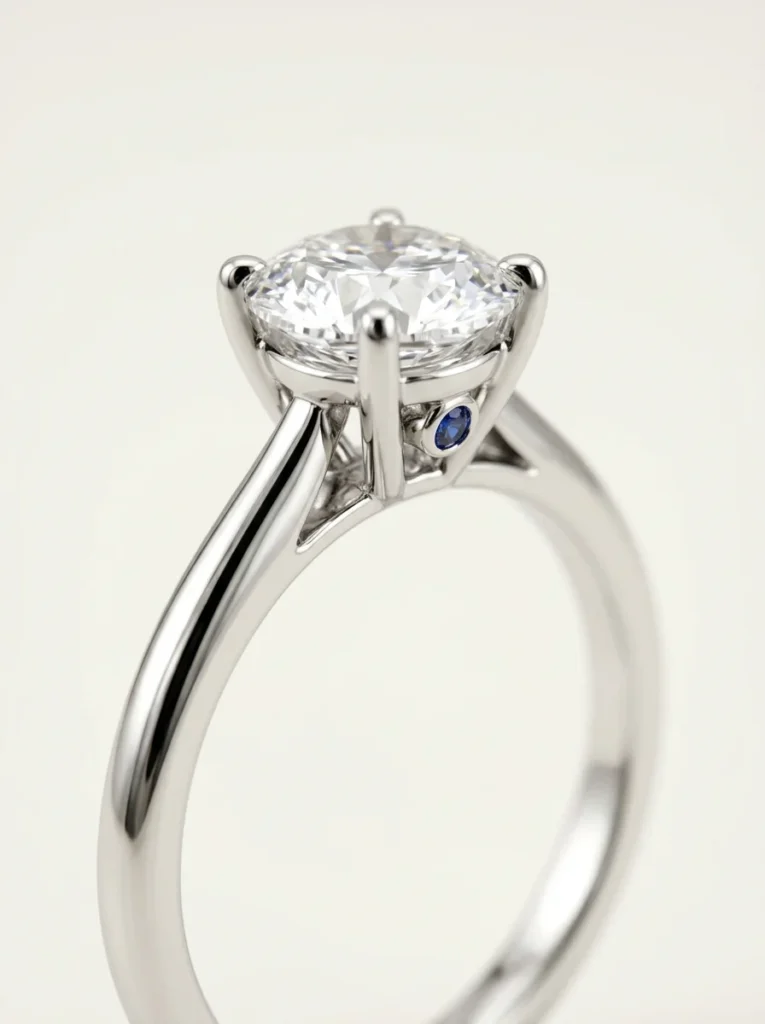
A hidden gemstone engagement ring may look like a classic solitaire from above, but a small sapphire, ruby, or other meaningful stone sits beneath the center diamond or inside the band.
Choose a birthstone, a color connected to a special memory, or a gemstone that reflects your shared story.
This approach keeps the overall ring simple while adding a private detail that feels personal to the couple.
Why it stands out: A discreet design feature carries personal significance without changing the ring’s classic appearance.
Best for: Sentimental brides who love meaningful jewelry and elegant designs with hidden details.
Choosing tip: Make sure the accent stone is protected and positioned where it will not rub uncomfortably against the finger or interfere with cleaning and future resizing.
15. Modern Bezel-Set Kite Diamond Engagement Ring
A kite-shaped diamond has an angular outline with a distinctive pointed silhouette. Paired with a sleek bezel, it becomes a bold engagement ring that feels both artistic and refined.
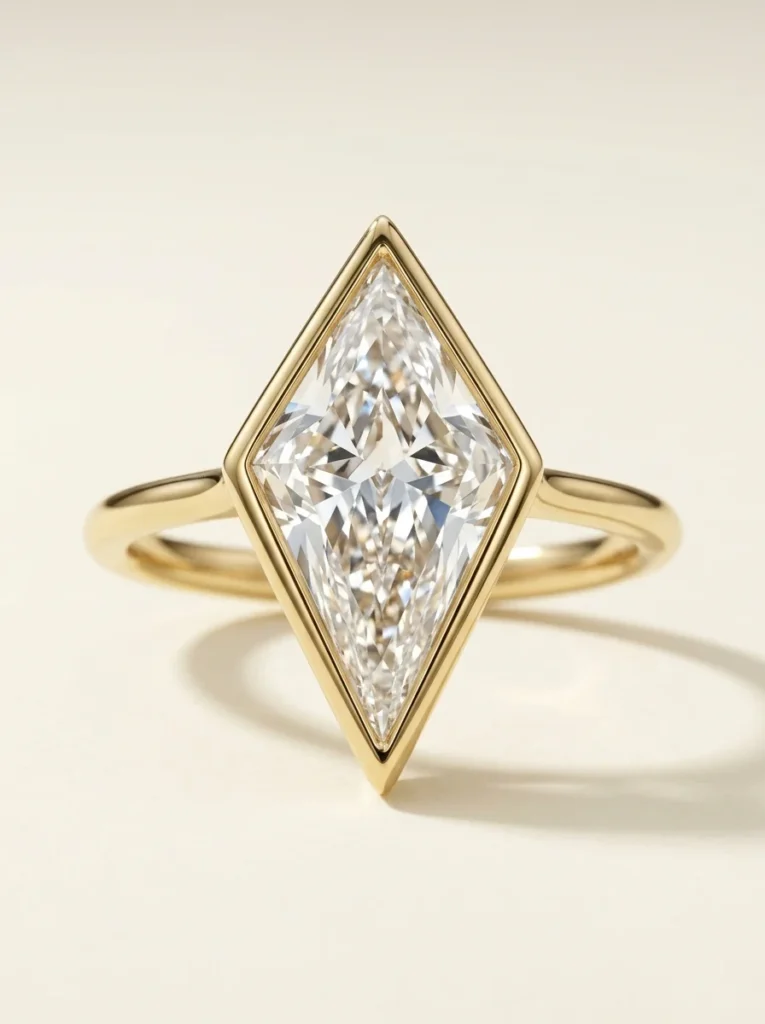
Imagine a kite-cut diamond positioned vertically on a narrow gold band, with a smooth metal rim framing its edges. For a more dramatic interpretation, the stone could sit at a slight angle on a softly curved band.
The combination of sharp geometry and smooth metal creates a beautiful contrast.
Why it stands out: The unusual stone shape and clean setting create an architectural design that doesn’t resemble a conventional solitaire.
Best for: Brides with minimalist, modern, or fashion-forward personal style.
Choosing tip: Because kite-shaped diamonds vary considerably in proportions and facet arrangements, ask for detailed photographs or videos of the actual stone. Its pointed edges should be appropriately protected.
How to Choose a Unique Engagement Ring You’ll Love Wearing
Finding a distinctive design is exciting, but appearance is only one part of the decision. A ring should also feel comfortable, suit your lifestyle, and work with the wedding band you may want later.
Start With Your Personal Style
Look at the jewelry you already enjoy wearing. Do you prefer delicate gold pieces, bold geometric accessories, vintage details, or colorful gemstones?
Use those preferences as a starting point. A ring that fits naturally into your style may bring more lasting satisfaction than one chosen solely because it looks unusual.
Consider the Center Stone’s Shape and Character
Diamond shape can dramatically change an engagement ring’s personality. A marquise feels graceful, an emerald cut looks structured, and a kite-shaped diamond makes a bold geometric statement.
Cut style also matters. Brilliant cuts emphasize lively sparkle, while step cuts create broader flashes of light and a more mirror-like appearance.
For further guidance, explore the Gemological Institute of America’s guide to diamond engagement ring shapes.
Think About Everyday Comfort
A dramatic high setting may look gorgeous in photographs, but it can catch on clothing or feel inconvenient during hands-on activities.
If you frequently work with your hands, consider a lower-profile setting with fewer exposed points. A well-designed bezel may offer additional protection around the stone’s edge, although no setting makes a ring completely damage-proof.
Choose the Right Ring Size
Ring size deserves particular attention when choosing a wide band, sculptural setting, or design with limited resizing options.
Wider bands can feel different from narrow ones, while some intricate or gemstone-covered bands are difficult to resize without affecting the design.
Before ordering, confirm the intended US ring size with a professional jeweler whenever possible. An online sizing tool can help with an initial estimate, but it should not replace an accurate professional fitting for an expensive purchase.
Check Wedding Band Compatibility
Unusual engagement rings don’t always sit flush against a straight wedding band.
Bypass settings, oversized halos, low baskets, and asymmetrical designs may leave gaps between the two rings. That isn’t necessarily a problem if you love the appearance.
However, if a seamless bridal stack matters to you, ask to see matching, curved, or custom-contoured wedding band options before committing.
Are Unique Engagement Rings More Expensive?
Not necessarily. A unique engagement ring can be modestly priced or extremely expensive depending on its gemstones, metal, craftsmanship, and construction.
A simple east-west solitaire may use fewer decorative details than an elaborate traditional halo. On the other hand, custom sculptural work, intricate engraving, and multiple gemstones can increase manufacturing costs.
Consider the following ways to make your budget work harder:
- Choose an interesting shape: A distinctive cut can create visual impact without extensive side stones.
- Compare natural and lab-grown diamonds: Both are real diamonds, but their pricing and market characteristics differ.
- Explore colored gemstones: Some alternatives may offer good value, although rare, high-quality colored stones can also be very expensive.
- Prioritize the feature you love most: Put your budget toward the center stone, band design, or craftsmanship that matters to you.
- Request an itemized quote: Understand what is included for the center stone, setting, resizing, warranty, and custom work.
Remember that a complicated setting may also require additional maintenance over time. Factor that into the overall cost rather than concentrating on the initial purchase price alone.
Common Mistakes to Avoid When Buying an Unusual Engagement Ring
An unconventional design can be a wonderful choice, but a few practical checks can help prevent disappointment.
- Choosing from photographs alone: View realistic videos or try on similar styles to understand the ring’s actual proportions.
- Ignoring gemstone durability: Some beautiful gemstones need extra protection and more careful wear.
- Overlooking setting height: Tall or exposed designs may catch on clothing and other objects.
- Assuming every ring can be resized: Intricate settings, eternity-style bands, and certain custom constructions can limit resizing options.
- Forgetting the wedding band: Unusual ring shapes may require a specially designed companion band.
- Skipping documentation: Understand the gemstone’s identity, treatments, grading information where applicable, and the seller’s return and warranty terms.
For colored gemstone rings, the GIA colored gemstone engagement ring buying guide explains why hardness, toughness, and stability all matter for daily wear.
Frequently Asked Questions About Unique Engagement Rings
What is considered a unique engagement ring?
A unique engagement ring features design elements that differ from familiar styles, such as an unusual gemstone shape, sculptural band, asymmetrical setting, or personalized detail. It doesn’t need to be custom-made or expensive to feel distinctive.
Are unique engagement rings suitable for everyday wear?
Many are suitable for everyday wear when they use durable gemstones and carefully constructed settings. However, exposed points, delicate accents, tall settings, and certain gemstone types can require extra care. Ask a jeweler to assess the specific design before purchasing.
Can I design my own engagement ring?
Yes. Many jewelers offer custom or semi-custom engagement ring services. You may be able to choose the gemstone, metal, setting style, band shape, and meaningful personal details. Request drawings or a model and confirm the design before production begins.
Which gemstones are good alternatives to diamonds?
Sapphires and rubies are strong options for engagement rings because they offer attractive colors and good scratch resistance. Moissanite is another popular diamond alternative. More delicate gemstones may require protective settings or occasional rather than continuous wear.
Do unusual engagement rings need custom wedding bands?
Some do, but not all. Asymmetrical, bypass, and low-set designs may require a curved or contoured band if you want the rings to sit flush together. A straight band can also create an intentional gap that some couples prefer.
Are lab-grown diamonds a good choice for unique engagement rings?
Lab-grown diamonds can be an excellent option for unconventional designs. They have the essential chemical, physical, and optical properties of natural diamonds and are available in numerous shapes. Compare quality, price, documentation, and seller policies rather than assuming every lab-grown stone is the same.
How do I choose a ring that feels unique but timeless?
Focus on a design element you genuinely love, such as an unusual center stone, subtle asymmetry, or meaningful engraving. Combining one distinctive feature with clean, balanced proportions can create a ring that feels personal without depending entirely on a passing trend.
Final Thoughts: Choose a Ring That Feels Like You
The most memorable engagement rings aren’t always the largest or most elaborate. Sometimes, a gentle curve in the band, an unexpected gemstone pairing, or a beautifully unusual diamond shape is enough to make a ring feel entirely personal.
From artistic sculptural settings to romantic vintage details, these 15 unique engagement ring ideas offer plenty of inspiration for stepping beyond tradition.
As you narrow down your favorites, focus on the details that genuinely connect with your style. Then consider comfort, gemstone durability, ring sizing, and wedding band compatibility before making your final choice.
A distinctive engagement ring should feel as wonderful to wear as it does to admire.
Join the Conversation