
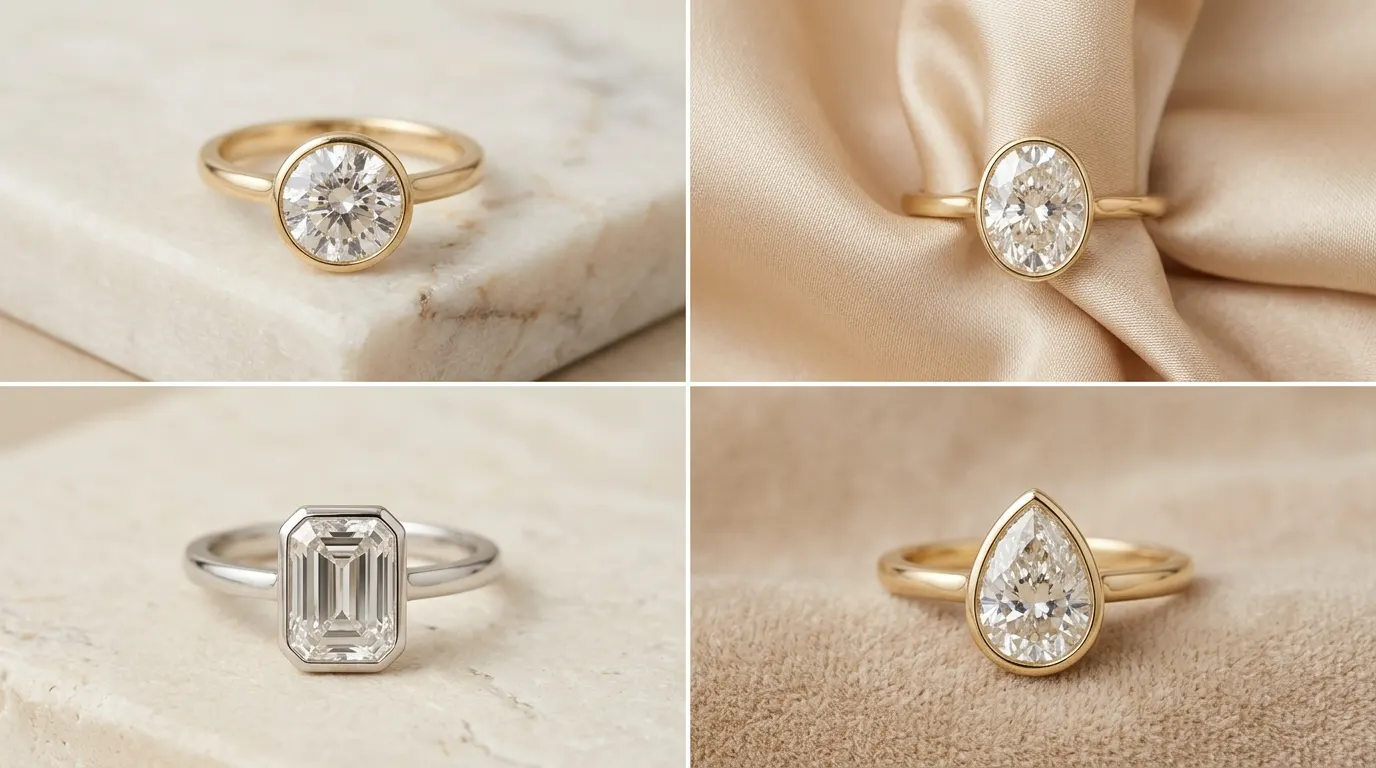
A bezel engagement ring offers a beautiful balance of modern design and everyday practicality. Instead of using traditional prongs, this setting surrounds the center diamond with a smooth metal rim. The result is a clean, polished look that feels both distinctive and comfortable.
If you love elegant engagement rings but want something that feels secure and easy to wear, a bezel setting is worth exploring. From classic round diamonds to elongated emerald cuts and romantic pear shapes, there are many ways to make this design your own.
Below, discover 10 bezel engagement ring ideas, along with helpful advice about diamond shapes, metals, comfort, wedding band compatibility, and choosing a setting that suits your lifestyle.
What Is a Bezel Engagement Ring?
A bezel engagement ring holds its center diamond or gemstone inside a fitted metal rim. The rim wraps around the stone’s outer edge and keeps it in place without traditional prongs.
A full bezel surrounds the entire stone, while a partial bezel covers only selected sections. Both designs create a smooth outline, but they offer slightly different appearances and levels of edge coverage.
One of the main benefits is that the metal frame helps protect the gemstone’s edges from everyday contact. It also creates a lower, smoother profile in many designs, making the ring less likely to catch on clothing.
1. Classic Round Bezel Engagement Ring
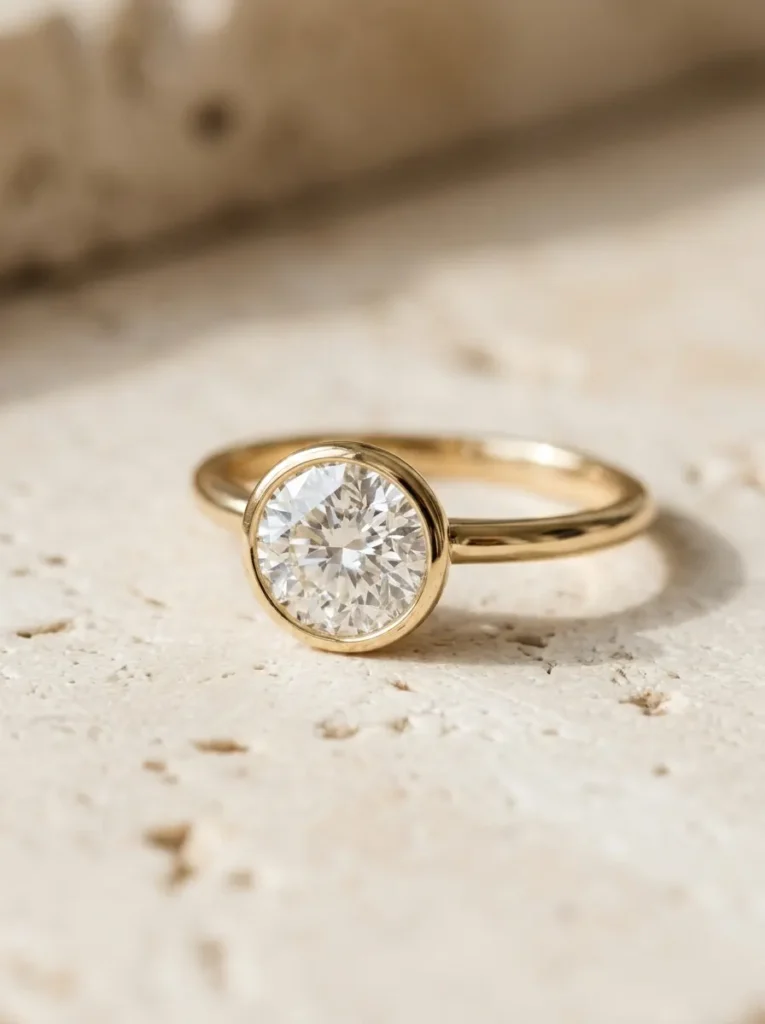
A round bezel engagement ring is a beautiful choice if you appreciate timeless jewelry with a contemporary finish. The circular metal frame follows the diamond’s outline, creating a balanced and polished appearance.
Yellow gold gives the ring a warm, traditional touch. White gold and platinum create a cooler, more understated finish. A slim band keeps the design delicate, while a wider band gives it a stronger modern character.
Styling Tip: Choose a fine bezel rim if you want the round diamond to remain the main focus. Compare different rim widths before selecting your setting.
2. Oval Bezel Engagement Ring
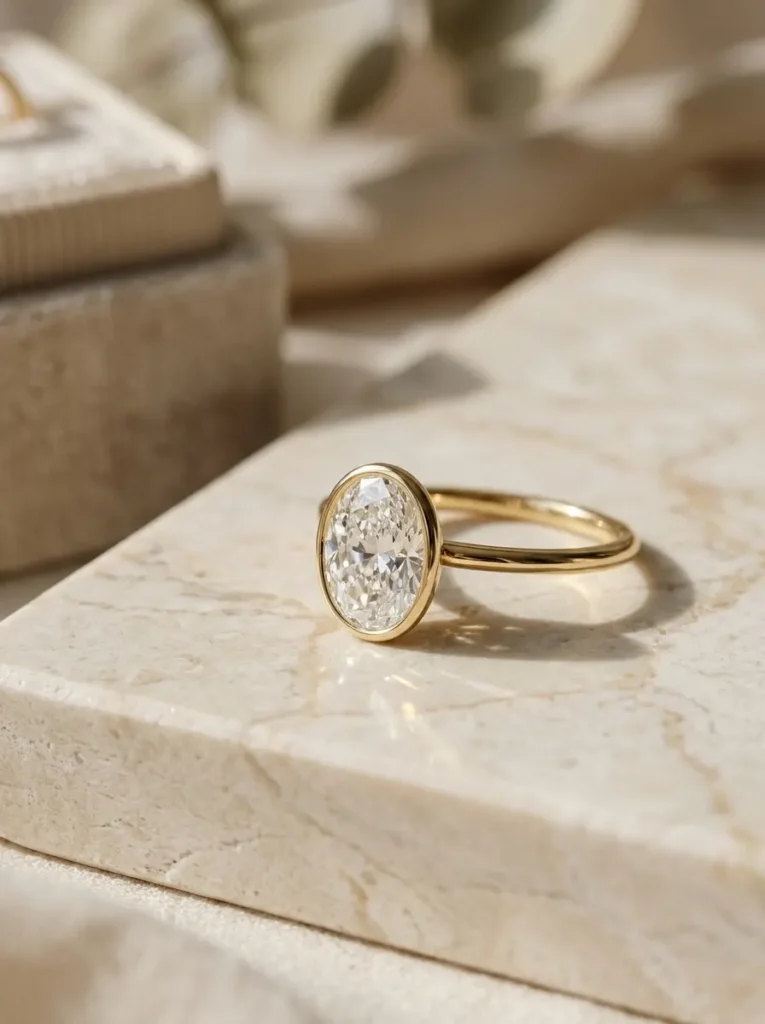
An oval bezel engagement ring combines an elongated diamond shape with the clean lines of a protective metal frame. Its smooth curves create a graceful appearance without making the design feel overly decorative.
This style works beautifully with a simple gold band. You can also choose a slightly tapered band that draws attention toward the center diamond.
The bezel follows the oval outline and creates a neat border around the stone. If you prefer a contemporary ring with a soft, elegant shape, this combination is worth considering.
Styling Tip: Compare different oval proportions and bezel thicknesses. The frame should complement the diamond rather than overpower its outline.
3. Emerald-Cut Bezel Engagement Ring
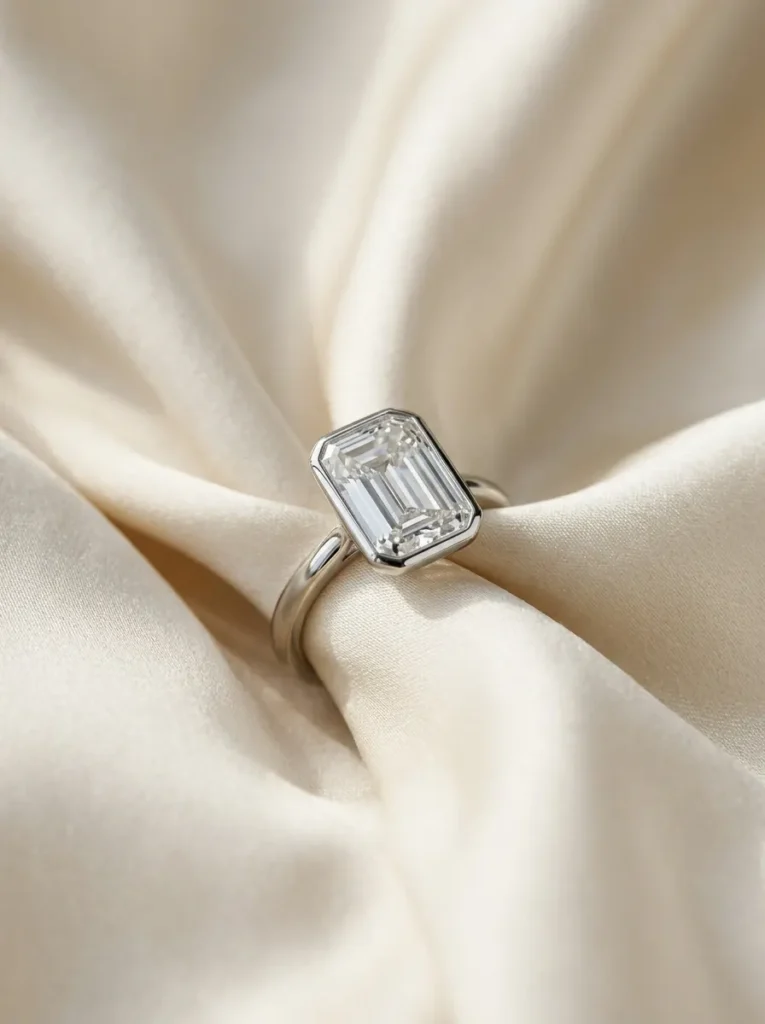
An emerald-cut bezel engagement ring is ideal for someone who loves geometric jewelry and understated sophistication. Its rectangular shape features step-cut facets that create broad flashes of light rather than the intense sparkle of a brilliant-cut diamond.
A straight-edged bezel highlights the diamond’s clean geometry. Yellow gold creates a striking contrast, while platinum and white gold offer a coordinated, minimalist appearance.
You can keep the band plain for a refined look or add subtle accent diamonds along the shoulders.
Styling Tip: Look closely at the diamond’s clarity and overall appearance. Emerald cuts have larger open facets, so inclusions may be easier to notice.
4. Cushion-Cut Bezel Engagement Ring
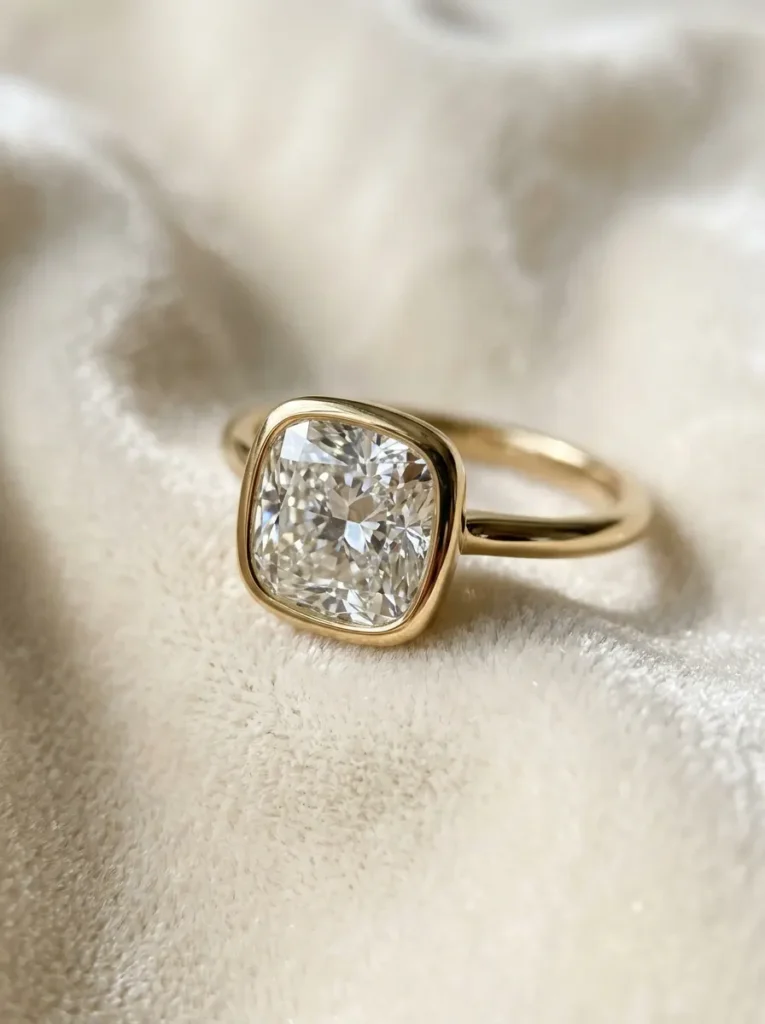
A cushion-cut bezel engagement ring combines soft corners with a smooth metal frame. Its rounded-square or rectangular outline creates a lovely balance between vintage inspiration and modern design.
This style works particularly well in yellow or rose gold. A rounded bezel can follow the cushion diamond’s shape, while a slightly thicker band gives the ring a more substantial appearance.
If you prefer something romantic without a traditional halo, a simple cushion bezel is an attractive alternative.
Styling Tip: Choose a bezel that follows the diamond’s corners smoothly. The finished frame should look balanced from both the top and side views.
5. Pear-Shaped Bezel Engagement Ring
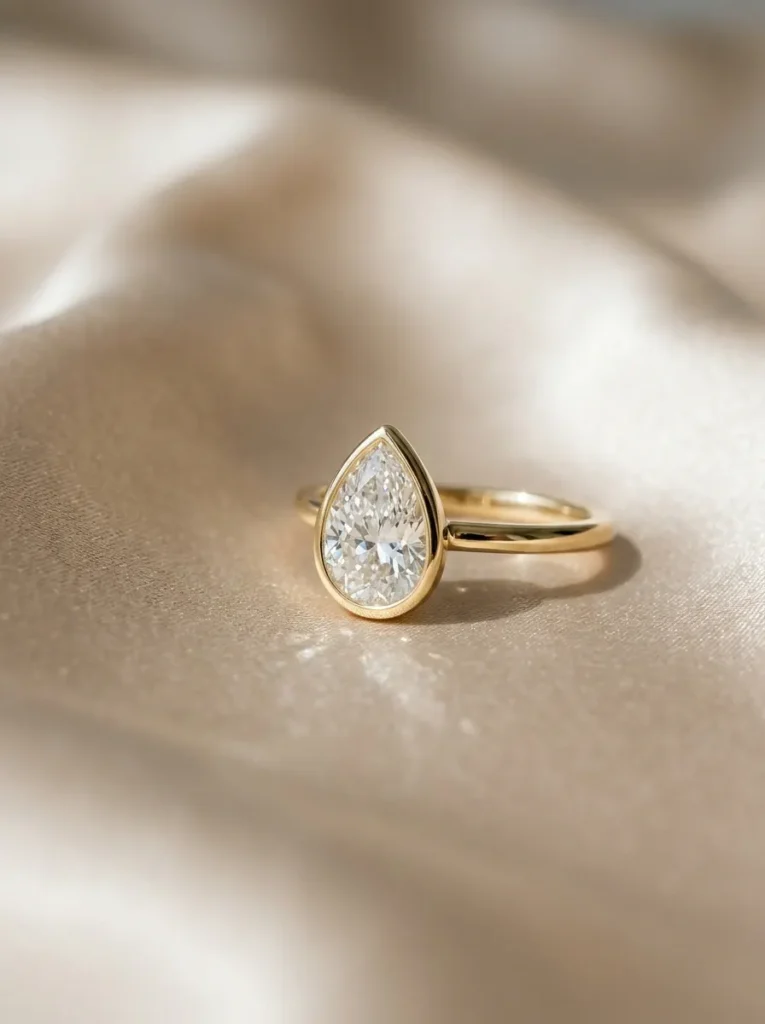
A pear-shaped bezel engagement ring brings together rounded curves and a distinctive pointed tip. The metal frame follows the teardrop outline, giving the diamond a graceful and contemporary appearance.
This design has an important practical advantage. A properly fitted bezel can protect the pointed end and outer edge of the pear-shaped diamond.
Yellow gold creates a warm, elegant frame, while white gold and platinum keep the overall look crisp. You can also explore an east-west orientation if you prefer a less traditional design.
Styling Tip: Pay special attention to the pointed tip. Ask your jeweler how the bezel protects it and whether the frame follows the diamond’s outline accurately.
6. Marquise Bezel Engagement Ring
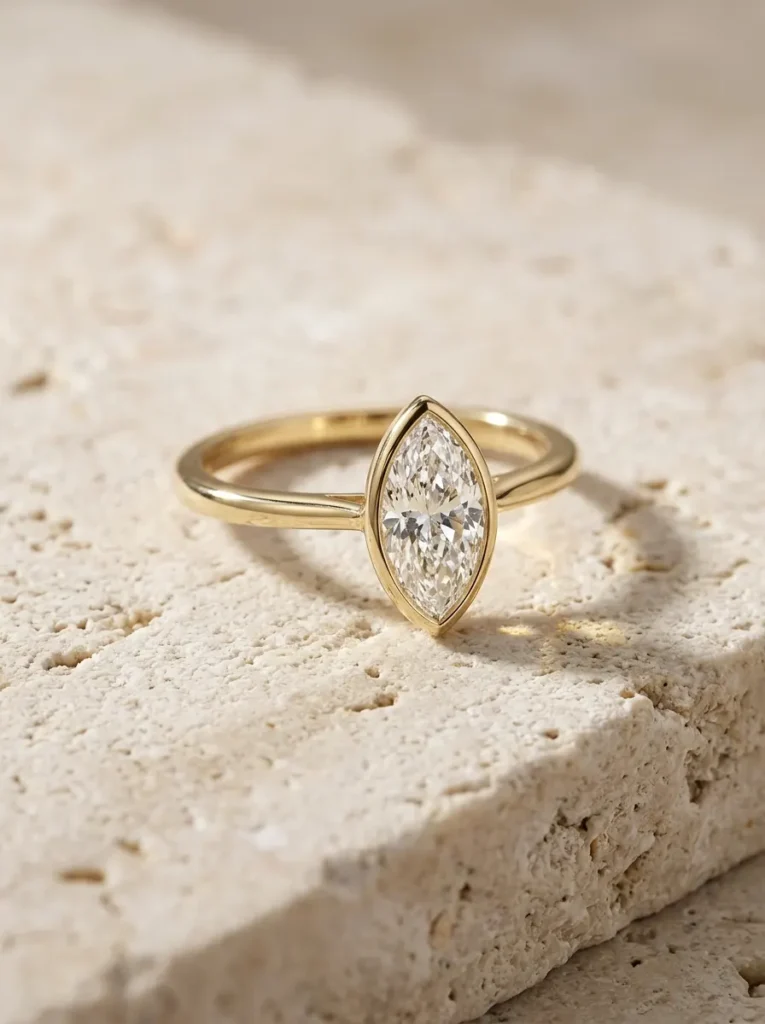
A marquise bezel engagement ring is a distinctive option for someone who enjoys elongated diamond shapes. Its two pointed ends create a dramatic silhouette, while the metal frame gives the design a smooth and structured finish.
The bezel can protect both pointed ends when it is designed to fit the individual stone. This makes the setting an interesting choice for a shape that needs careful attention around its tips.
A slim band creates a delicate appearance, while a wider band gives the ring a bold, architectural feel.
Styling Tip: Check the symmetry of the marquise diamond and make sure both pointed ends receive suitable protection.
7. East-West Bezel Engagement Ring
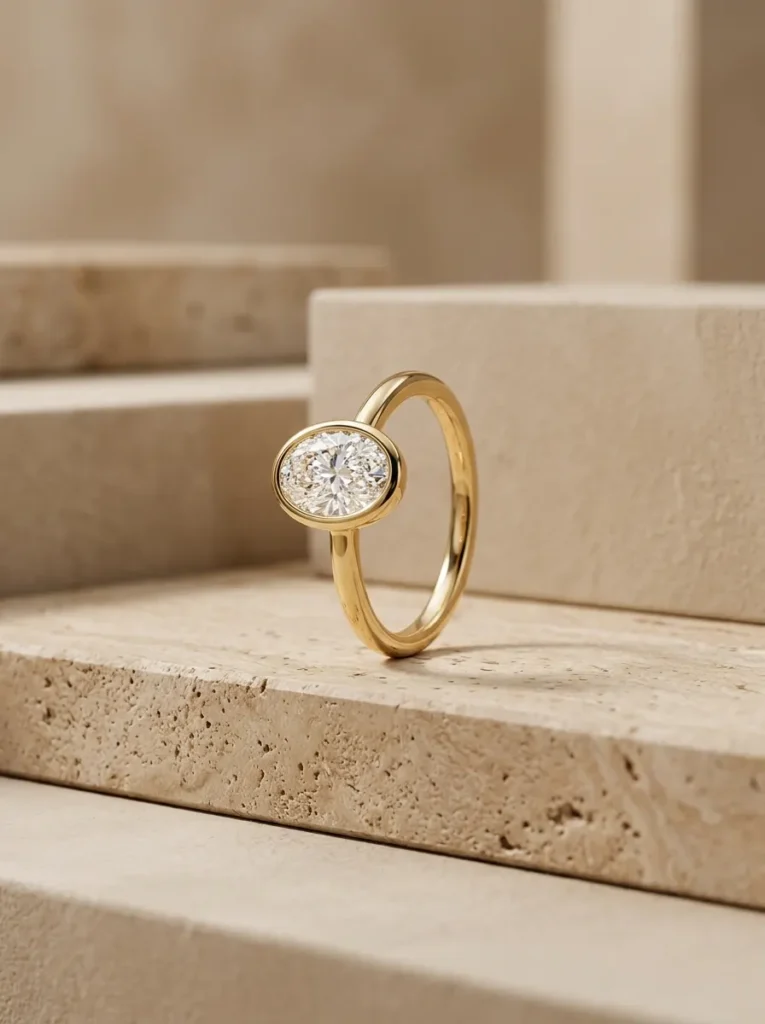
An east-west bezel engagement ring places the center diamond horizontally across the band instead of using the traditional vertical orientation. This small design change creates a noticeably different appearance.
Oval, emerald, marquise, and pear-shaped diamonds can all be used in east-west designs. The horizontal arrangement gives the ring a contemporary feel without requiring extra decorative details.
A plain gold band works well if you prefer clean lines. You can also choose a slightly wider band to create a stronger visual statement.
Styling Tip: Try the ring on before choosing it. The center stone’s width and setting height can influence how comfortably it sits beside your fingers.
8. Bezel Halo Engagement Ring
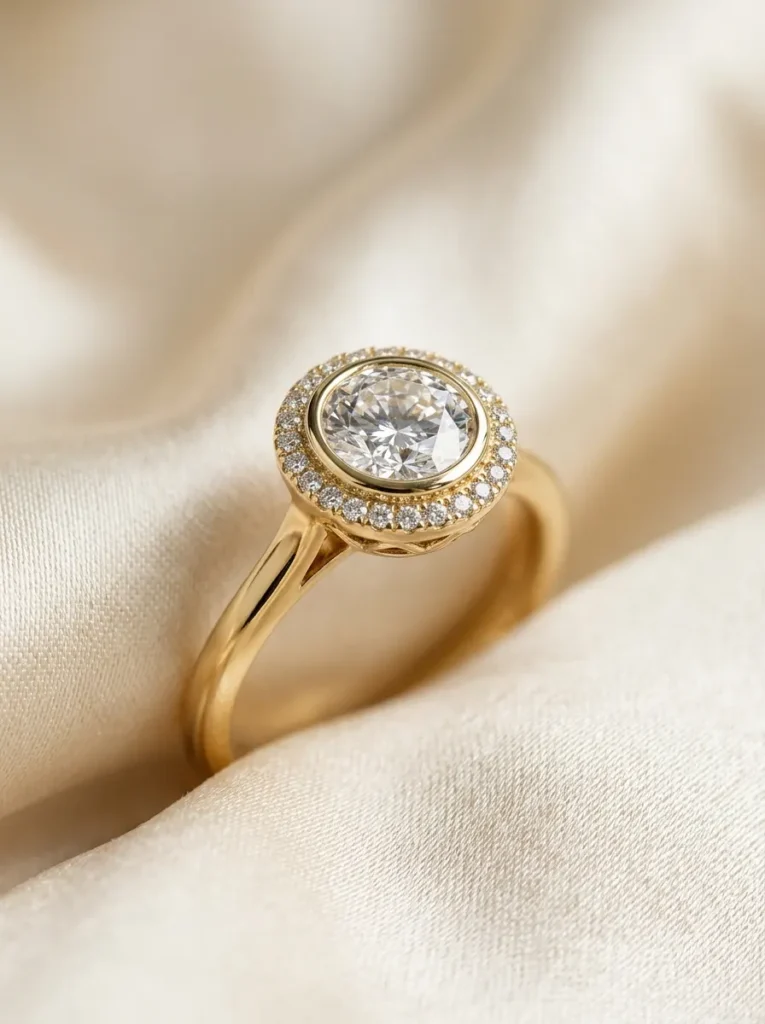
A bezel halo engagement ring combines a metal frame around the center diamond with a surrounding border of smaller accent stones. It offers more detail than a simple solitaire while keeping the center stone clearly defined.
The halo can follow the shape of a round, oval, cushion, or emerald-cut diamond. Small diamonds create extra sparkle, while a matching metal frame gives the design a coordinated finish.
This is a lovely option if you enjoy decorative jewelry but still want the smooth outline of a bezel setting.
Styling Tip: Choose a halo that follows the center stone closely. A balanced border helps maintain the diamond’s original shape.
9. Pavé Band Bezel Engagement Ring
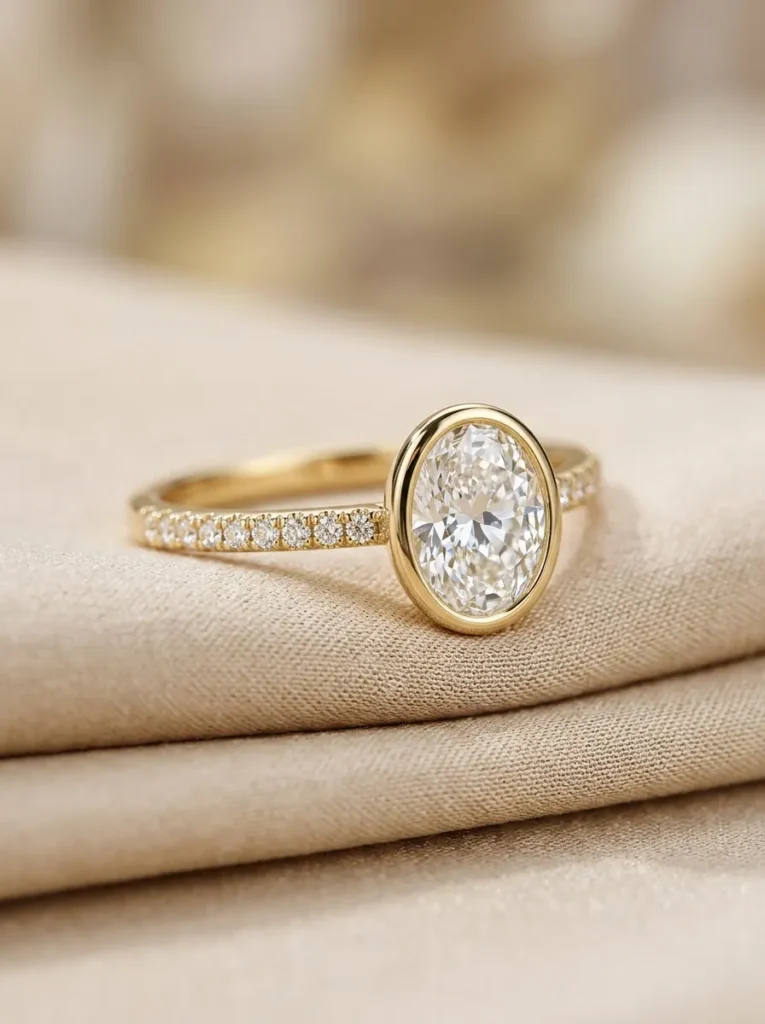
A pavé band bezel engagement ring pairs a smooth center setting with small diamonds arranged closely along the band. The combination creates a beautiful contrast between a clean center and sparkling details.
You can choose a full pavé band for more continuous sparkle or a half-pavé band for a simpler appearance. Yellow gold offers warmth, while white gold and platinum create a coordinated look with the accent diamonds.
Keep in mind that smaller accent stones require their own setting checks. The center bezel may protect the main diamond’s edges, but it does not eliminate maintenance for the rest of the ring.
Styling Tip: Consider a half-pavé band if you want decorative detail with fewer small stones along the underside of the ring.
10. Two-Tone Bezel Engagement Ring
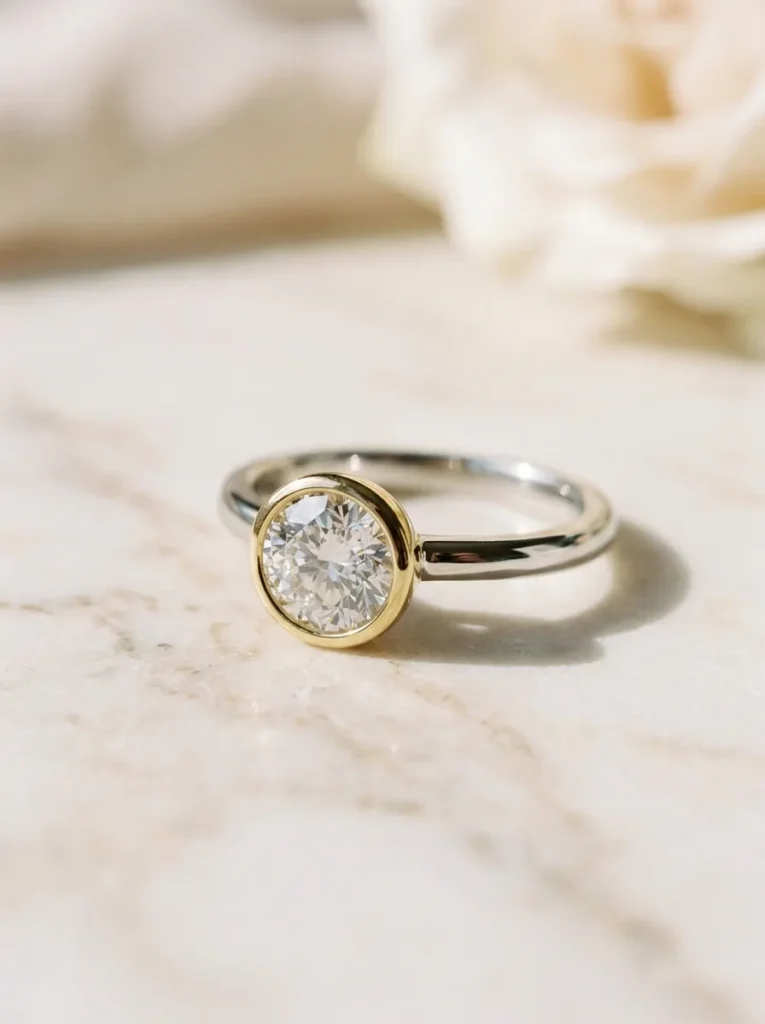
A two-tone bezel engagement ring combines two metal colors in one design. For example, you might choose a yellow gold bezel with a white gold or platinum band.
This contrast creates visual interest while allowing the center diamond to remain the main feature. You can also reverse the combination by choosing a white-metal bezel with a yellow gold band.
Two-tone designs are especially appealing if you regularly wear jewelry in different metal colors. They can make it easier to coordinate your engagement ring with your existing accessories.
Styling Tip: Keep the two metal colors balanced. A clearly defined bezel and a simple band can create a polished result without too many competing details.
Full Bezel vs. Partial Bezel: Which Design Should You Choose?
Before choosing a specific ring, it helps to understand the difference between full and partial bezel settings. Both use metal to hold the center stone, but the amount of coverage changes the appearance and protection.
| Feature | Full Bezel | Partial Bezel |
|---|---|---|
| Metal coverage | Surrounds the entire stone | Covers selected sections |
| Appearance | Clean and enclosed | Open and contemporary |
| Edge protection | Provides coverage around the full perimeter | Depends on the covered areas |
| Diamond visibility | More of the outer edge is covered | More of the edge remains visible |
| Overall style | Sleek and structured | Light and architectural |
Which should you choose? A full bezel may suit you if you prefer complete edge coverage and a smooth outline. A partial bezel may appeal to you if you want a more open design.
Ask your jeweler to explain how the specific setting holds the diamond. Not every partial bezel provides the same level of protection.
Why Choose a Bezel Engagement Ring?
Bezel settings offer several practical and visual benefits. However, it is important to understand both their advantages and limitations before making a purchase.
1. Extra Protection Around the Diamond
The metal rim covers the gemstone’s outer edge, helping protect it from everyday contact. This can be particularly useful for pointed shapes such as pear and marquise diamonds.
The Gemological Institute of America explains that bezel settings can help protect a gemstone’s girdle and reduce certain risks associated with wear. However, the setting does not make a diamond damage-proof.
2. A Smooth, Comfortable Profile
Many bezel rings sit closer to the finger than traditional raised prong settings. Their smooth metal edges are also less likely to catch on sweaters, gloves, and other fabrics.
Actual comfort depends on the ring’s height, band width, shape, and overall construction. Try the design on before making a decision.
3. A Modern and Minimalist Appearance
Bezel settings create a clean outline around the center stone. They work beautifully with simple bands, geometric diamond shapes, and contemporary jewelry designs.
You can also add halos, pavé details, or contrasting metals if you prefer something more decorative.
4. Fewer Exposed Prongs to Maintain
A full bezel does not use the individual prongs found in many traditional settings. This removes the need for routine prong retipping, although the bezel itself still needs professional inspection.
Check the ring periodically for damage, movement, or changes in the metal rim. A jeweler can assess whether the setting remains secure.
Are There Any Disadvantages to Bezel Engagement Rings?
Although bezel settings are practical, they are not the right choice for every preference.
- Less visible diamond edge: The metal frame covers part of the gemstone’s outer edge.
- Different light performance: A full bezel can restrict some side light compared with an open prong setting. The actual effect depends on the diamond and setting design.
- More visible metal: A wide bezel can create a heavier appearance than a delicate prong setting.
- Repair considerations: Resizing and repairs may require specialized work around the fitted metal frame.
- Wedding band compatibility: Some bezel designs need a curved or specially shaped wedding band to sit closely beside them.
If maximum diamond visibility and an open setting are your priorities, compare a bezel with a traditional solitaire before choosing.
Which Metal Looks Best With a Bezel Setting?
The metal you choose can change the entire appearance of your engagement ring. Consider your existing jewelry, preferred color, and the overall design you want.
Yellow Gold
Yellow gold gives a bezel engagement ring a warm, classic appearance. It creates a beautiful contrast with a white diamond and works well with both vintage-inspired and modern designs.
White Gold
White gold creates a bright, cool-toned finish. It is a popular option if you prefer a coordinated look with white-metal jewelry.
Many white gold rings have a rhodium coating that may need refreshing over time. Ask your jeweler about its care requirements.
Platinum
Platinum offers a naturally white precious-metal option. It works beautifully with minimalist bezel designs and provides a clean background for a diamond.
Its weight and maintenance characteristics differ from gold, so compare both metals before purchasing.
Rose Gold
Rose gold adds a soft pink tone to the setting. It gives a bezel ring a distinctive appearance and works particularly well with simple bands and rounded diamond shapes.
How to Choose the Right Bezel Engagement Ring
A beautiful design is important, but your engagement ring should also fit your daily routine and personal preferences. Consider these points before choosing your favorite.
1. Select Your Preferred Diamond Shape
Start by comparing round, oval, emerald, cushion, pear, and marquise diamonds. Each shape creates a different appearance inside a bezel setting.
Look at the actual diamond from different angles. Its proportions, symmetry, and cut quality can affect how the finished ring looks.
2. Compare Bezel Thickness
The width of the metal rim has a noticeable effect on the overall design. A narrow bezel creates a delicate outline, while a wider one makes the setting more prominent.
Ask to compare different thicknesses with the same diamond shape. This makes it easier to see how much metal you prefer around the stone.
3. Consider Your Everyday Activities
Think about your work, hobbies, and regular activities. If you often wear gloves or use your hands throughout the day, a smooth, lower-profile design may feel more convenient.
However, no engagement ring should be treated as indestructible. Follow your jeweler’s advice about removing it for activities that could damage the ring.
4. Check Your Ring Size
A comfortable fit is essential. Your ring should slide over your knuckle with some resistance and sit securely without feeling painful or excessively tight.
Before shopping, use our Ring Size Calculator to get an initial US ring-size estimate. For an important purchase, confirm the fit with a professional jeweler.
5. Think About Your Wedding Band
Some bezel engagement rings sit close to a straight wedding band, while others have a setting that creates a small gap.
Try the engagement ring with different wedding band shapes before buying. A curved band may fit more closely around certain center settings.
6. Compare the Overall Cost
The final price depends on the center diamond, metal, craftsmanship, setting complexity, and additional stones. A custom bezel can involve more detailed metalwork than a simple setting.
Compare the complete ring rather than judging its price by carat weight alone. Ask what is included in the purchase and whether resizing, inspections, and repairs are covered.
If you are still exploring different designs, our guide to choosing an engagement ring that matches your personal style can help you narrow down your preferences.
How to Care for a Bezel Engagement Ring
A bezel setting can reduce some maintenance concerns, but regular care is still important. Dirt and residue can collect around the metal frame and underneath the center stone.
- Clean it gently: Follow your jeweler’s care instructions and use a suitable cleaning method for your diamond and metal.
- Use a soft brush: A soft brush can help remove surface residue when the jeweler confirms that this cleaning method is appropriate.
- Avoid harsh chemicals: Household cleaners and abrasive products may damage certain metals or gemstones.
- Inspect the bezel: Ask a jeweler to check the rim for wear, damage, or movement.
- Store it carefully: Keep the ring in a separate jewelry compartment to reduce contact with other pieces.
Do not assume that every gemstone can handle the same cleaning process. The GIA’s gemstone durability guide explains why stone characteristics matter when selecting settings and planning jewelry care.
Frequently Asked Questions About Bezel Engagement Rings
Are bezel engagement rings good for everyday wear?
They can be a practical option for everyday wear because the smooth metal rim protects the stone’s edges and reduces snagging. However, the ring’s comfort and durability depend on its construction, gemstone, and how you wear it.
Do bezel engagement rings sparkle less?
A full bezel can limit some side light compared with an open prong setting. However, a well-cut diamond can still look bright and beautiful in a bezel. Diamond cut quality and the specific setting design both matter.
Can any diamond shape have a bezel setting?
Many diamond shapes can be bezel-set, including round, oval, emerald, cushion, pear, and marquise. The metal frame must be designed to fit the stone’s individual outline and protect vulnerable areas.
Are full bezel settings better than half bezels?
Neither is automatically better. A full bezel surrounds the entire stone, while a partial bezel leaves some sections exposed. Your choice depends on the appearance, protection, and diamond visibility you prefer.
Can you resize a bezel engagement ring?
Some bezel engagement rings can be resized, but the process depends on the band’s construction and the position of the setting. A jeweler should inspect the complete ring before confirming whether an adjustment is possible.
Do bezel engagement rings look modern?
Yes. Their clean metal outlines, smooth profiles, and minimalist details create a contemporary appearance. They can also look classic when paired with traditional diamond shapes and warm gold.
Can a wedding band sit flush against a bezel engagement ring?
Some designs allow a straight wedding band to sit directly beside the engagement ring. Others need a curved or specially fitted band. Try the two rings together before purchasing them.
Final Thoughts on Bezel Engagement Rings
Bezel engagement rings combine a sleek appearance with practical design details. Their smooth metal frames offer edge protection, reduce snagging, and create a distinctive alternative to traditional prong settings.
Whether you prefer a classic round diamond, an elegant oval, a geometric emerald cut, or a distinctive marquise shape, there is plenty of room to personalize this setting.
Before choosing, compare the bezel thickness, metal, diamond proportions, ring size, and wedding band compatibility. The best design is one that reflects your taste and feels comfortable as part of your everyday jewelry collection.
Join the Conversation