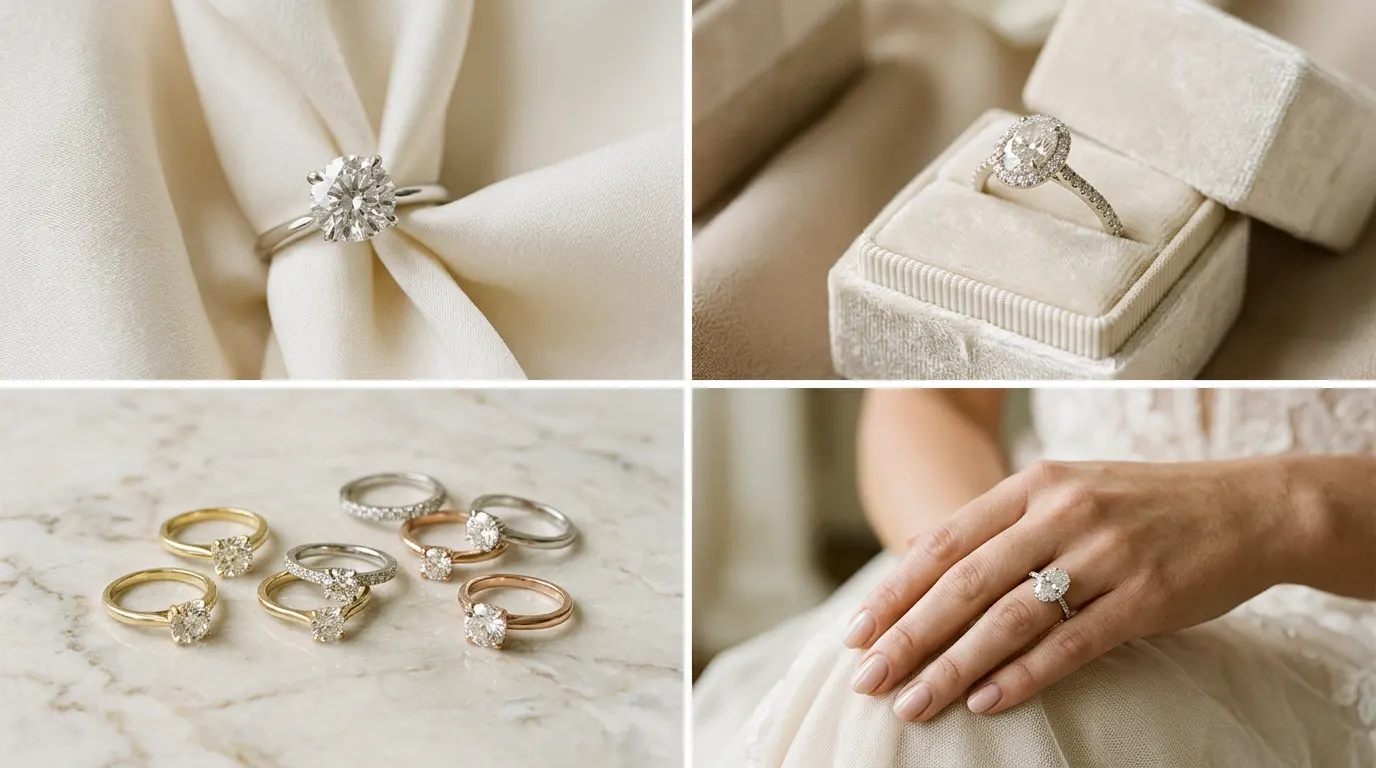
zhoosing an engagement ring is a big decision. You want a design that feels beautiful, personal, and comfortable enough to wear every day. But with so many diamond shapes, settings, metals, and styles available, knowing where to start can feel overwhelming.
The best way to choose an engagement ring is to consider your personal style and everyday lifestyle together. A classic solitaire may suit someone who loves simple jewelry, while a vintage-inspired ring may appeal to someone who enjoys unique details. Your daily routine, preferences, and budget also matter.
This guide explains how to choose an engagement ring that reflects your taste, fits your lifestyle, and feels like a meaningful choice for years to come.
1. Start With Your Personal Jewelry Style
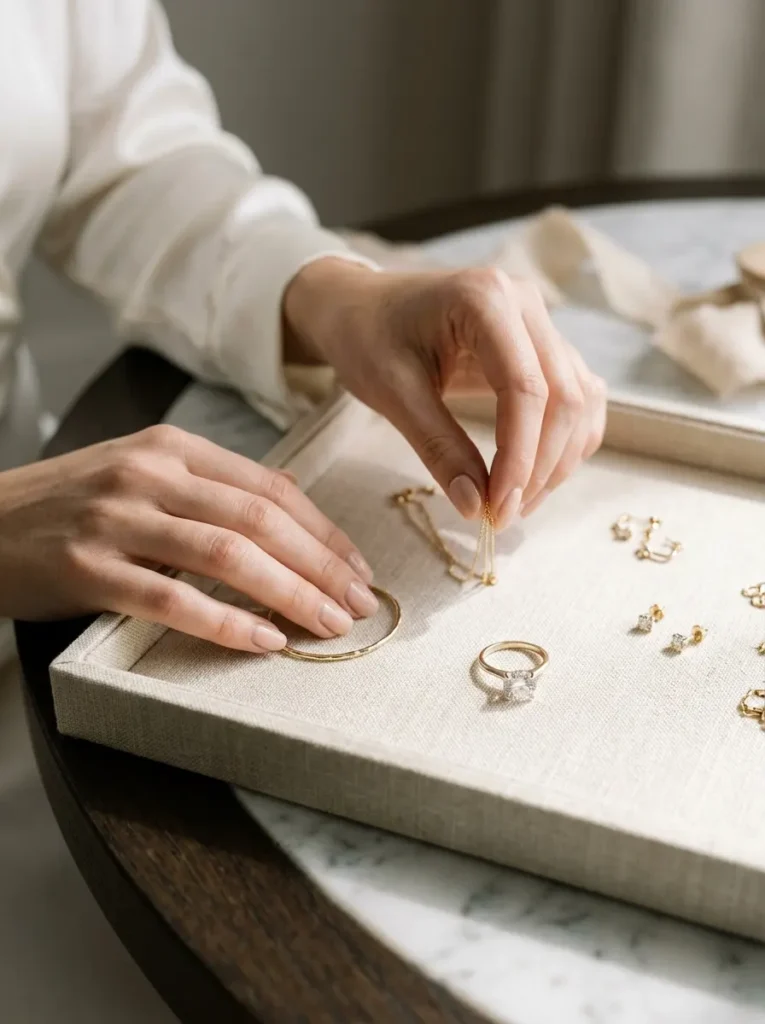
Before comparing diamonds or visiting a jewelry store, think about the jewelry you already enjoy wearing. Your everyday accessories can offer useful clues about the engagement ring design you will love.
Classic and Timeless
If you prefer simple necklaces, delicate bracelets, and traditional accessories, a classic engagement ring may be a natural choice. A round brilliant diamond in a solitaire setting offers a clean design that works with many outfits.
Six-prong or four-prong settings can create slightly different looks. A plain gold or platinum band keeps the overall design understated.
Modern and Minimalist
Do you prefer clean lines, simple shapes, and understated accessories? Consider a minimalist engagement ring with a smooth band and an uncluttered setting.
An emerald-cut diamond, a sleek bezel setting, or a slim solitaire can create a contemporary appearance. These designs keep the focus on shape and craftsmanship rather than extra decoration.
Romantic and Vintage-Inspired
If you love antique details, delicate patterns, and romantic accessories, explore vintage-inspired engagement rings. Milgrain edges, engraved bands, floral details, and intricate settings can add character.
An oval or cushion-shaped center stone can work beautifully with this style. You can also explore a halo design or small accent diamonds for extra detail.
Bold and Statement-Making
If your jewelry choices usually feature noticeable shapes or distinctive details, a statement engagement ring may suit your taste. Consider a three-stone design, a larger center stone, or a distinctive gemstone combination.
Keep the overall design balanced. A bold center stone can make a strong impression without requiring decoration on every part of the band.
2. Choose a Diamond Shape You Love
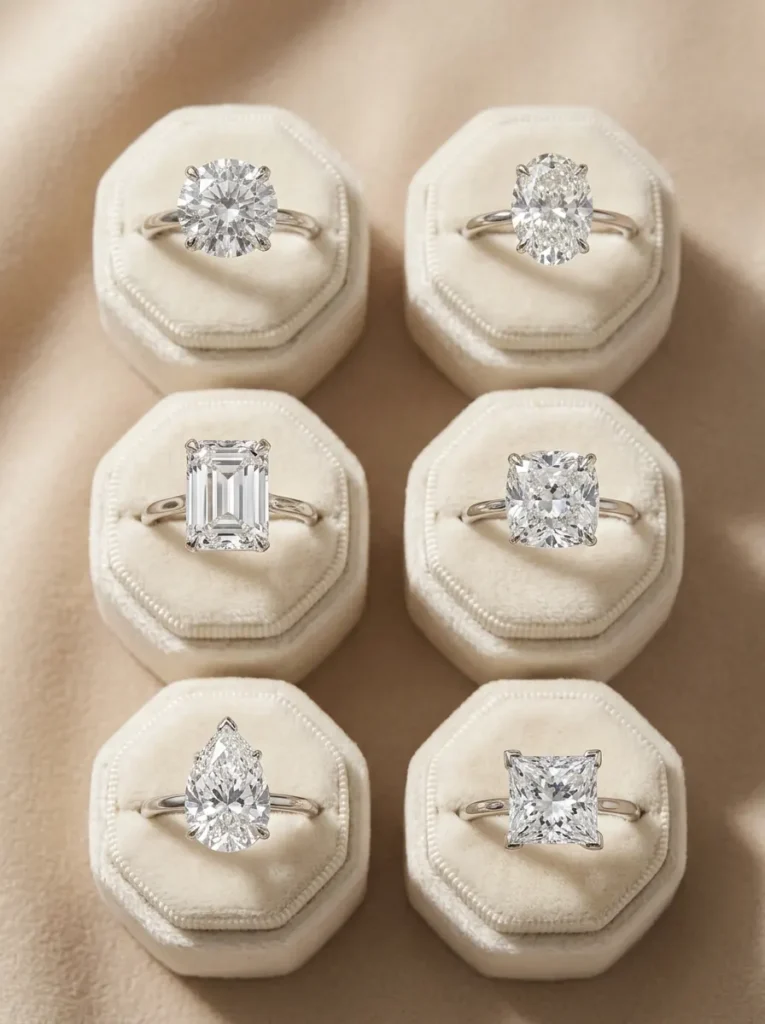
The diamond shape is one of the first things people notice about an engagement ring. It influences the ring’s overall appearance and helps define its personality.
Look at several shapes before making a decision. A diamond that looks beautiful in a photograph may feel different when you see it in person.
Round Brilliant
Round brilliant diamonds are a traditional engagement ring choice. Their carefully arranged facets create bright sparkle, making them suitable for classic, modern, and many other ring styles.
Choose this shape if you love a familiar design with plenty of brilliance.
Oval
Oval diamonds combine a rounded outline with an elongated shape. They offer a graceful appearance and work well in solitaire, halo, and three-stone settings.
Compare different oval diamonds in person because their proportions and light performance can vary.
Emerald Cut
Emerald-cut diamonds feature a rectangular outline and step-cut facets. Instead of intense scattered sparkle, they create a clean, mirror-like appearance.
This shape suits people who appreciate geometric designs and understated sophistication. Its larger open facets can also make clarity characteristics easier to notice.
Cushion Cut
Cushion-cut diamonds have soft, rounded corners and a square or rectangular outline. Their shape combines traditional inspiration with a softer appearance.
Consider this option if you enjoy romantic designs, vintage details, or a distinctive alternative to a round diamond.
Pear and Marquise
Pear-shaped diamonds have a rounded end and a pointed tip. Marquise diamonds feature two pointed ends and an elongated outline.
Both shapes create a distinctive look. Their pointed areas need suitable protection from the setting, so ask a jeweler about secure prong arrangements or protective designs.
Princess Cut
Princess-cut diamonds have a square outline and brilliant-style facets. Their clean shape gives an engagement ring a modern appearance while maintaining plenty of sparkle.
Pay attention to the corners when comparing settings. They should be properly protected to help reduce the risk of damage.
3. Find an Engagement Ring Setting That Fits Your Lifestyle
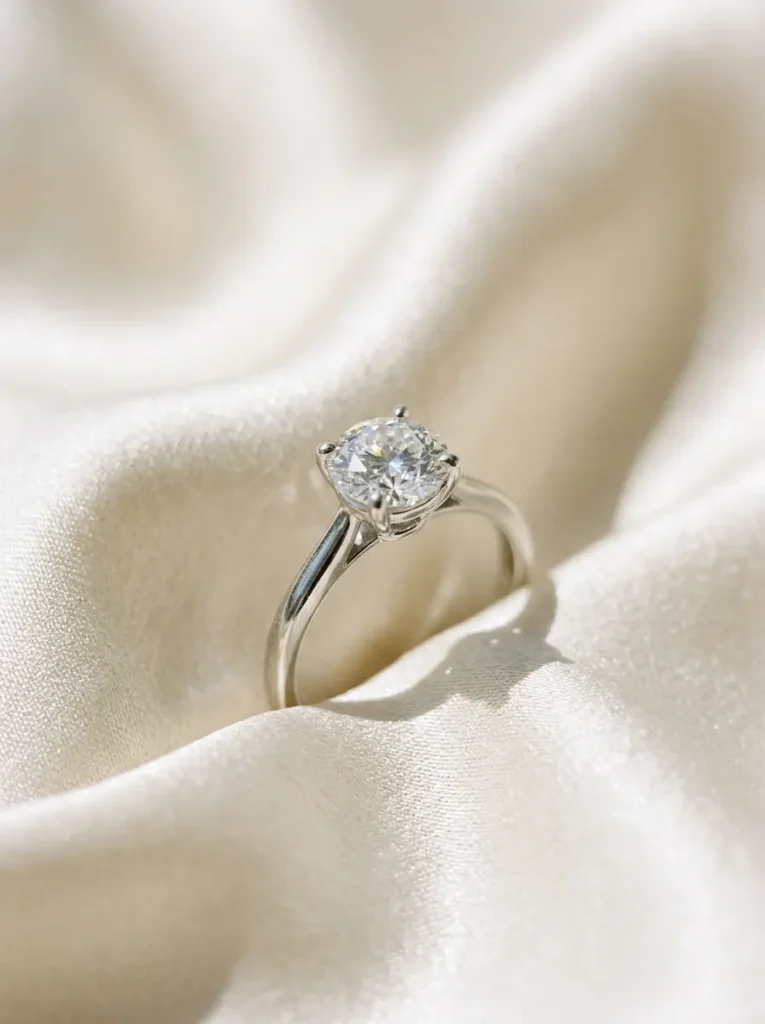
The setting holds the center stone in place and plays a major role in how the ring looks and feels. It also affects how easily the ring catches on clothing and how much protection the gemstone receives.
Think about what your hands do throughout a normal day. Your work, hobbies, exercise routine, and household activities can all influence your choice.
Solitaire Setting
A solitaire features one center gemstone without additional stones competing for attention. It is a popular choice for people who appreciate simple and timeless designs.
Choose a solitaire if you want the center diamond to remain the main focus. You can customize the look through the band width, metal color, prong design, and diamond shape.
Halo Setting
A halo setting surrounds the center stone with smaller gemstones. This creates additional sparkle and a decorative appearance.
It works well for someone who enjoys glamorous jewelry. However, the smaller stones may need occasional inspection and maintenance.
Three-Stone Setting
A three-stone ring features a center gemstone with two smaller stones on either side. The arrangement creates a balanced design with more visual detail than a traditional solitaire.
You can choose matching diamonds or combine different gemstones for a personal touch.
Bezel Setting
A bezel setting uses a metal rim around the gemstone instead of separate prongs. This creates a smooth outline and helps protect the stone’s edges.
It can be a practical option for people who work with their hands or prefer a lower-profile design. The metal surrounds more of the gemstone, so its appearance differs from an open prong setting.
Prong Setting
Prong settings hold the gemstone using small metal supports. They allow more of the center stone to remain visible and are commonly used in traditional engagement rings.
Four-prong and six-prong designs are common options. Ask a jeweler to check the security of the prongs and explain the maintenance your chosen setting may require.
4. Select a Metal That Matches Your Preferences
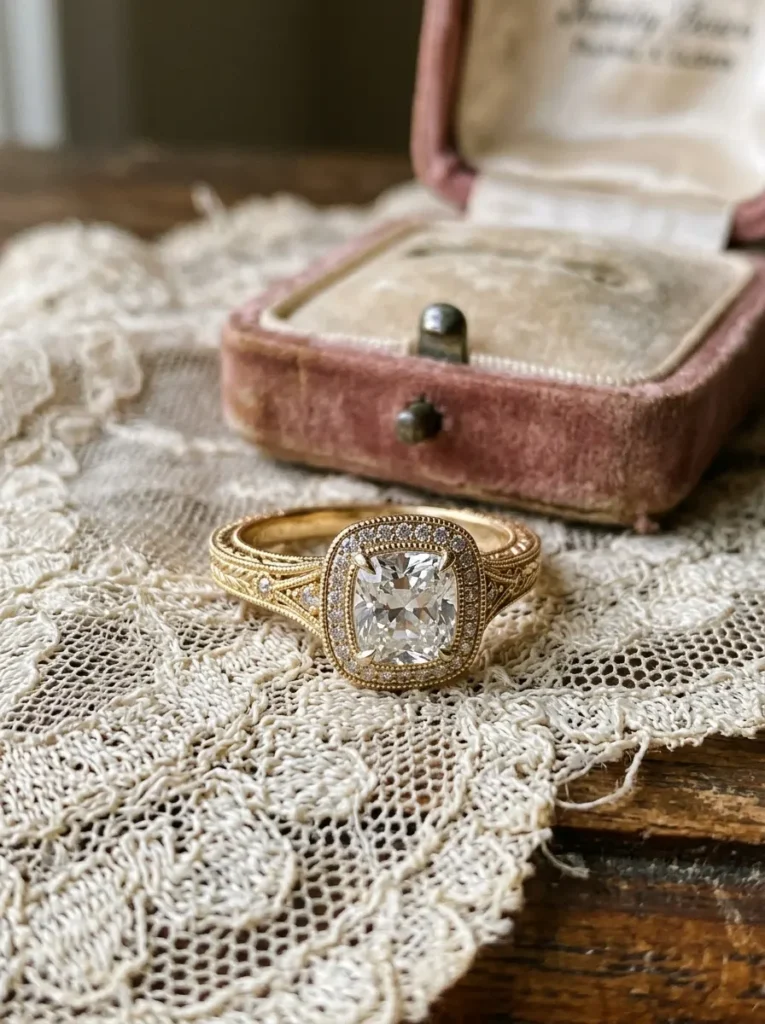
The metal affects the ring’s color, appearance, and maintenance needs. It also influences how the center gemstone looks.
Yellow Gold
Yellow gold has a warm, traditional appearance. It pairs beautifully with classic solitaire rings, vintage-inspired designs, and colorful gemstones.
It is a good option if you regularly wear gold necklaces, earrings, or bracelets.
White Gold
White gold offers a cool-toned appearance that works well with modern and traditional engagement rings. It creates a coordinated look with many white-metal jewelry pieces.
White gold usually has a rhodium coating that may need refreshing over time. Ask about the maintenance requirements before purchasing.
Rose Gold
Rose gold has a soft pinkish tone created by its metal alloy. It offers a distinctive alternative to traditional yellow and white metals.
Consider it if you enjoy warm colors, romantic details, and jewelry with a slightly different appearance.
Platinum
Platinum is a naturally white precious metal used in fine jewelry. It is valued for its durability and is often selected for engagement rings designed for regular wear.
It generally costs more than many gold options. Compare the overall ring price and ask about its care requirements.
5. Choose a Ring That Works With Your Daily Routine
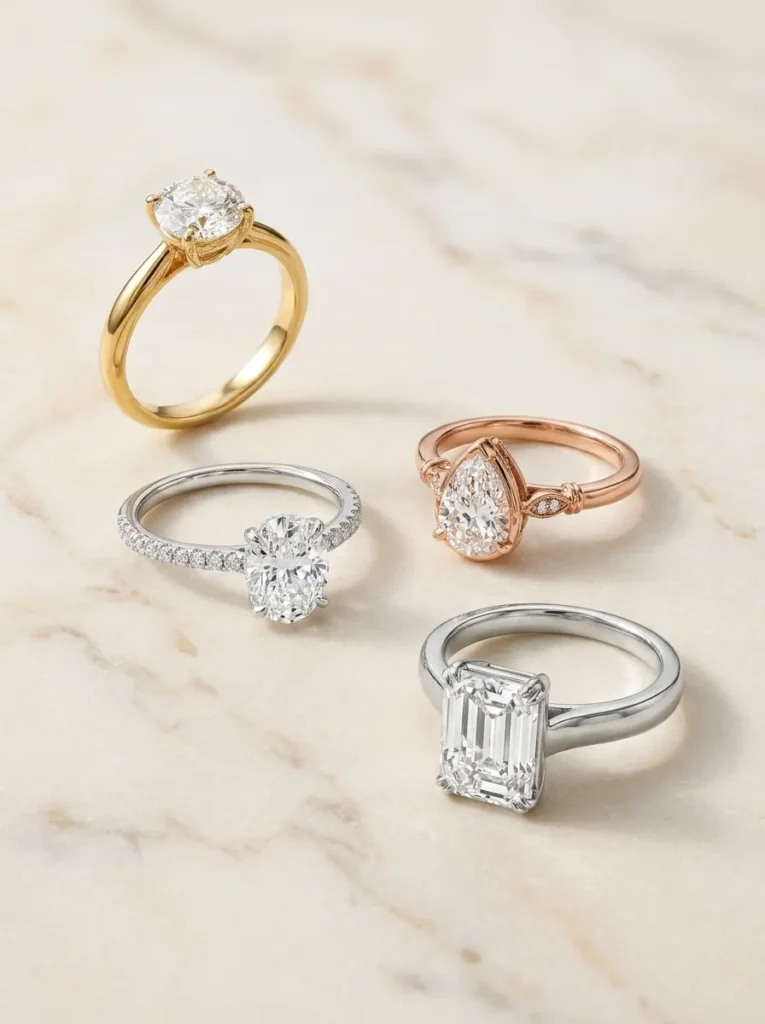
An engagement ring may look beautiful in a display case, but it also needs to suit your everyday activities. Think beyond appearance before choosing a final design.
- Office work: A simple band or lower-profile setting may feel comfortable during typing and other desk activities.
- Healthcare work: Check workplace rules about jewelry. Some roles require rings to be removed for hygiene or safety reasons.
- Outdoor activities: Consider a smooth, protective setting that is less likely to catch on equipment or clothing.
- Fitness routines: You may prefer to remove your ring during weight training or activities where jewelry could become uncomfortable or damaged.
- Frequent handwork: A low-profile design may be easier to manage than a tall setting with exposed details.
Remember that no engagement ring is completely maintenance-free. Regular inspections and appropriate care help keep its gemstones and setting in good condition.
6. Understand the 4Cs Before Choosing a Diamond

If you are purchasing a diamond engagement ring, learning about the 4Cs will help you compare diamond quality. The 4Cs are cut, color, clarity, and carat weight.
Cut
Cut describes how well a diamond’s facets interact with light. It affects the stone’s brightness, fire, and sparkle.
For round brilliant diamonds, cut quality is particularly important when comparing appearance. Do not choose a diamond based on carat weight alone.
Color
Diamond color grading measures how close a diamond is to colorless. The traditional GIA scale runs from D, which is colorless, to Z, which has a noticeable light yellow or brown tint.
Your preferred metal can influence how the diamond’s color appears. Compare stones in the setting and metal color you are considering.
Clarity
Clarity refers to internal characteristics called inclusions and external characteristics called blemishes. These features vary in size, number, location, and visibility.
Look at the diamond with suitable magnification and ask whether any visible characteristics affect its appearance.
Carat Weight
Carat measures a diamond’s weight, not its exact visible size. Two diamonds with the same carat weight can have different face-up appearances because of their shapes and proportions.
Choose a weight that fits your priorities and budget rather than treating a particular number as a requirement.
For more detailed guidance, consult the Gemological Institute of America engagement ring buying guide.
7. Set a Comfortable Engagement Ring Budget
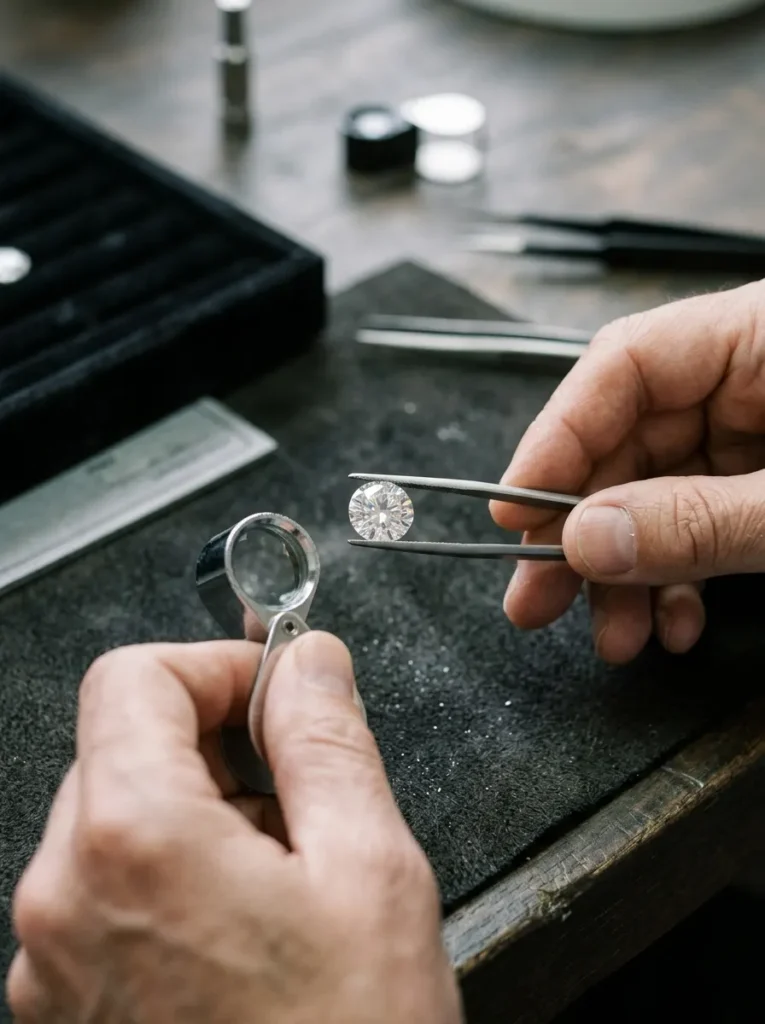
Your budget should reflect what you are comfortable spending. There is no universal amount that everyone needs to spend on an engagement ring.
Before shopping, decide on a realistic spending limit. Remember to consider the complete ring rather than only the center diamond.
- Center stone: Compare different shapes, sizes, and quality characteristics.
- Metal: Compare gold karats and platinum options.
- Setting: Detailed settings and additional gemstones can affect the price.
- Maintenance: Include possible cleaning, inspection, and repair costs.
- Insurance: Consider whether jewelry insurance is appropriate for your circumstances.
If you want to make your budget go further, compare several diamond shapes and prioritize the characteristics that matter most to you. A smaller diamond with appealing cut quality may be a better choice than a larger stone that does not meet your preferences.
8. Think About Your Wedding Band Before Buying
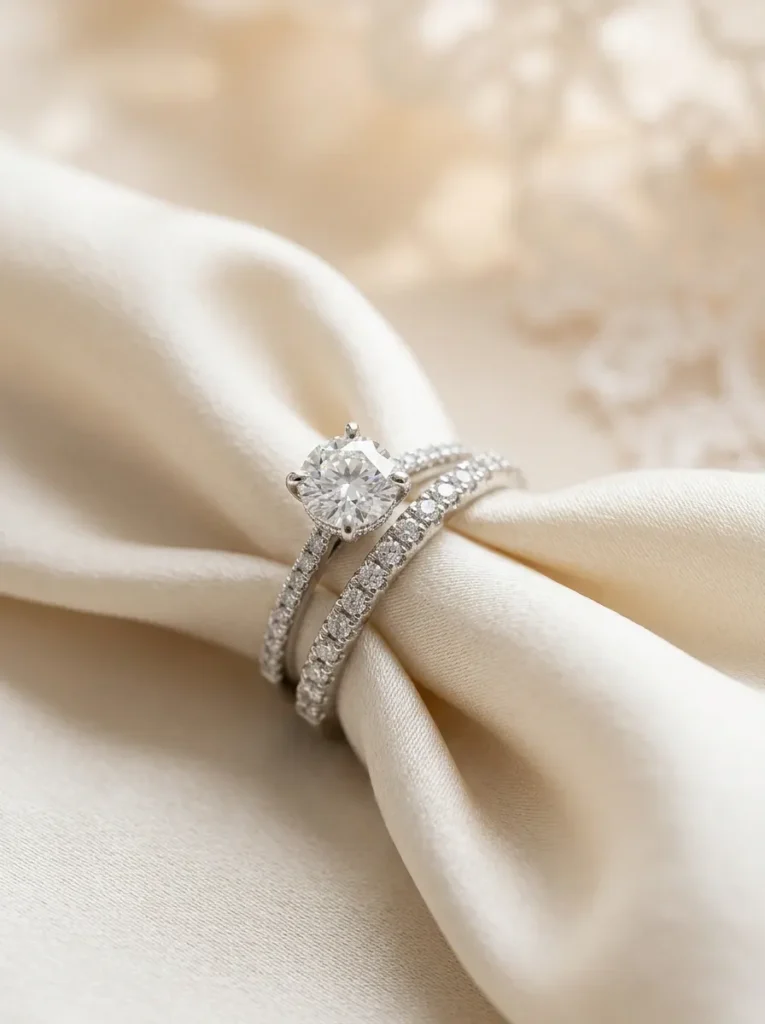
Your engagement ring may eventually be worn alongside a wedding band. Thinking about both pieces early can help you choose a combination that feels comfortable and looks coordinated.
Some engagement rings sit close to a straight wedding band, while others have raised settings or unusual shapes that leave a gap.
Consider these options:
- Classic pairing: Match a simple engagement ring with a plain metal wedding band.
- Sparkling pairing: Add a diamond wedding band for extra detail.
- Contoured band: Choose a curved design that follows the shape of your engagement ring.
- Mixed metals: Combine different metal colors if you enjoy a more individual look.
Try the rings together before making a final decision. Check that they sit comfortably and do not rub against each other in a way that could cause unnecessary wear.
9. Make Sure the Ring Fits Comfortably
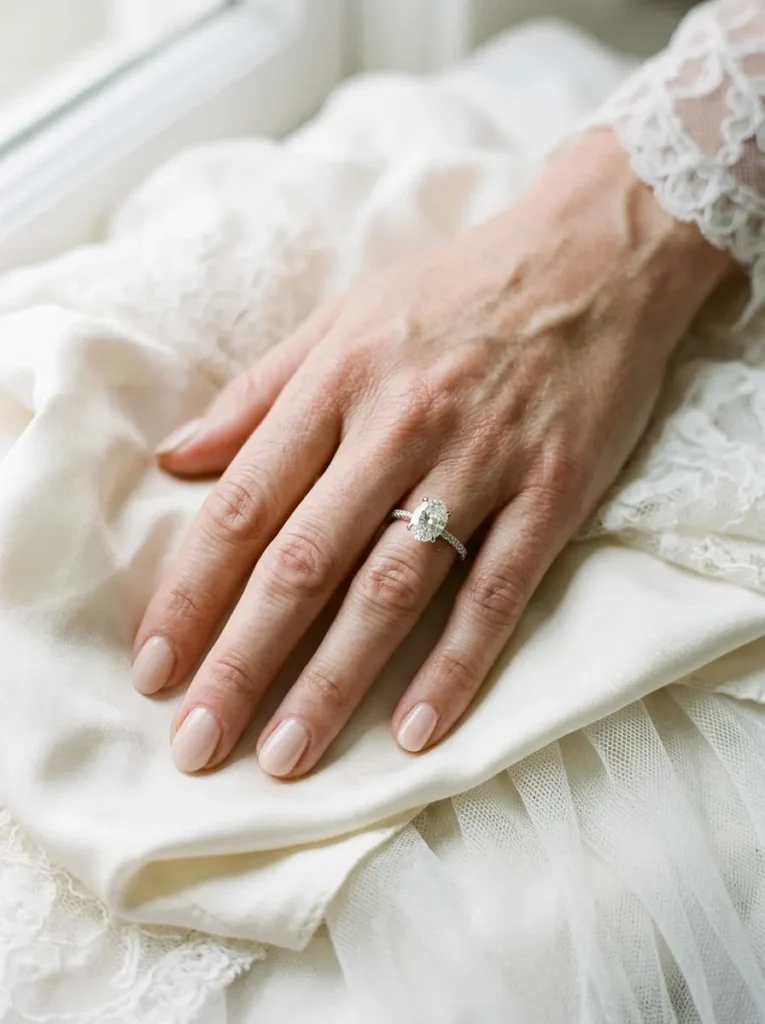
Ring size is an important part of choosing an engagement ring. A beautiful design will be difficult to enjoy if it constantly feels too tight or slips around your finger.
Finger size can change slightly throughout the day because of temperature and other normal factors. A professional jeweler can measure your finger and help you select a suitable size.
When checking the fit, pay attention to these details:
- The ring should slide over your knuckle with some resistance.
- It should feel comfortable once it reaches the base of your finger.
- It should not cause pain, pressure, or persistent discomfort.
- It should not move around excessively during normal hand movements.
Band width and ring design can affect how a ring feels. If you are unsure, ask a jeweler to compare different sizes and widths before ordering.
10. Choose a Reputable Jeweler and Check the Details
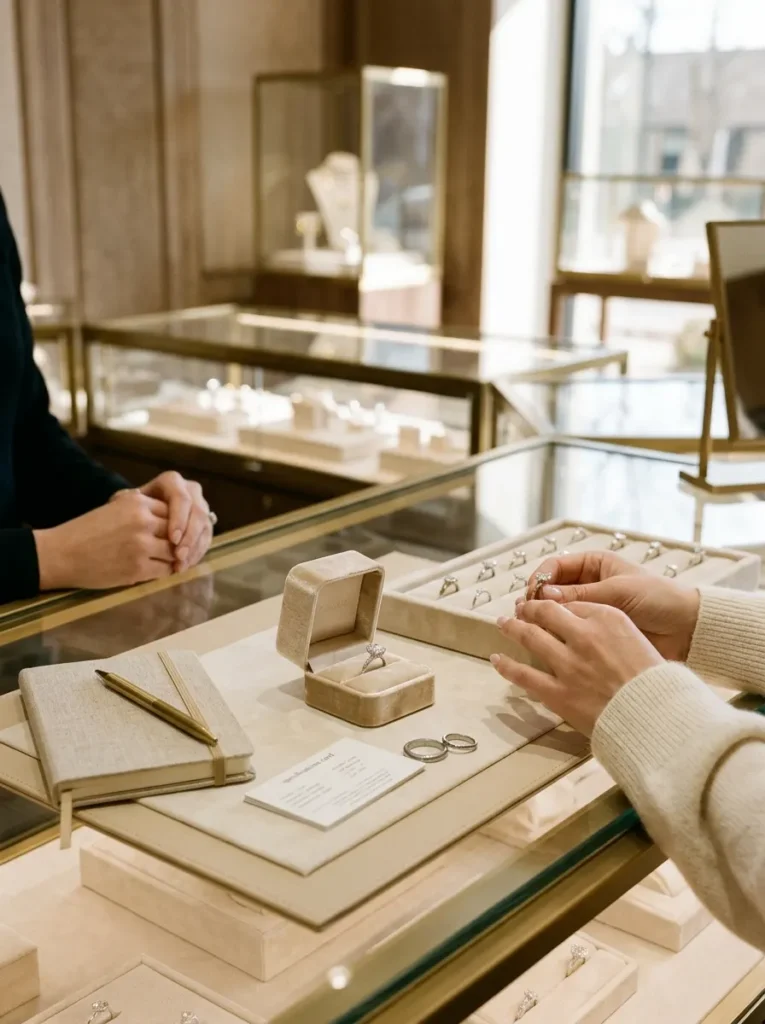
Where you purchase your engagement ring matters just as much as the design you select. A reputable jeweler should explain the ring’s materials, gemstone characteristics, pricing, and care requirements clearly.
Before completing a purchase, check the following:
- Ask for the diamond grading report when applicable.
- Confirm whether the diamond is natural or laboratory-grown.
- Check the metal type and gold purity, if relevant.
- Review the return, exchange, and resizing policies.
- Ask whether the setting and gemstones are covered by a warranty.
- Request written details of the ring’s specifications.
- Understand any maintenance or inspection recommendations.
For a natural diamond, a GIA grading report can provide information about its identity and quality characteristics. Read the report carefully and make sure its details match the diamond you are purchasing.
Common Mistakes to Avoid When Choosing an Engagement Ring
A little research can help you avoid decisions that create unnecessary stress later. Keep these common mistakes in mind while shopping.
Choosing a Ring Only Because It Is Popular
Trends can provide inspiration, but your engagement ring should reflect your own preferences. A design that looks beautiful on someone else may not match your everyday style.
Focusing Only on Carat Weight
A bigger diamond is not automatically a better choice. Cut quality, shape, clarity, and overall appearance all contribute to the final look.
Ignoring Your Daily Activities
A tall setting or delicate design may require more care during certain activities. Think about comfort and practicality before choosing a ring.
Forgetting About Resizing and Maintenance
Ask about resizing limitations, routine inspections, and repair policies. Some intricate settings and eternity-style bands can be more difficult to resize.
Shopping Without Comparing Options
Give yourself time to compare different stones, metals, and settings. Seeing several designs side by side can make your preferences much clearer.
Frequently Asked Questions
How do I choose an engagement ring that matches my style?
Start by looking at the jewelry you already wear. Consider whether you prefer classic, minimalist, vintage-inspired, or statement designs. Then compare diamond shapes, metals, and settings that match those preferences.
What is the most practical engagement ring setting for everyday wear?
Bezel settings are often considered practical because metal surrounds the gemstone and creates a smooth profile. However, the best choice depends on the stone, construction, activities, and personal preferences.
Which engagement ring diamond shape is the most timeless?
Round brilliant diamonds are a classic choice because of their familiar shape and bright sparkle. However, oval, cushion, emerald, and other shapes can also make beautiful long-term choices.
Should I choose yellow gold, white gold, or platinum?
Choose a metal based on your preferred color, budget, and maintenance needs. Yellow gold has a warm appearance, white gold offers a cool finish, and platinum provides a naturally white precious-metal option.
How much should I spend on an engagement ring?
There is no fixed spending rule. Choose an amount that fits your financial circumstances and compare designs within that limit. Focus on quality, comfort, and personal preference instead of following an arbitrary spending guideline.
Should my engagement ring match my wedding band?
Matching metals can create a coordinated appearance, but they are not essential. You can combine different metals, textures, and designs if the rings fit comfortably together.
Can I choose a non-diamond engagement ring?
Yes. Sapphires, emeralds, and other gemstones offer beautiful alternatives to diamonds. Research their durability and care requirements before choosing a gemstone for regular wear.
Final Thoughts
Learning how to choose an engagement ring becomes easier when you focus on the details that matter most. Start with your personal style, explore diamond shapes, compare settings, and consider how the ring will fit into your everyday routine.
Keep your budget realistic and ask a reputable jeweler to explain the materials, gemstone quality, and maintenance requirements. Most importantly, choose a design that feels meaningful to you rather than one selected simply because it is popular.
The right engagement ring is one you can appreciate for its beauty, comfort, and personal meaning for years to come.
Join the Conversation