
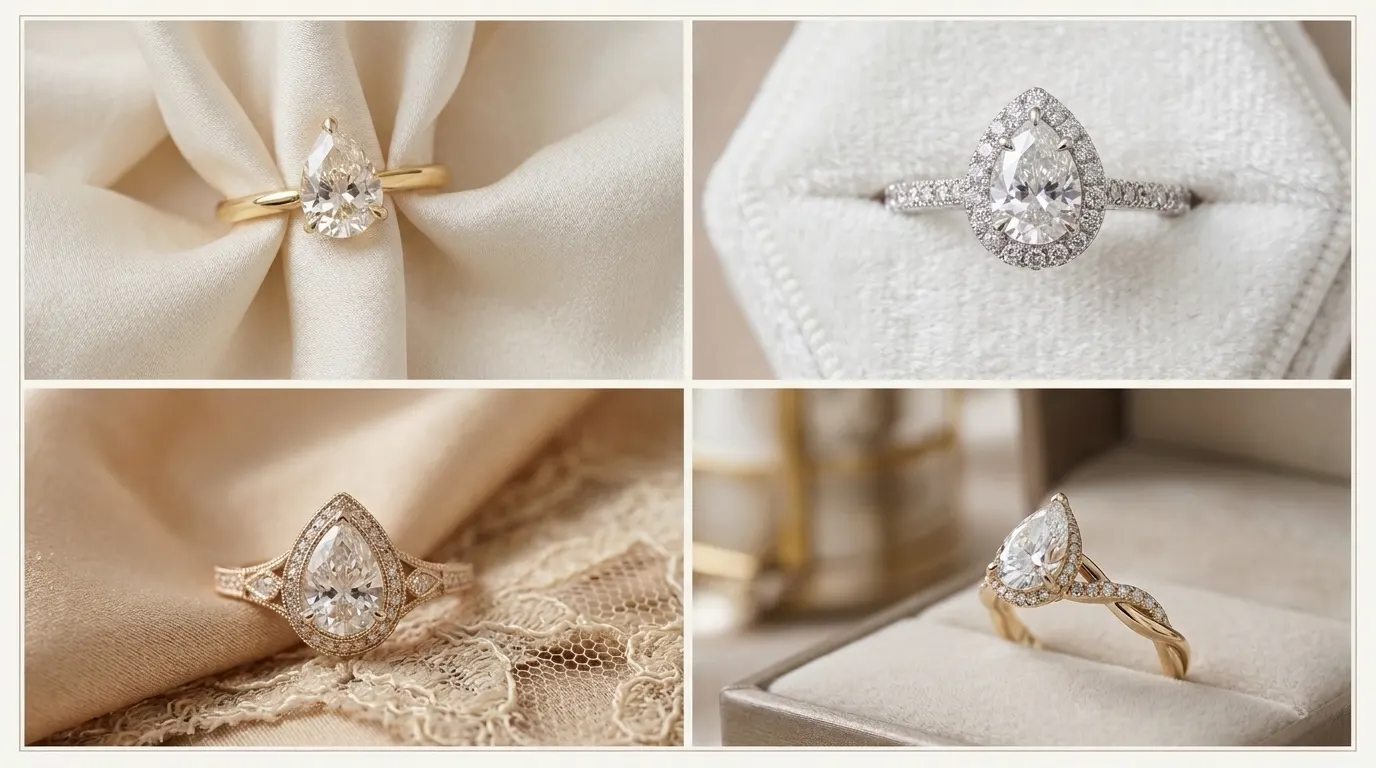
Pear shaped engagement rings bring together the soft curves of a round diamond and the graceful point of a marquise. Their teardrop silhouette creates an elegant look that feels romantic, distinctive, and timeless. If you want an engagement ring that stands out without looking overly dramatic, this diamond shape deserves a closer look.
From classic solitaire designs to sparkling halos and vintage-inspired settings, there are many beautiful ways to wear a pear-shaped diamond. Below, you’ll discover 10 elegant pear shaped engagement rings, along with helpful tips for choosing the right setting, metal, and diamond proportions.
10 Pear Shaped Engagement Rings That Look Elegant on the Hand
1. Classic Pear Shaped Solitaire Engagement Ring
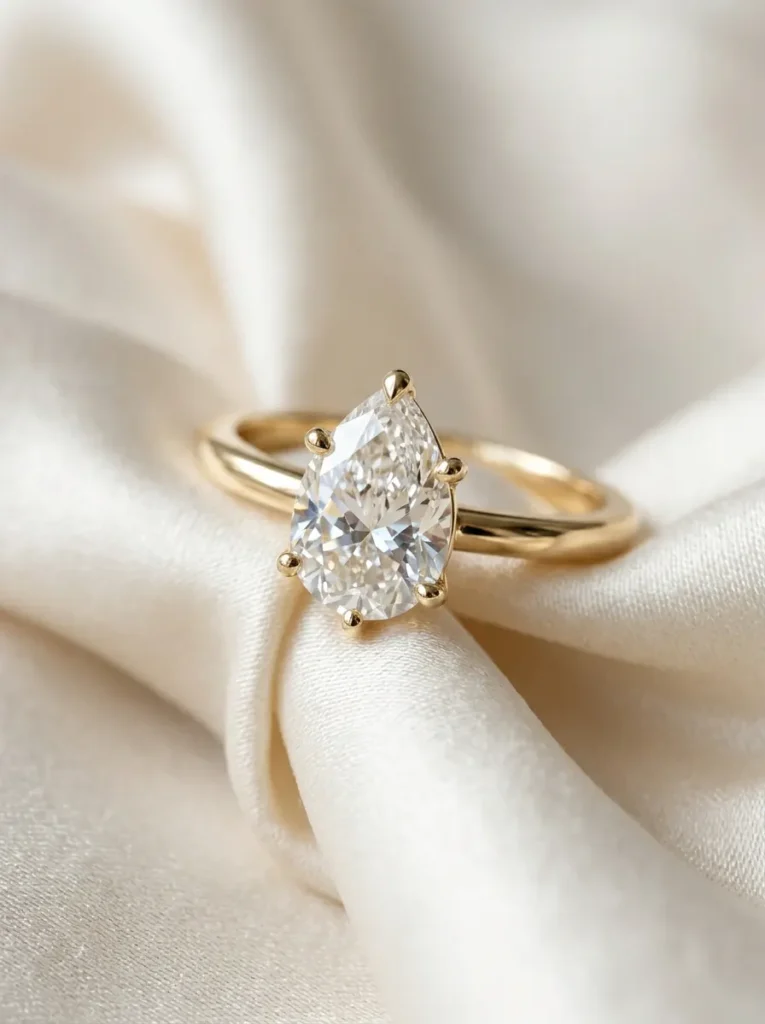
A classic solitaire is a beautiful choice if you love simple and timeless jewelry. It features one pear-shaped diamond on a clean, polished band. With no extra stones competing for attention, the graceful outline of the center diamond becomes the main attraction.
White gold and platinum create a crisp, bright finish, while yellow gold adds warmth. A slim band gives the design a delicate appearance, while a slightly wider band creates a more substantial look.
Styling Tip: Choose a protective V-shaped prong at the pointed end of the diamond. This helps protect the tip while keeping the overall design clean.
2. Pear Shaped Halo Engagement Ring
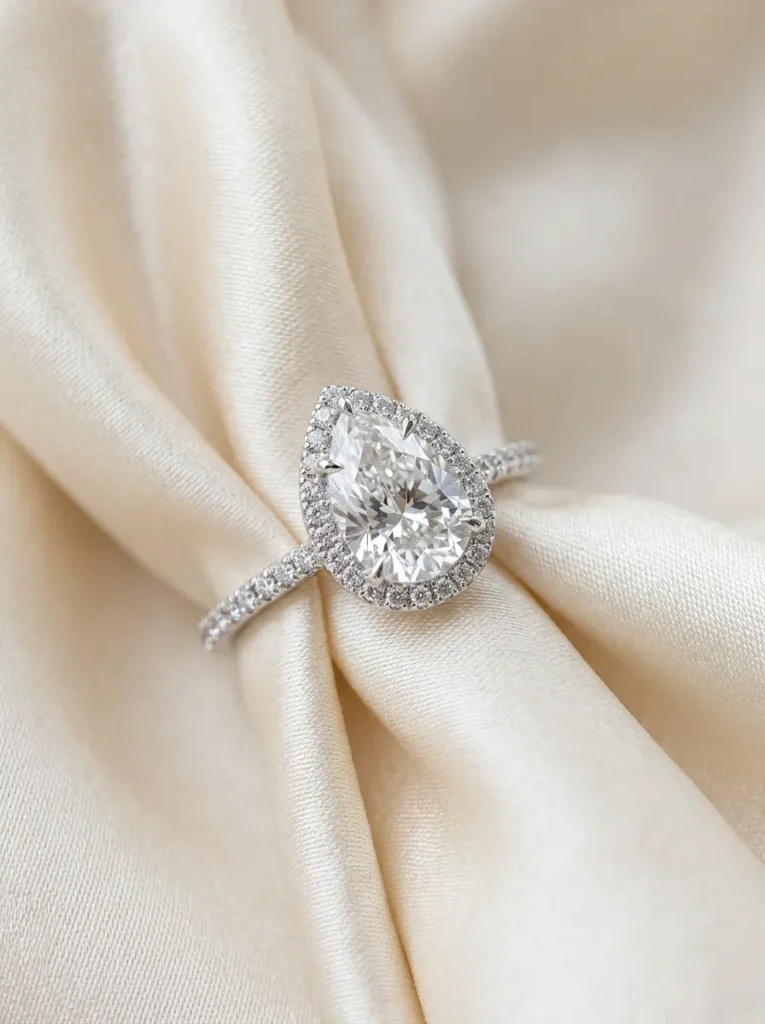
A pear-shaped halo ring surrounds the center diamond with a border of smaller diamonds. This creates a bright frame that follows the teardrop outline. It also adds extra sparkle without changing the distinctive shape of the center stone.
A delicate halo works well if you enjoy detailed jewelry. You can choose a traditional white diamond halo or a colored gemstone border for a more personal design.
Styling Tip: Look for a halo that follows the center stone closely. A balanced outline helps the pear shape remain the focus.
3. Pear Shaped Hidden Halo Engagement Ring
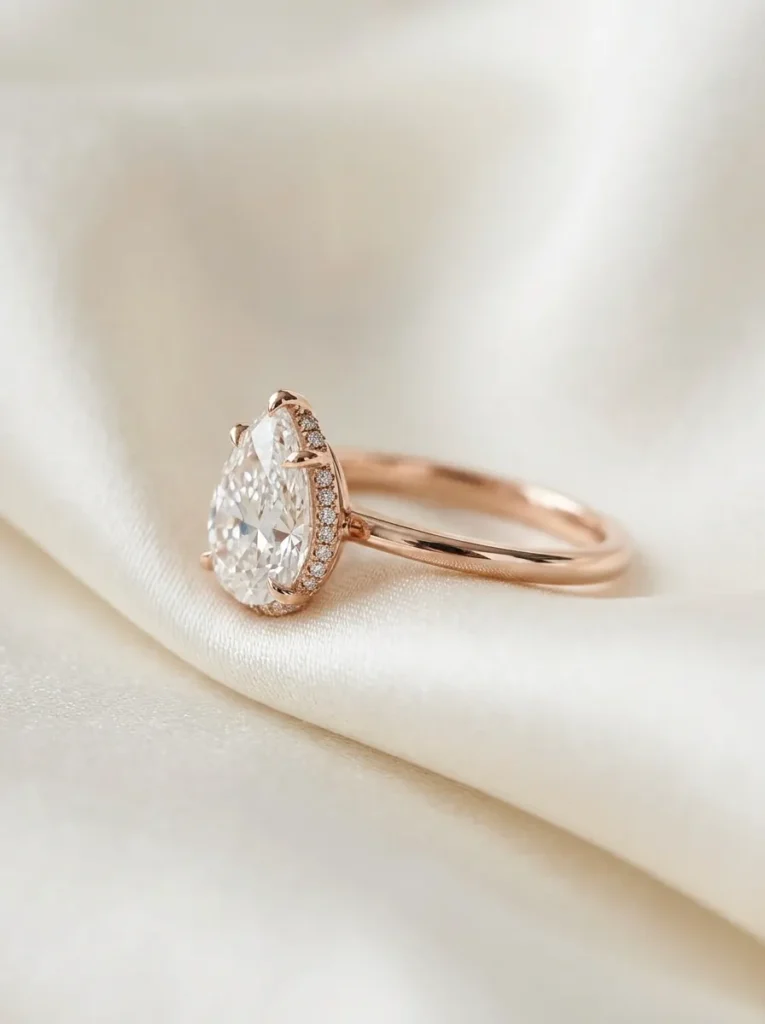
A hidden halo offers a subtle detail for someone who prefers understated elegance. Instead of placing small diamonds around the visible edge, the setting features a row of tiny stones beneath the center diamond.
From above, the ring looks like a simple pear solitaire. From the side, the hidden diamonds add a little extra sparkle. This design is especially appealing if you enjoy details that are not immediately obvious.
Styling Tip: Check the side profile before choosing this design. Make sure the hidden halo does not make the setting feel too tall for your everyday preferences.
4. Pear Shaped Three-Stone Engagement Ring
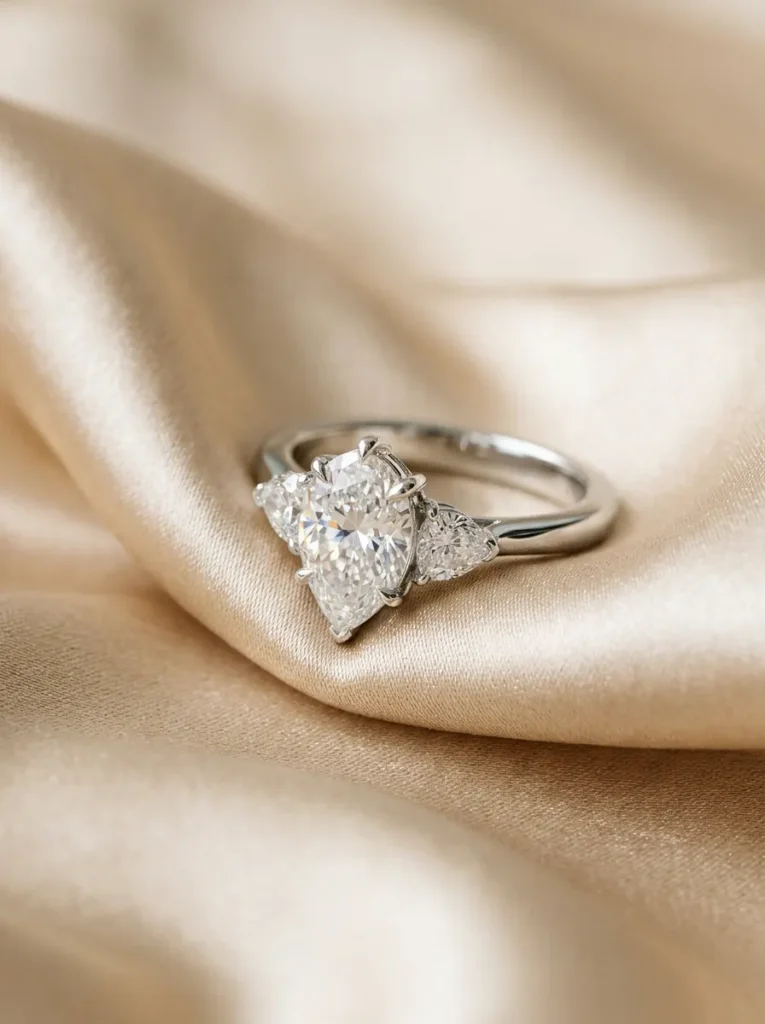
A three-stone ring pairs one pear-shaped center diamond with two smaller side stones. The additional diamonds can create a balanced design while giving the ring more visual detail.
Round side stones offer a soft contrast against the pointed center diamond. Tapered baguette diamonds create a more structured appearance. You can also explore pear-shaped side stones for a coordinated design.
Styling Tip: Pay attention to the size of the side stones. They should complement the center diamond rather than make the overall design look crowded.
5. Pear Shaped East-West Engagement Ring
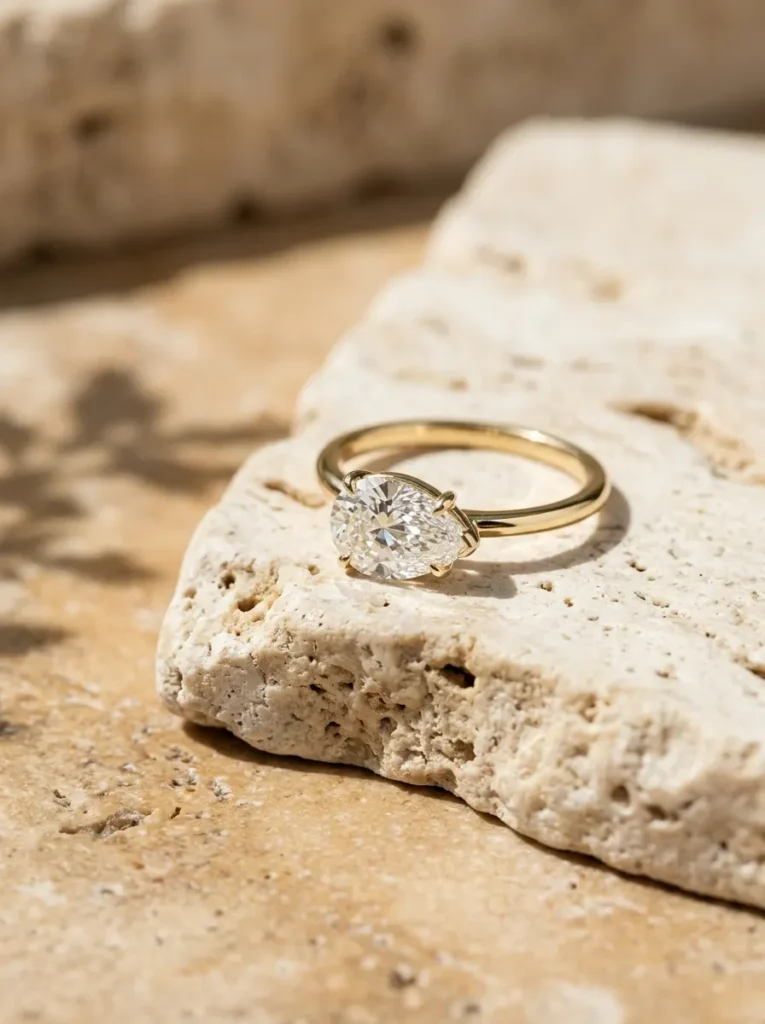
An east-west engagement ring places the pear-shaped diamond horizontally across the band instead of following the traditional vertical direction. This creates a contemporary look while keeping the familiar teardrop silhouette.
The sideways position makes the ring feel different from a classic solitaire. It can also be a lovely option if you enjoy modern jewelry with an unexpected design detail.
Styling Tip: Ask your jeweler to show you how the horizontal setting sits on your finger. The band’s proportions and the diamond’s width can affect comfort and balance.
6. Pear Shaped Bezel Engagement Ring
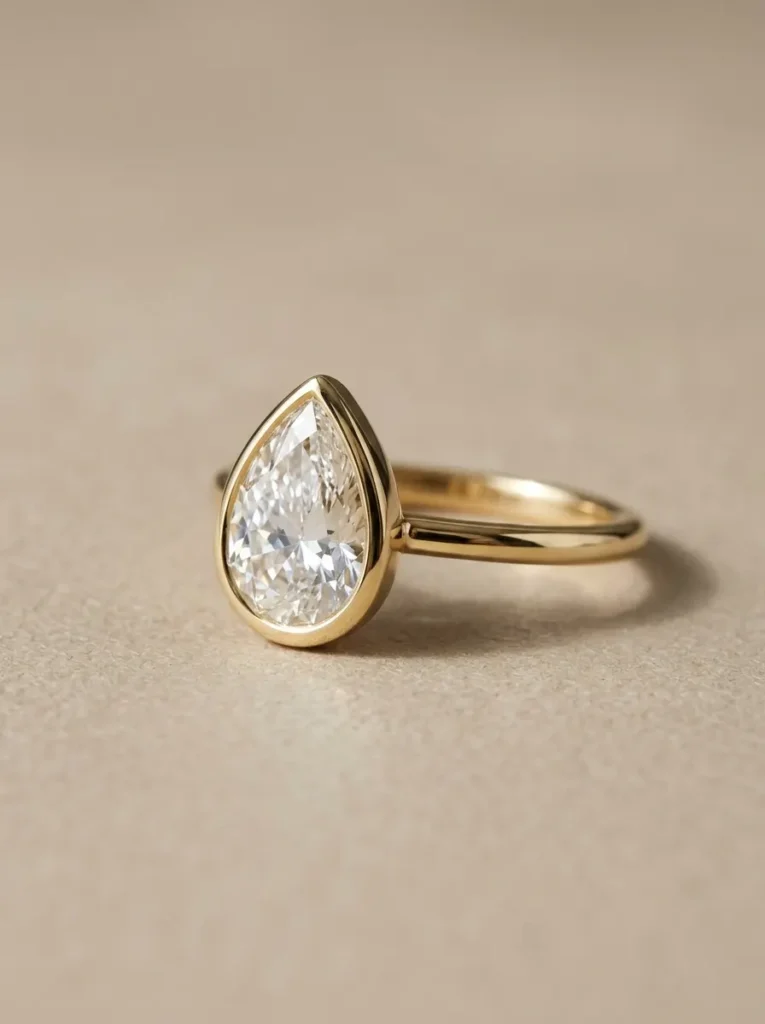
A bezel setting surrounds the diamond with a thin metal rim. It creates a smooth outline and gives the ring a clean, modern appearance. Unlike an open prong setting, the metal border offers protection around the stone’s edges.
This design works beautifully in yellow gold, white gold, and platinum. A thin bezel keeps the diamond visually prominent, while a wider border creates a more noticeable frame.
Styling Tip: Make sure the bezel follows the pear’s curves closely and protects its pointed end. A well-fitted setting should hold the diamond securely.
7. Vintage-Inspired Pear Shaped Engagement Ring
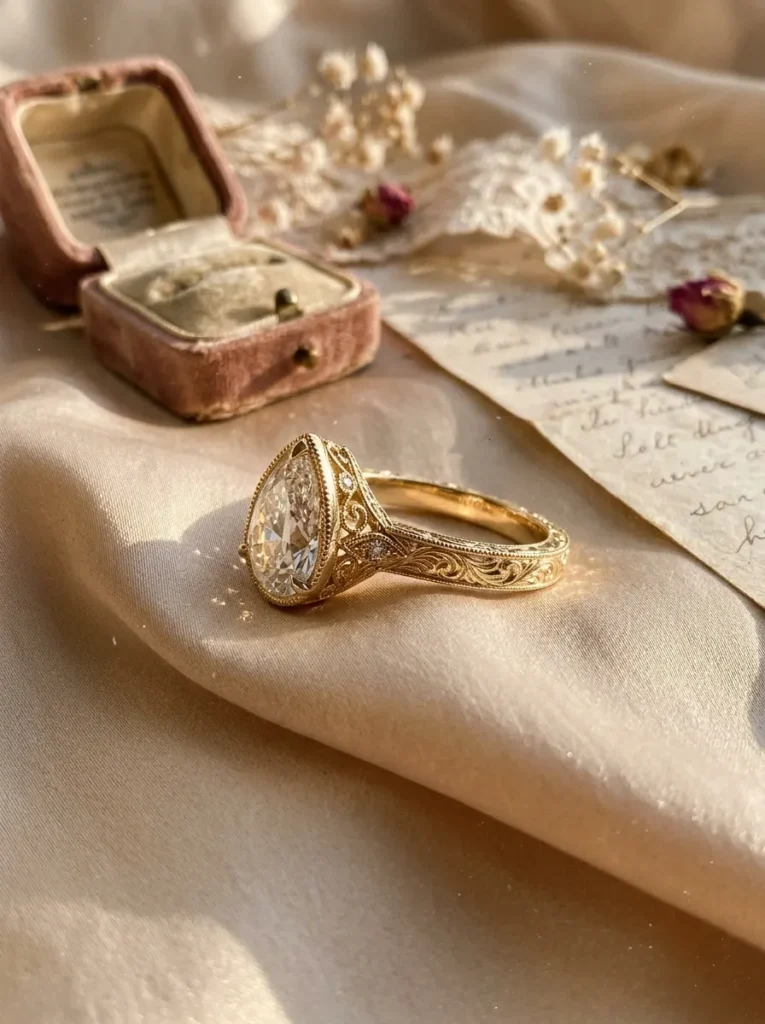
Vintage-inspired designs bring decorative details to the graceful pear silhouette. Think delicate milgrain edges, engraved metalwork, small accent diamonds, and intricate gallery details beneath the center stone.
Yellow gold gives this style a warm, traditional feel. Platinum and white gold offer a lighter finish while keeping the detailed design elegant. You can also choose a subtle halo for additional vintage character.
Styling Tip: Choose one or two decorative features that you love. Too many competing details can make the center diamond less noticeable.
8. Pear Shaped Pavé Engagement Ring
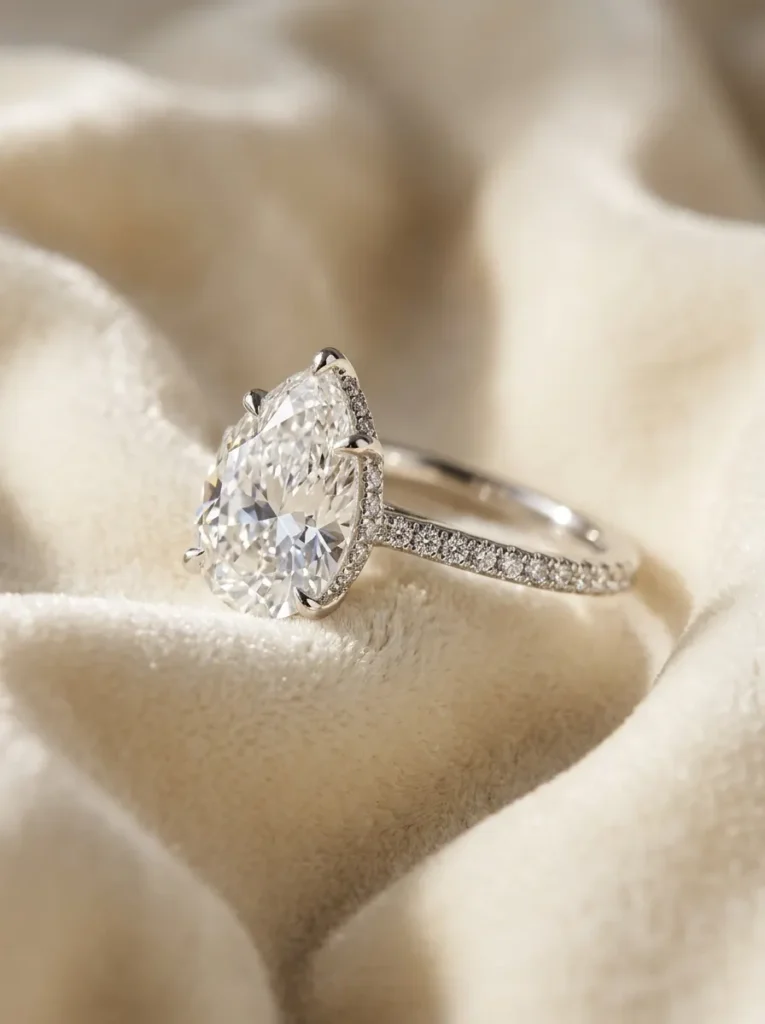
A pavé band features small diamonds set closely together along the ring’s surface. When paired with a pear-shaped center stone, it creates a beautiful combination of center-stone sparkle and delicate detail.
This style is a lovely choice if you enjoy a little extra brilliance. You can choose a full pavé band for sparkle around more of the ring or a half-pavé design for a simpler finish.
Styling Tip: Ask about the maintenance of the small accent stones. Have the setting checked periodically to make sure the diamonds remain secure.
9. Pear Shaped Split-Shank Engagement Ring
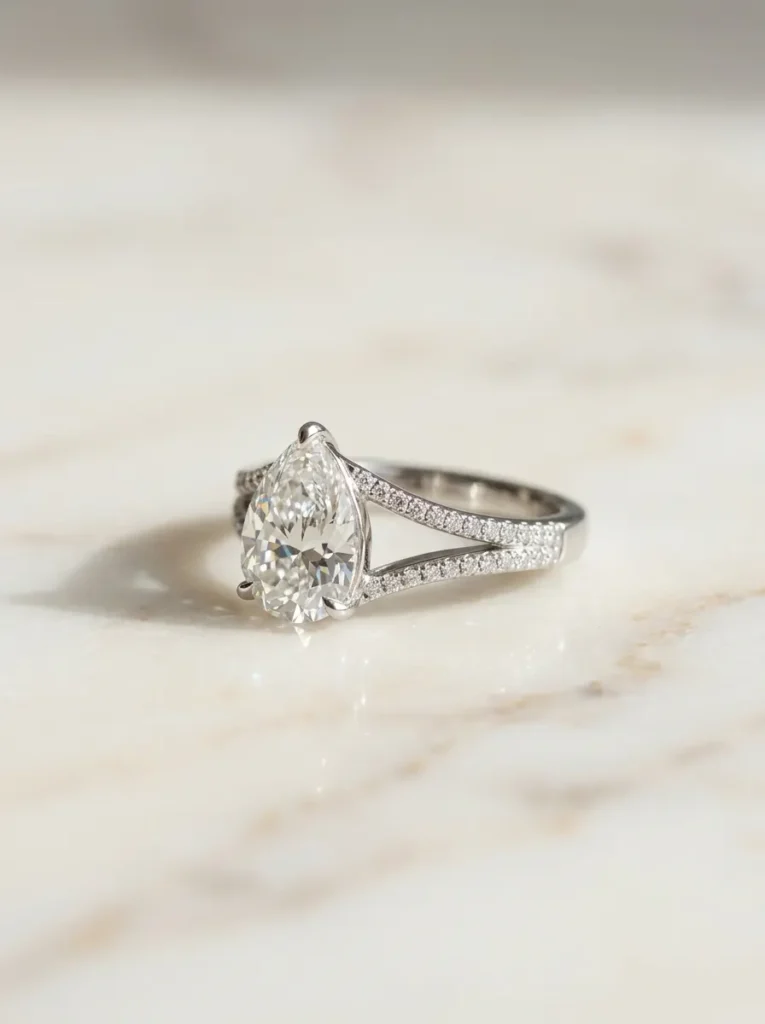
A split-shank ring has a band that separates into two sections as it approaches the center diamond. This creates an open, graceful appearance around the pear-shaped stone.
The two sections can remain plain or feature small accent diamonds. A simple split shank feels modern and refined, while a diamond-covered design adds more sparkle.
Styling Tip: Consider the width of both sections together. The design should feel balanced with the size and proportions of your center diamond.
10. Pear Shaped Twisted Band Engagement Ring
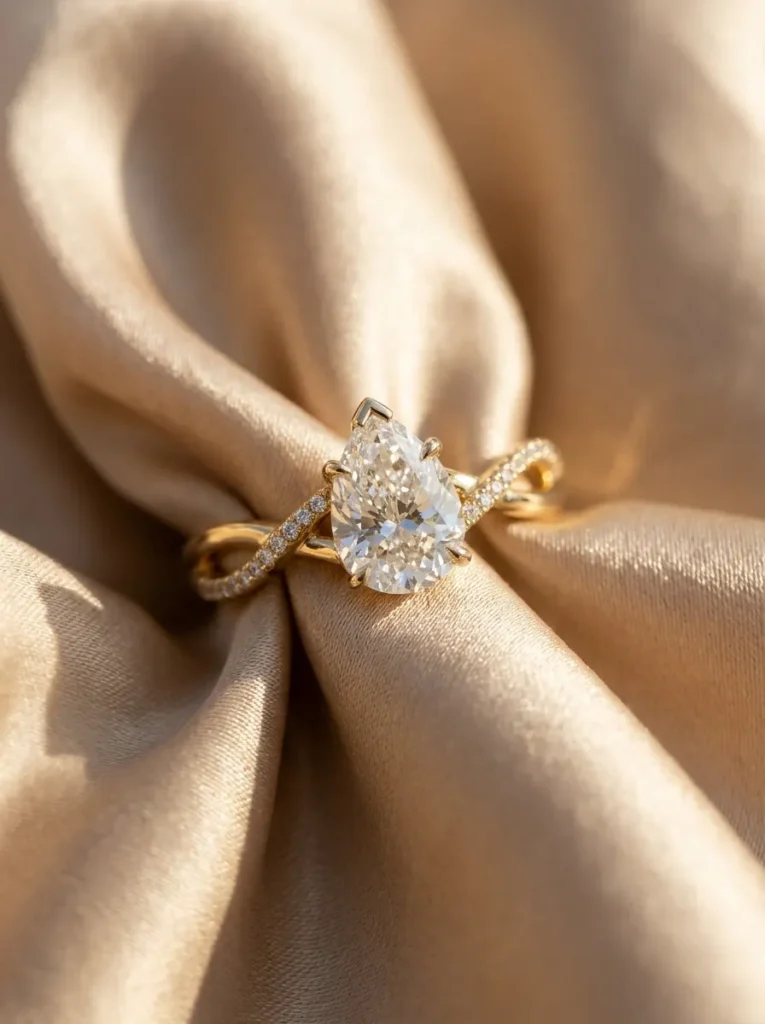
A twisted band adds a soft, flowing detail to a pear-shaped center diamond. The metal strands cross or curve around each other, creating movement without taking attention away from the stone.
You can choose a plain twisted band for a delicate appearance or a diamond-accented version for extra brilliance. Rose gold gives the design a warm finish, while white gold creates a cooler look.
Styling Tip: Look at the ring from the top and sides. The twisted sections should sit comfortably and leave enough space for a suitable wedding band.
Why Choose a Pear Shaped Engagement Ring?
Pear-shaped diamonds offer a distinctive combination of round curves and a pointed end. Their elongated outline can create the appearance of extra length across the finger. They also offer several styling options, from traditional settings to modern horizontal designs.
Here are a few reasons this shape may appeal to you:
- Distinctive silhouette: The teardrop shape feels recognizable without looking like a traditional round diamond.
- Brilliant sparkle: Pear brilliant cuts use facets designed to reflect light.
- Versatile styling: They work with solitaire, halo, bezel, and three-stone settings.
- Different orientations: You can wear the pointed end facing toward or away from your fingertips.
- Range of proportions: Shorter and longer shapes create different visual effects.
How to Choose the Right Pear Shaped Engagement Ring
Choosing a beautiful design is only one part of the decision. The diamond’s proportions, symmetry, setting, and overall appearance also matter.
1. Check the Diamond’s Symmetry
A well-proportioned pear diamond should have balanced curves on both sides. Imagine a line running from the rounded end to the pointed tip. Both sides should look reasonably similar.
Look closely at the shoulders, curves, and point. An uneven outline can affect the overall appearance of the finished ring.
2. Understand the Length-to-Width Ratio
The length-to-width ratio compares the diamond’s length with its width. It helps describe whether a pear looks shorter and fuller or longer and slimmer.
The Gemological Institute of America (GIA) notes that many experts prefer ratios around 1.50:1 to 1.75:1. However, there is no single ratio that suits every preference.
A shorter pear may have a softer, fuller outline. A longer pear may have a more dramatic appearance. Compare different proportions before deciding.
3. Look for a Subtle Bow-Tie Effect
The bow-tie effect is a darker pattern that can appear across the center of a pear-shaped diamond. It happens because of the way light interacts with the diamond’s facets.
A slight bow-tie is common. However, a large or very dark shadow may interrupt the stone’s sparkle. Ask to see the diamond in a rotating video or under different lighting conditions before making a decision.
4. Protect the Pointed End
The pointed tip is one of the most delicate parts of a pear-shaped diamond. It needs suitable protection, especially in a ring intended for regular wear.
A V-shaped prong can cover the tip, while a bezel setting surrounds the diamond with metal. Your jeweler can help you compare protective settings that suit the stone and your preferred design.
5. Choose a Metal That Matches Your Style
The metal changes the overall appearance of an engagement ring. Consider these popular options:
- Yellow gold: Adds a warm, classic appearance.
- White gold: Creates a bright, polished finish.
- Platinum: Offers a naturally white precious metal option.
- Rose gold: Brings a soft pink tone to the design.
Think about the jewelry you already enjoy wearing. Matching your engagement ring to your usual metal preferences can help create a coordinated collection.
Which Way Should a Pear Shaped Engagement Ring Point?
Traditionally, pear-shaped engagement rings are worn with the pointed end facing toward the fingertips. However, some people prefer the point facing toward the hand, while others choose a horizontal east-west design.
There is no required direction. Try both orientations and choose the one you enjoy most. The best choice is the one that feels comfortable and reflects your personal style.
What Wedding Band Goes With a Pear Shaped Engagement Ring?
The right wedding band depends on the shape of your engagement ring’s setting. A pear diamond can pair with several band styles, but the center stone and its pointed end may affect how closely the rings sit together.
- Curved wedding band: Follows the outline of the engagement ring and can fit around a raised center setting.
- Chevron wedding band: Creates a pointed shape that can complement the pear’s silhouette.
- Plain gold band: Offers a simple contrast to a detailed engagement ring.
- Pavé wedding band: Adds small diamonds for extra sparkle.
- Open wedding band: Leaves a small space around the center stone when the setting needs additional room.
Before purchasing a band, try both rings together. A jeweler can also help you find a matching design or create a custom fit.
Common Mistakes to Avoid When Choosing Pear Shaped Engagement Rings
- Choosing by carat weight alone: Two diamonds with the same carat weight can have different face-up appearances.
- Ignoring symmetry: Uneven curves or an off-center point can change the overall look.
- Overlooking the bow-tie: Review the diamond from different angles instead of relying on one photograph.
- Leaving the tip unprotected: Ask about a V-prong or another suitable protective setting.
- Forgetting the wedding band: Check how your engagement ring will sit beside a future wedding band.
- Ignoring everyday comfort: Consider the setting height, band width, and how the ring feels during daily activities.
Frequently Asked Questions
Are pear shaped engagement rings elegant?
Yes. Their teardrop outline combines soft curves with a distinctive pointed end. This creates a graceful design that works with both classic and contemporary settings.
Do pear shaped diamonds look bigger than round diamonds?
The elongated outline can create the impression of a larger face-up size compared with a round diamond of the same carat weight. However, the actual appearance depends on the diamond’s proportions and cut.
Are pear shaped engagement rings suitable for everyday wear?
They can be suitable for regular wear when properly set and cared for. Pay particular attention to protecting the pointed tip and have the setting checked periodically by a jeweler.
What is the best setting for a pear shaped diamond?
There is no single best setting for everyone. Solitaire, halo, bezel, and three-stone settings can all work beautifully. A V-prong or bezel can help protect the pointed end.
Should a pear shaped engagement ring point up or down?
Both directions are acceptable. The traditional orientation has the point facing toward the fingertips, but you can also wear it in the opposite direction or horizontally.
Does a pear shaped diamond have a bow-tie effect?
Many pear-shaped diamonds show some degree of bow-tie pattern across the center. Its appearance varies from stone to stone, so review the diamond in motion and under different lighting conditions.
Final Thoughts on Pear Shaped Engagement Rings
Pear shaped engagement rings offer a beautiful balance of sparkle, graceful curves, and distinctive design. Whether you prefer a simple solitaire, a sparkling halo, or a detailed vintage setting, there are plenty of ways to make this diamond shape your own.
Before choosing your favorite, compare the diamond’s symmetry, proportions, and bow-tie effect. Most importantly, make sure the pointed tip has suitable protection and the ring feels comfortable for everyday wear. A thoughtful choice will help you enjoy your engagement ring for years to come.
Further Reading: For additional diamond education, explore the GIA guide to choosing a pear-shaped diamond.
Join the Conversation