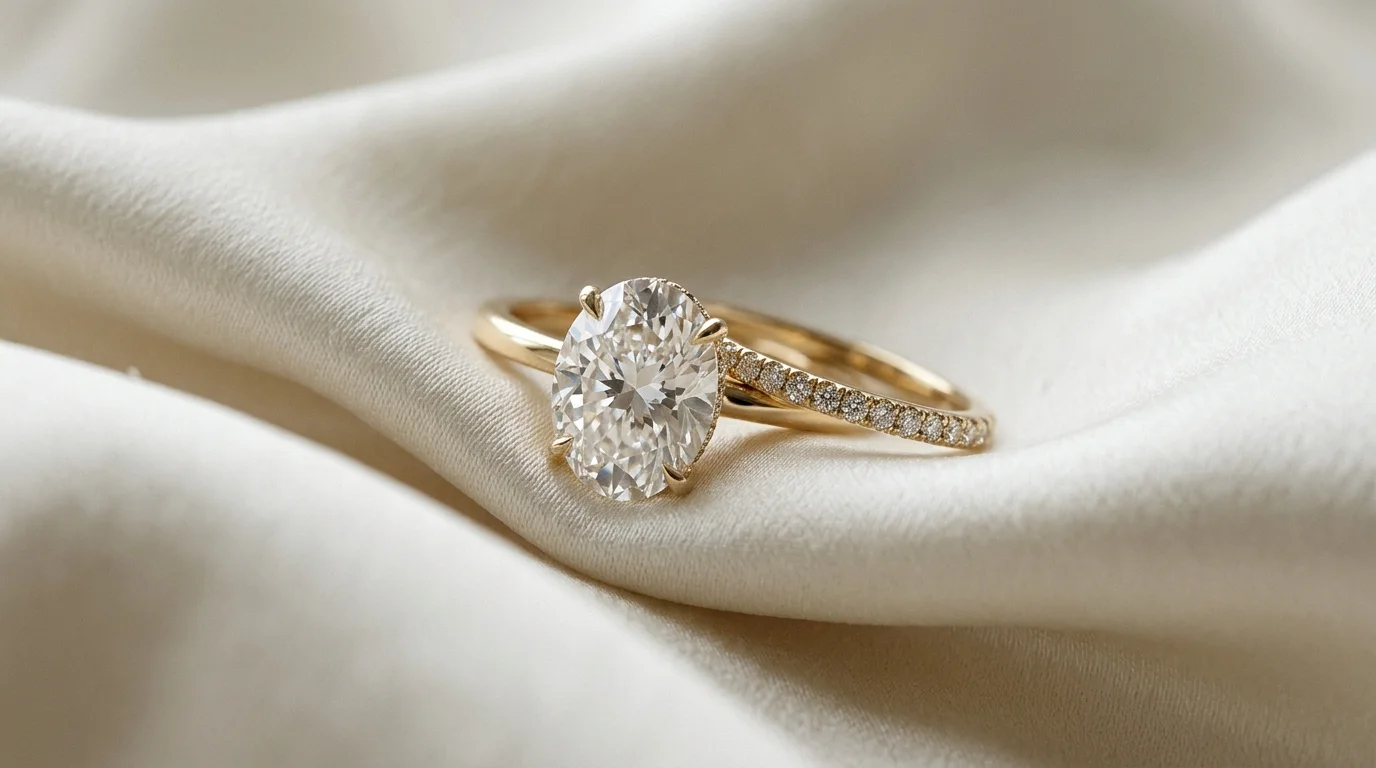
Matching a wedding band with your engagement ring is about more than choosing the same metal or adding extra sparkle. The right combination should feel balanced on your hand, sit comfortably beside your engagement ring, and reflect your personal style.
Before you buy a wedding band, look at your engagement ring’s setting, shape, width, and metal. These details will help you decide whether a classic straight band, a diamond-studded design, or a curved wedding band will work best. With a few thoughtful choices, you can create a bridal ring set that feels coordinated without looking overly matched.
How to Match a Wedding Band With Your Engagement Ring
The easiest way to choose a matching wedding band is to start with how the two rings fit together. Once you understand the setting and available space, you can compare metal colors, band widths, and decorative details.
- Check the setting: Determine whether a straight band can sit comfortably beside your engagement ring.
- Choose your metal: Match the metal for a coordinated look or combine metals intentionally.
- Balance the proportions: Consider the width and visual weight of both rings.
- Coordinate the details: Decide whether you prefer a plain band, extra diamonds, or vintage-inspired decoration.
- Try both rings together: Check their fit, comfort, and appearance from different angles before purchasing.
You do not need identical rings to create a beautiful set. A simple wedding band can complement an elaborate engagement ring, while a diamond band can add interest to a clean, understated solitaire.
1. Match the Metal of Your Wedding Band and Engagement Ring
Metal color is a natural starting point because it helps the two rings look connected. Matching metals create a traditional, coordinated appearance, while mixed metals can add contrast and personality.
Yellow Gold With Yellow Gold
A yellow gold wedding band pairs beautifully with a yellow gold engagement ring. The warm color creates a classic bridal look that works with solitaire diamonds, vintage settings, and rings with intricate details.
If your engagement ring has a delicate band, consider a simple yellow gold wedding band that lets the center stone remain the focal point. For a bolder appearance, a wider band or a design with subtle engraving can add character without overwhelming the ring.
White Gold With White Gold
A white gold wedding band creates a clean, bright appearance beside a white gold engagement ring. This pairing works especially well with classic diamond solitaires, pavé settings, and contemporary designs.
Remember that white gold commonly has a rhodium finish that may need maintenance over time. If you are comparing white gold with platinum, ask a jeweler about their differences in composition, finish, and long-term care rather than assuming they are interchangeable.
Rose Gold With Rose Gold
Rose gold offers a warm, romantic appearance that pairs well with delicate solitaires, oval diamonds, and vintage-inspired engagement rings. Matching both rings in rose gold creates a soft, coordinated look.
If your engagement ring already has detailed shoulders or a halo, a plain rose gold wedding band can keep the overall combination from feeling too busy.
Can You Mix Different Metal Colors?
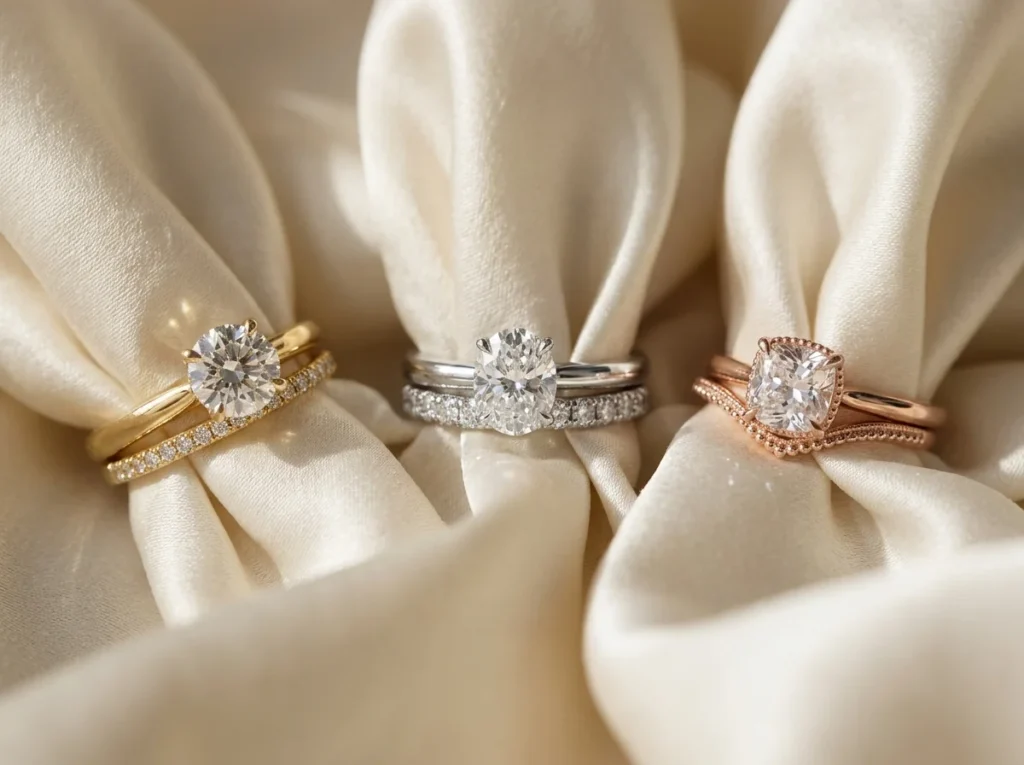
Absolutely. A yellow gold wedding band beside a white gold engagement ring creates a noticeable contrast, while rose gold can introduce warmth to a white-metal setting.
The key is to make the combination look intentional. Repeat a metal color elsewhere in your ring stack, choose a two-tone design, or keep the decorative details simple so the contrast feels balanced.
2. Choose a Wedding Band That Fits Your Engagement Ring’s Setting
The setting is one of the most important factors when choosing a wedding band. Even two rings with matching metals and beautiful designs may not sit well together if the engagement ring’s center setting extends into the space where the band needs to go.
Straight Wedding Bands
A straight wedding band has a traditional circular shape without a curve or notch. It is a versatile choice for many solitaire engagement rings, particularly when the center stone is raised enough to leave room beside the setting.
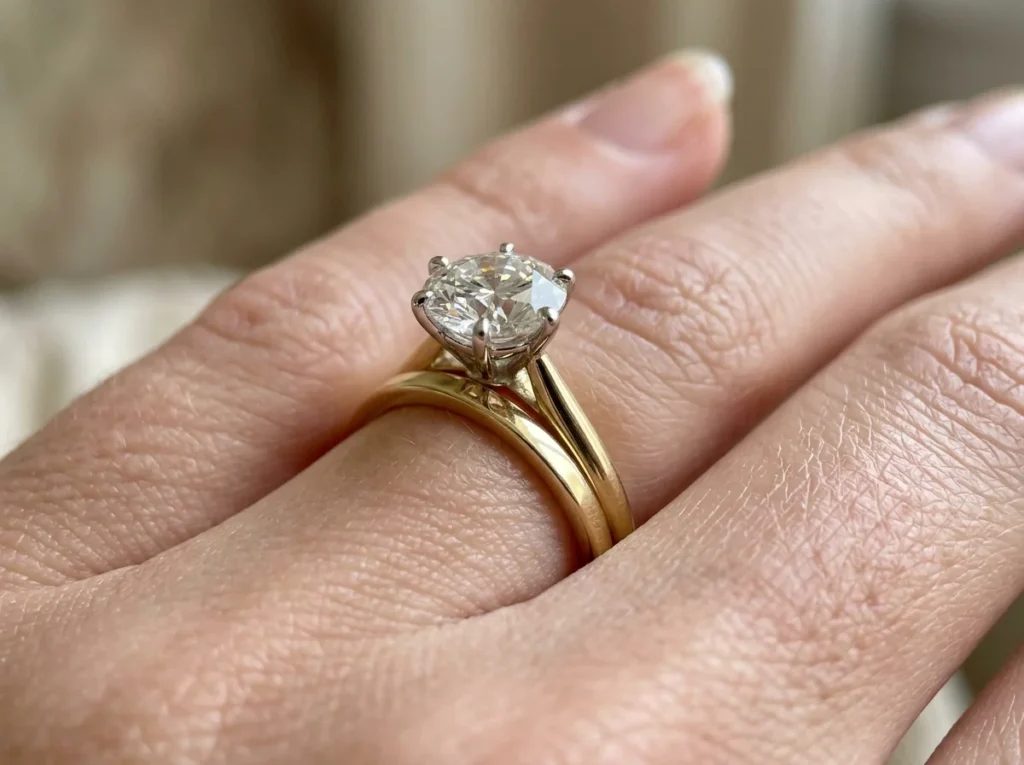
Choose a straight band if you want a simple, timeless combination that can also work well with other rings. Before purchasing, try it beside your engagement ring to make sure the two can sit together comfortably.
Curved or Contoured Wedding Bands
A curved wedding band follows the outline of an engagement ring’s setting. Its shape can help the two rings sit closer together when a straight band would leave an unwanted gap.
Contoured bands are particularly useful for some halo rings, low-set center stones, and engagement rings with unusual profiles. Because the curve needs to work with the actual setting, try the band with your engagement ring rather than relying on its appearance in a product photograph.
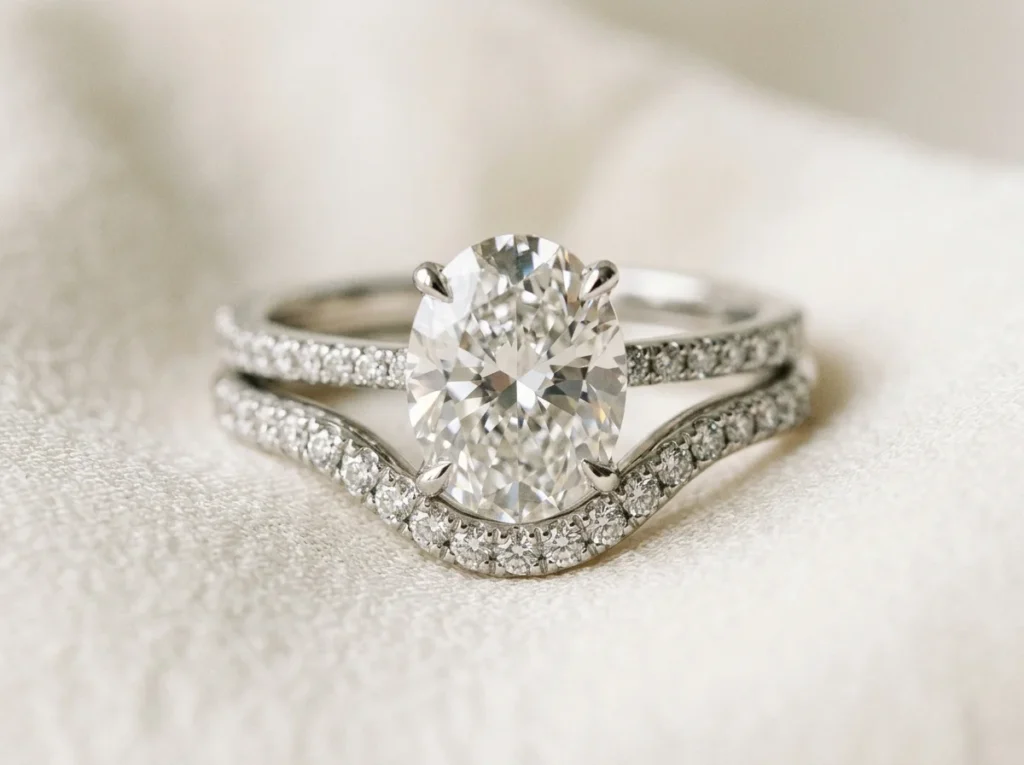
Notched Wedding Bands
A notched wedding band has a small indentation designed to accommodate part of an engagement ring’s setting. This can be useful when a straight band cannot sit close enough to the center stone.
Notched designs range from subtle to pronounced, depending on the shape of the engagement ring. Ask a jeweler to check the fit so the notch clears the setting without creating uncomfortable contact.
Chevron and V-Shaped Wedding Bands
Chevron bands form a shallow V that can frame the point of a pear-shaped or marquise engagement ring. They can also add a geometric detail to a solitaire or create a distinctive stacked look.
These bands do not need to touch the engagement ring at every point to look attractive. Focus on balanced proportions and a shape that complements the center stone.
3. Match the Wedding Band to Your Engagement Ring’s Diamond Shape
Your center stone can guide the wedding band’s shape and detailing. Some combinations create a smooth, symmetrical look, while others use contrast to make each ring stand out.
Round Diamond Engagement Rings
Round diamonds are versatile and work with many wedding band styles. A plain gold band keeps the combination classic, while a pavé diamond band adds sparkle along the finger.
If your engagement ring already has diamonds along its shoulders, consider a simple band to avoid making the overall design look too crowded.
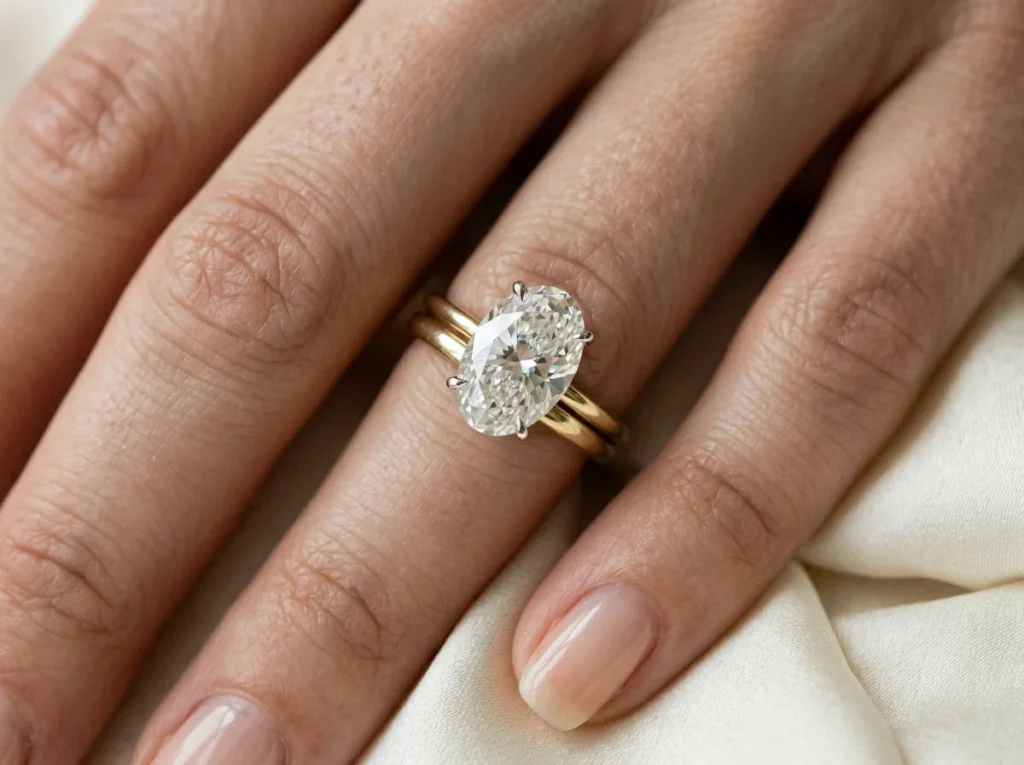
Oval Engagement Rings
Oval engagement rings pair well with slim diamond bands, delicate gold bands, and curved designs. A narrow band can emphasize the oval’s elongated shape without competing with the center stone.
Check the setting from the side before choosing a straight band. Some oval rings have baskets or low profiles that require a shaped band for a closer fit.
Emerald-Cut Engagement Rings
Emerald-cut diamonds have a clean, geometric appearance that pairs beautifully with understated wedding bands. A plain metal band creates a refined combination, while baguette diamonds or a delicate pavé band can echo the stone’s linear details.
For a balanced look, avoid choosing a wedding band with so much decoration that the center stone loses its visual prominence.
Pear-Shaped Engagement Rings
Pear-shaped diamonds have a rounded end and a pointed tip. A curved or V-shaped wedding band can follow the outline of the stone and create a graceful frame.
A plain band can also work if the setting leaves enough clearance. Make sure the band does not press against the pointed end or delicate prongs.
Princess-Cut Engagement Rings
Princess-cut diamonds have a square outline that works well with straight wedding bands and other geometric designs. A plain band gives the pairing a clean, structured appearance, while a channel-set diamond band adds sparkle in a similar pattern.
Because square stones have distinct corners, check how the engagement ring’s setting meets the neighboring band before deciding on the final design.
Marquise Engagement Rings
Marquise diamonds have pointed ends that create an elongated silhouette. A curved or chevron wedding band can complement this shape, particularly when the engagement ring’s setting extends close to the finger.
If you prefer a straight band, try it with the engagement ring to see whether the pointed ends and setting leave enough room for a comfortable fit.
4. Balance the Width of Both Rings
The width of your wedding band affects how the entire ring set looks and feels. A delicate engagement ring can look crowded beside a very wide band, while a substantial engagement ring may need a band with enough visual weight to feel balanced.
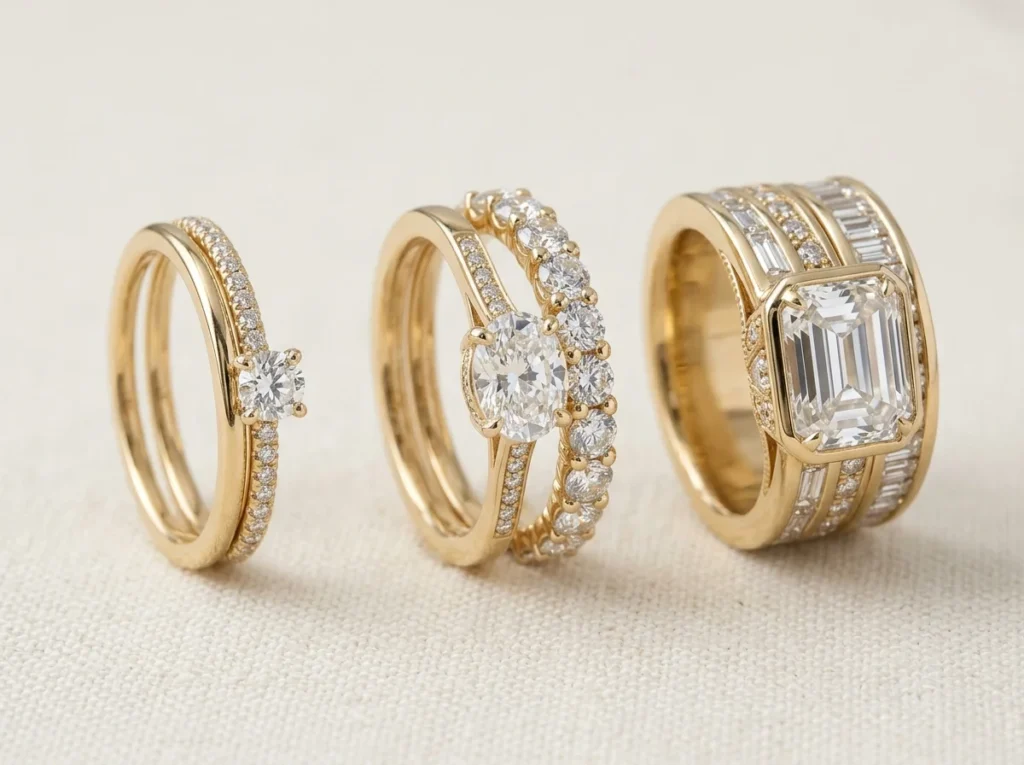
Choose a Slim Wedding Band for a Delicate Engagement Ring
A slim band works well with a fine solitaire, a small center stone, or an engagement ring with a narrow shank. It keeps the combination light and allows the center diamond to remain the main attraction.
However, extremely thin bands are not automatically the best choice. Ask a jeweler whether the band’s thickness and construction are suitable for everyday wear.
Choose a Medium-Width Band for a Balanced Look
A medium-width wedding band can provide a little more presence without dominating the engagement ring. It is worth trying if your engagement ring has a moderately wide shank or a center stone with noticeable side details.
Look at the rings together rather than judging each band’s width separately. The combined appearance is what matters.
Consider a Wider Band for a Statement Ring
A wider wedding band can complement a bold engagement ring, especially when both designs share a similar visual style. It can also create a distinctive look when paired with a simple solitaire.
Keep comfort in mind. Two wide rings can cover more of your finger and may feel tighter together than either ring worn alone.
5. Decide Whether to Choose a Plain or Diamond Wedding Band
The right amount of sparkle depends on your engagement ring and the look you want to create. You can choose a band that blends quietly into the set or one that adds another layer of detail.
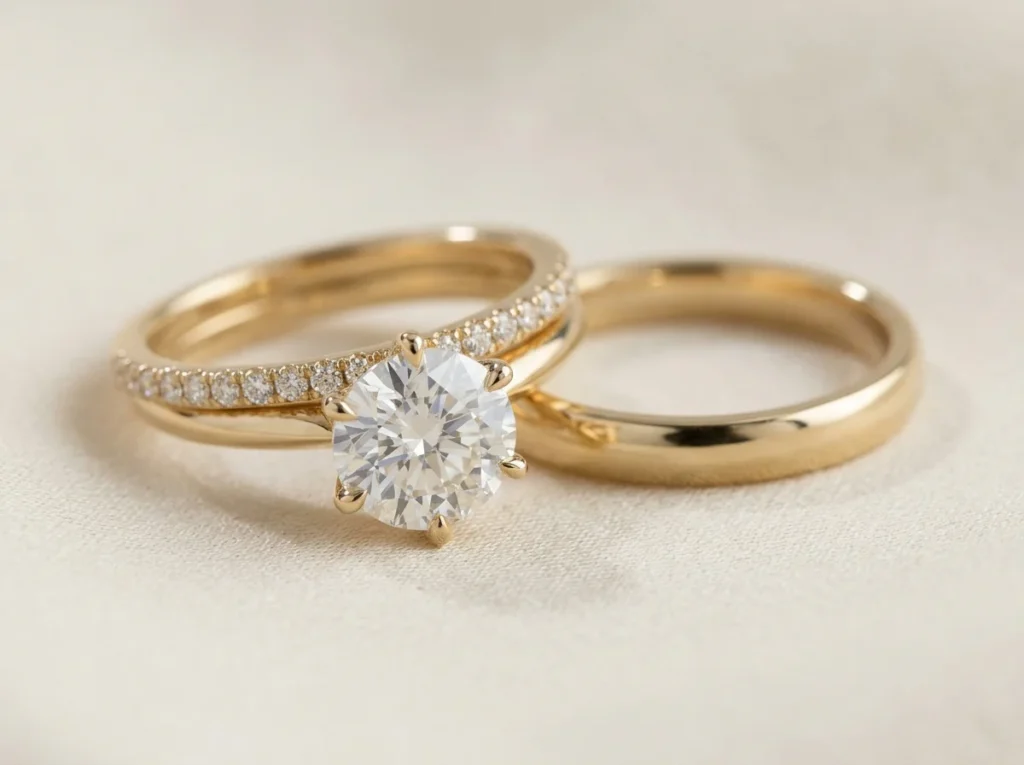
Plain Metal Wedding Bands
A plain wedding band is a timeless option for an engagement ring with a prominent center diamond, intricate shoulders, or a halo. It creates a visual pause between detailed elements and keeps the combination from feeling overly decorative.
Plain bands are also a useful choice if you want a ring that can be worn alone on days when you prefer a simpler look.
Pavé Diamond Wedding Bands
Pavé bands feature small diamonds set closely together along part of the band. They add a line of sparkle that pairs well with solitaire engagement rings and some halo designs.
If your engagement ring already has pavé diamonds along its shank, compare a plain band with a diamond band before deciding. Two heavily decorated rings can compete for attention.
Channel-Set Wedding Bands
Channel-set bands hold diamonds within a channel formed by the surrounding metal. The result is a neat, structured row of stones that can complement modern and geometric engagement rings.
Consider this style if you want extra sparkle without the more textured appearance of some pavé designs. Ask how the band will fit beside your setting and what maintenance it may need.
Vintage-Inspired Wedding Bands
Engraving, milgrain edges, and delicate decorative details can complement vintage engagement rings. A wedding band that repeats one or two features from the engagement ring can make the pairing feel connected without requiring an exact match.
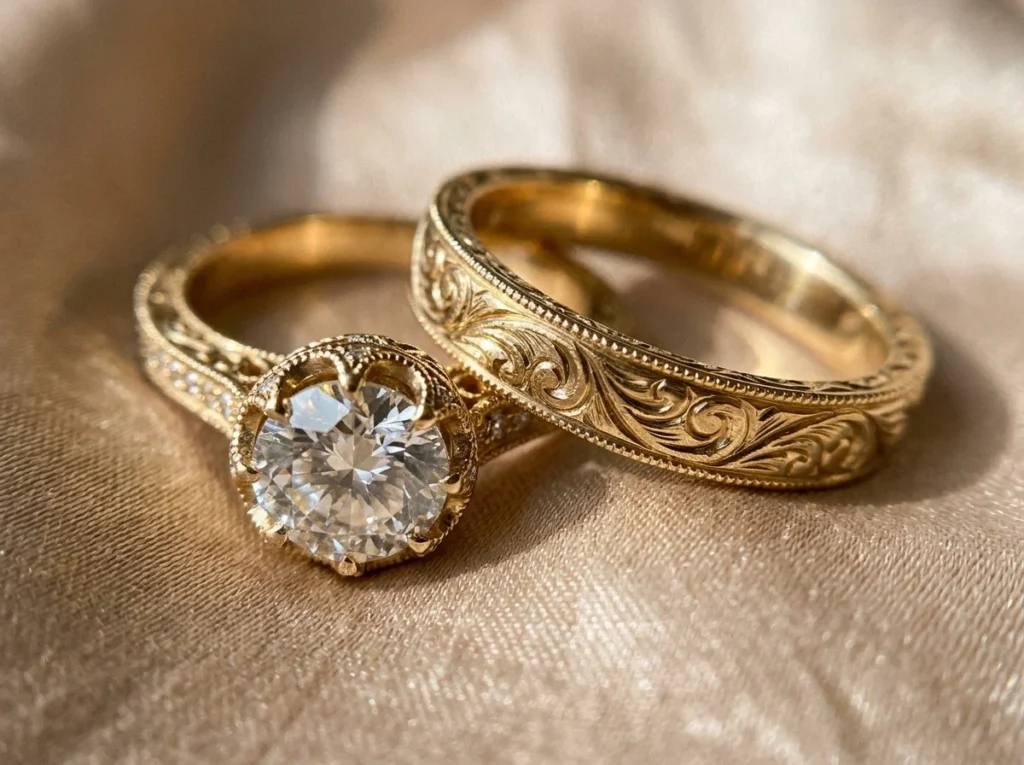
If the engagement ring is already ornate, choose a band with simpler detailing. This lets both rings remain distinct while preserving the overall vintage look.
6. Coordinate the Finish and Overall Style
Metal color and diamond placement are only part of the picture. The surface finish and design style can also influence whether your wedding band feels like a natural companion to your engagement ring.
- Polished finish: A smooth, reflective surface suits classic and contemporary engagement rings.
- Matte or brushed finish: A softer surface can create subtle contrast with a polished ring.
- Engraved details: Decorative patterns can complement vintage-inspired or heirloom designs.
- Geometric details: Straight edges and clean lines can suit modern engagement rings.
- Organic or textured details: These can create a more individual pairing when the engagement ring has a less traditional design.
You can match the finishes for a uniform look or combine them for contrast. If you choose different finishes, compare them in natural light as well as indoor lighting to understand how they look together.
7. Choose Between a Matching Set and a Mix-and-Match Pairing
A matching bridal set is designed to coordinate, and sometimes to fit together closely. Buying both rings as a set can make it easier to check the proportions and setting clearance before the rings are finished.
A mix-and-match pairing gives you more freedom to combine different metals, widths, stone shapes, and finishes. It can be especially appealing if you already own an engagement ring or want a wedding band that expresses a different side of your style.
Neither approach is inherently better. The right choice depends on how the rings fit, how they feel together, and whether you like their appearance as a pair.
8. Think About Comfort and Everyday Wear
Your wedding band and engagement ring may be worn together for many years, so comfort deserves as much attention as appearance. Try both rings on together and move your hand naturally to see whether the combination feels secure.
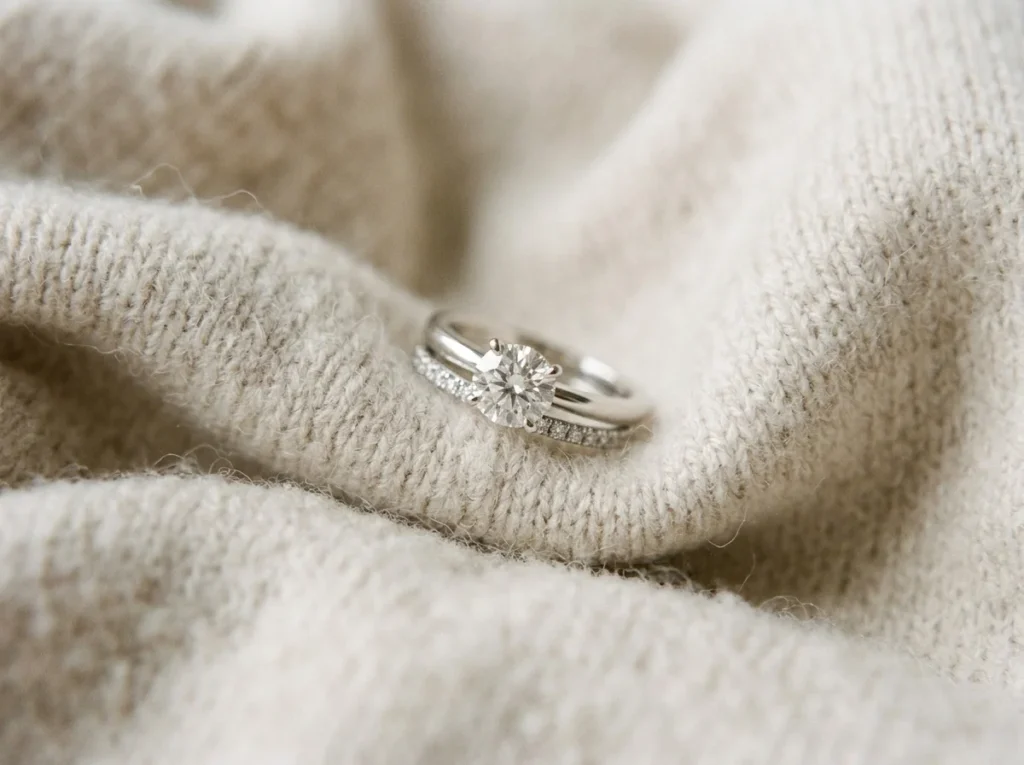
- Check the combined fit: Two rings can feel tighter together than one ring worn alone.
- Look for unwanted contact: Make sure the band does not press against delicate prongs or the center setting.
- Consider the inner profile: A comfort-fit band has a slightly rounded interior that some people find easier to wear.
- Ask about maintenance: Diamonds, settings, and metal surfaces may need periodic inspection or care.
- Discuss resizing: Some eternity bands and heavily detailed designs can be difficult or impossible to resize without changing the design.
If you are purchasing online, review the seller’s sizing, return, and resizing policies before placing your order. For an unusual or low-set engagement ring, having a jeweler examine the actual ring can help you avoid an unsuitable pairing.
Common Mistakes to Avoid When Matching Wedding Bands
Choosing a Band Without Checking the Setting
A wedding band may look beautiful on its own but leave a gap beside your engagement ring. Check the side profile and try the rings together before committing to a straight band.
Assuming Every White Metal Is the Same
White gold and platinum can look similar, but they have different material properties and maintenance needs. Ask your jeweler to explain the differences if you plan to combine them.
Adding Too Many Decorative Details
A detailed engagement ring does not always need an equally detailed wedding band. Sometimes a plain band creates a more balanced result than another row of diamonds or intricate engraving.
Ignoring the Combined Width
Two rings that look delicate individually can feel bulky when worn together. Try the complete combination on your finger to assess both comfort and appearance.
Buying Based Only on a Photograph
Product photographs may not show the exact setting clearance, height, or way two rings sit against each other. When possible, compare the actual rings or ask for a detailed side-view demonstration before purchasing.
Wedding Band Matching Checklist
Before choosing your final wedding band, use this checklist to make sure you have considered the most important details.
- Does the wedding band fit comfortably beside the engagement ring?
- Can a straight band sit flush, or would a curved or notched design work better?
- Do the metal colors and finishes look intentional together?
- Is the band width balanced with the engagement ring?
- Does the amount of sparkle suit the overall design?
- Are there any points where the rings rub, press, or catch?
- Have you checked sizing, resizing, care, and return policies?
If you are still unsure, bring your engagement ring to a jeweler and compare several bands in person. Seeing the options together is often the simplest way to identify the combination that suits your style and fits comfortably.
Frequently Asked Questions
Does a wedding band have to match an engagement ring exactly?
No. Your wedding band can match the metal and style of your engagement ring, or it can create a deliberate contrast. The most important considerations are comfortable fit, balanced proportions, and a combination you enjoy wearing.
Should my wedding band be the same metal as my engagement ring?
Matching metals is a straightforward way to create a coordinated look. Mixed metals can also work beautifully, but ask a jeweler about differences in wear, composition, and maintenance before choosing rings that will sit closely together every day.
Can I wear a straight wedding band with an oval engagement ring?
Yes, if the setting leaves enough room for the band to sit beside it. Some oval engagement rings have low baskets or wider settings that may require a curved or notched band to achieve a closer fit.
What wedding band looks best with a solitaire engagement ring?
A solitaire is versatile enough to pair with a plain metal band, a pavé diamond band, or a more decorative design. Choose a plain band for an understated look or add diamonds if you want more sparkle.
Is it okay to have a gap between my wedding band and engagement ring?
Yes. A small, intentional gap can be part of the design, especially when the engagement ring has a low setting or an unusual silhouette. Check that the rings remain comfortable and do not repeatedly knock against delicate parts of the setting.
Should I buy my wedding band and engagement ring together?
Buying them together makes it easier to coordinate their proportions and check the fit before purchasing. However, you can choose a wedding band later by bringing your existing engagement ring to a jeweler for comparison.
How do I know if my wedding band is too wide?
A band may be too wide for your preference if the combined rings feel bulky, restrict comfortable movement, or overwhelm the engagement ring visually. Try different widths side by side and consider how the complete set feels during normal hand movements.
Final Thoughts
The best way to match a wedding band with your engagement ring is to balance fit, metal, width, and design. Start by checking the setting, then compare a few styles that complement your center stone without competing with it.
You do not need a perfectly identical set to create a beautiful pairing. Whether you choose a classic gold band, a sparkling diamond design, or a curved band made to fit your ring, prioritize comfort and a look that feels true to your personal style.
Join the Conversation