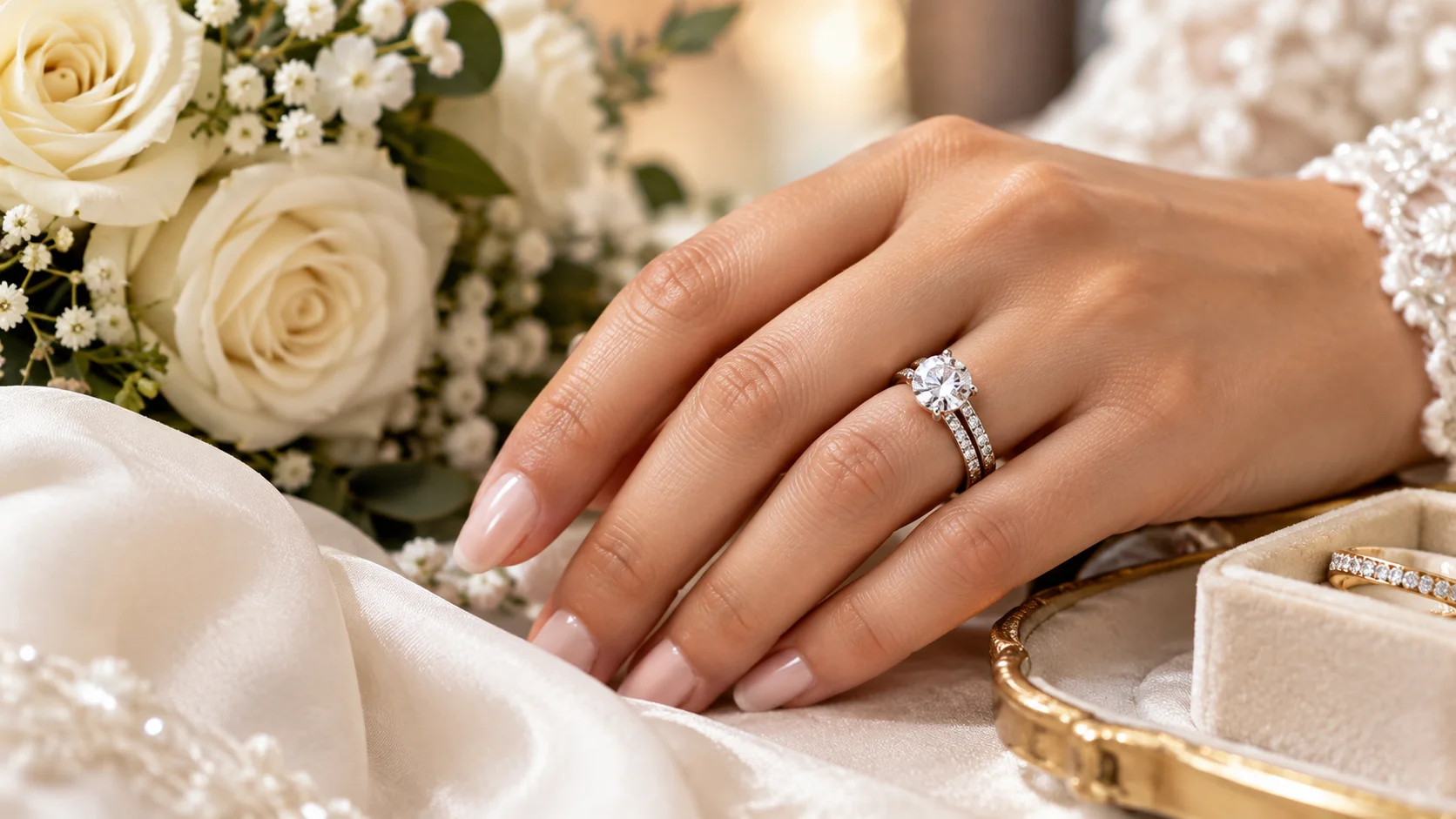
Your wedding band is more than the finishing touch to your engagement ring. It is a piece of jewelry you can wear every day, so the right design should feel beautiful, comfortable, and true to your personal style.
These 15 wedding band ideas range from timeless gold and diamond designs to modern curved bands, vintage details, and distinctive mixed-metal combinations. Whether you prefer a simple band or something that makes a statement, you can find inspiration for a wedding ring that complements your engagement ring and suits your lifestyle.
15 Wedding Band Ideas From Timeless to Modern
1. Classic Yellow Gold Wedding Band
A classic yellow gold wedding band is one of the most enduring choices for couples who appreciate understated elegance. Its warm color looks beautiful on its own and pairs especially well with traditional yellow gold engagement rings.
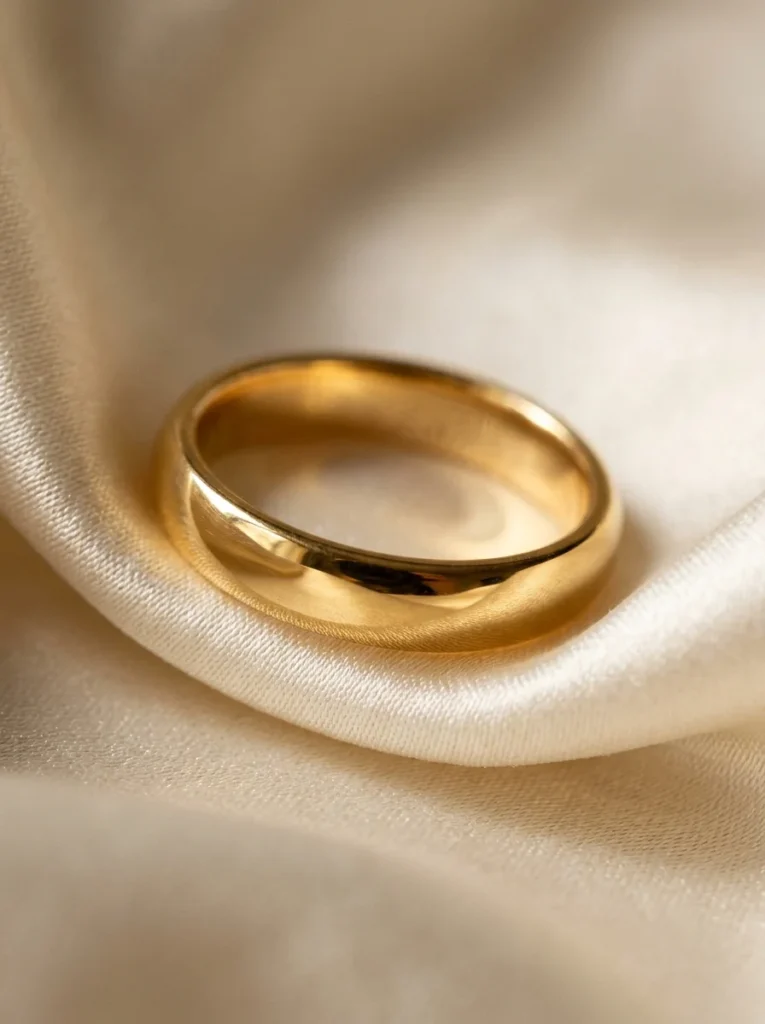
Choose a slim band for a delicate appearance or a wider design for a more substantial look. A polished finish gives the ring a bright shine, while a brushed finish creates a softer, more contemporary effect.
Best for: Classic bridal styles, minimalist jewelry lovers, and anyone who wants a ring that never feels tied to a trend.
2. Delicate Diamond Wedding Band
A delicate diamond wedding band adds sparkle without taking attention away from your engagement ring. Small diamonds set across the band create a refined shimmer that works with solitaire, halo, and three-stone rings.
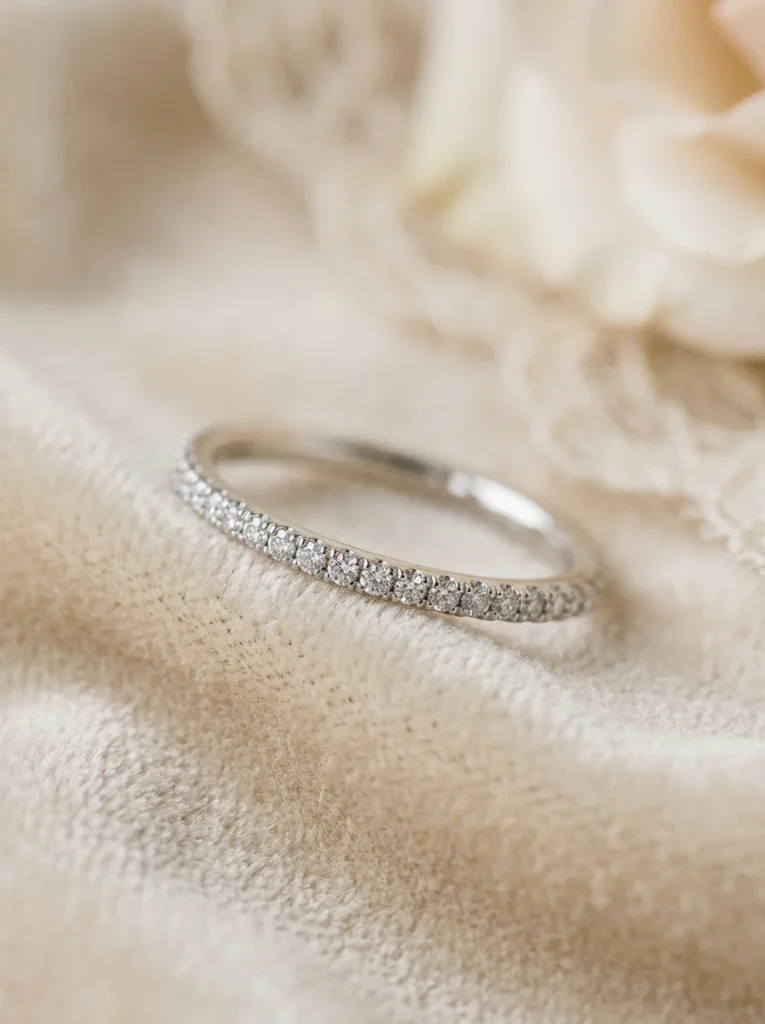
For a subtle look, consider a slim band with tiny diamonds. If you want more brilliance, choose a design with closely set stones that cover more of the visible surface.
Pay attention to how the diamonds sit against your engagement ring. The two rings should feel comfortable together, without an awkward gap or unnecessary rubbing.
Best for: Brides who love subtle sparkle and feminine, elegant jewelry.
3. Pavé Diamond Wedding Band
A pavé wedding band features small diamonds set closely together, creating the appearance of a continuous line of sparkle. The tiny settings allow the stones to catch the light while keeping the overall design relatively delicate.
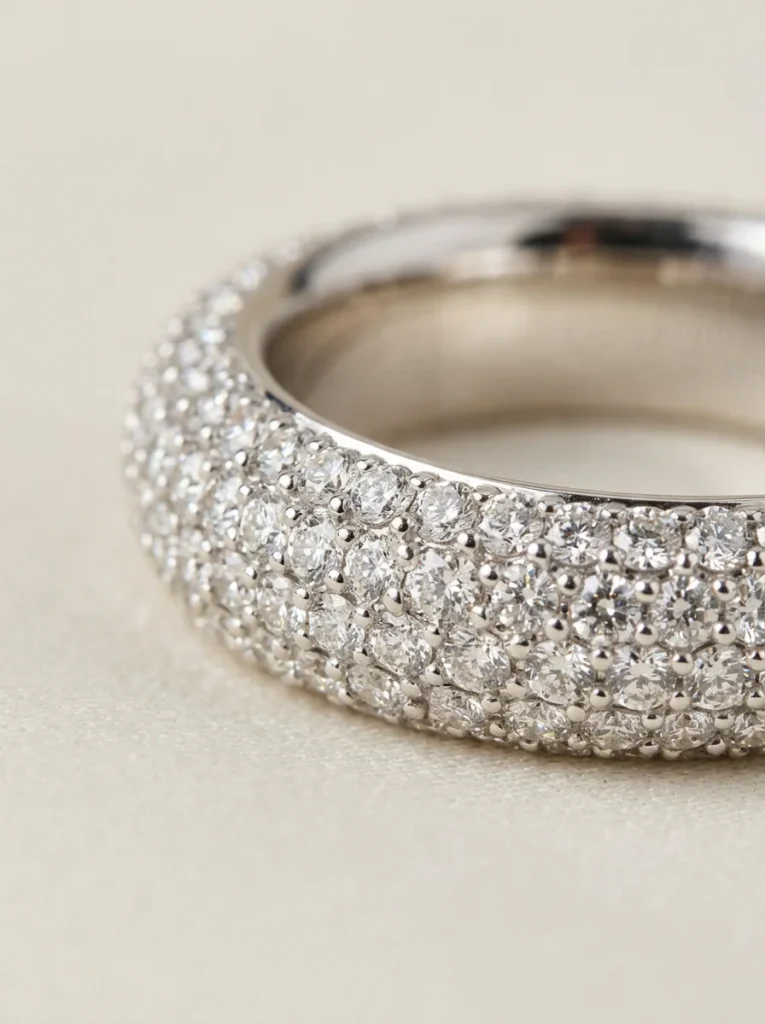
This style works beautifully with a diamond solitaire when you want to add extra brilliance without choosing another large center stone. It can also complement a halo engagement ring for a more glamorous combination.
Compare the band width, diamond coverage, and setting style before buying. A pavé band with a low profile may feel different from one with more raised settings, especially when worn beside another ring.
Best for: Glamorous bridal looks and couples who want noticeable sparkle in a refined design.
4. Curved Wedding Band
A curved wedding band follows the shape of your engagement ring rather than forming a completely straight line. The gentle contour can create a more coordinated look when a traditional band leaves a visible gap.
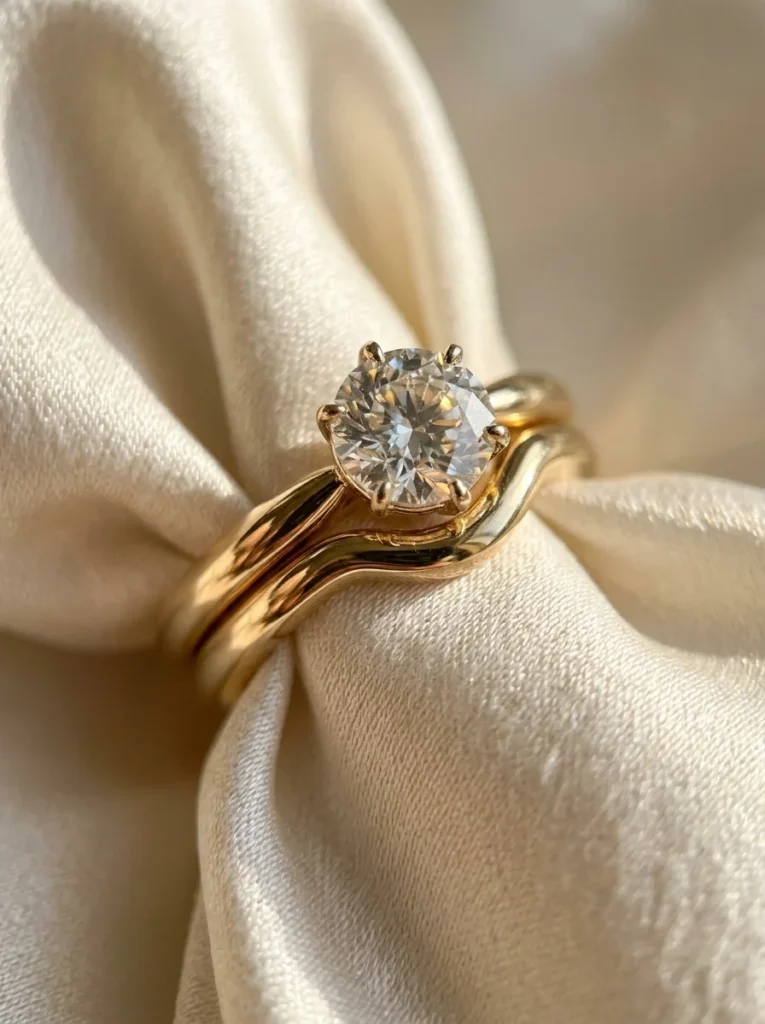
Some curved bands have a shallow wave, while others feature a deeper contour designed around a prominent center stone. You can find simple metal versions as well as diamond-accented styles.
Whenever possible, try the band with your actual engagement ring. Curves that look similar in photographs may fit differently around a particular setting.
Best for: Engagement rings with prominent center stones, unusual settings, or shapes that make straight bands difficult to pair.
5. Vintage-Inspired Wedding Band
A vintage-inspired wedding band brings character to your wedding jewelry through milgrain edges, engraved details, delicate patterns, or small decorative stones. Milgrain refers to tiny bead-like details along a metal edge.
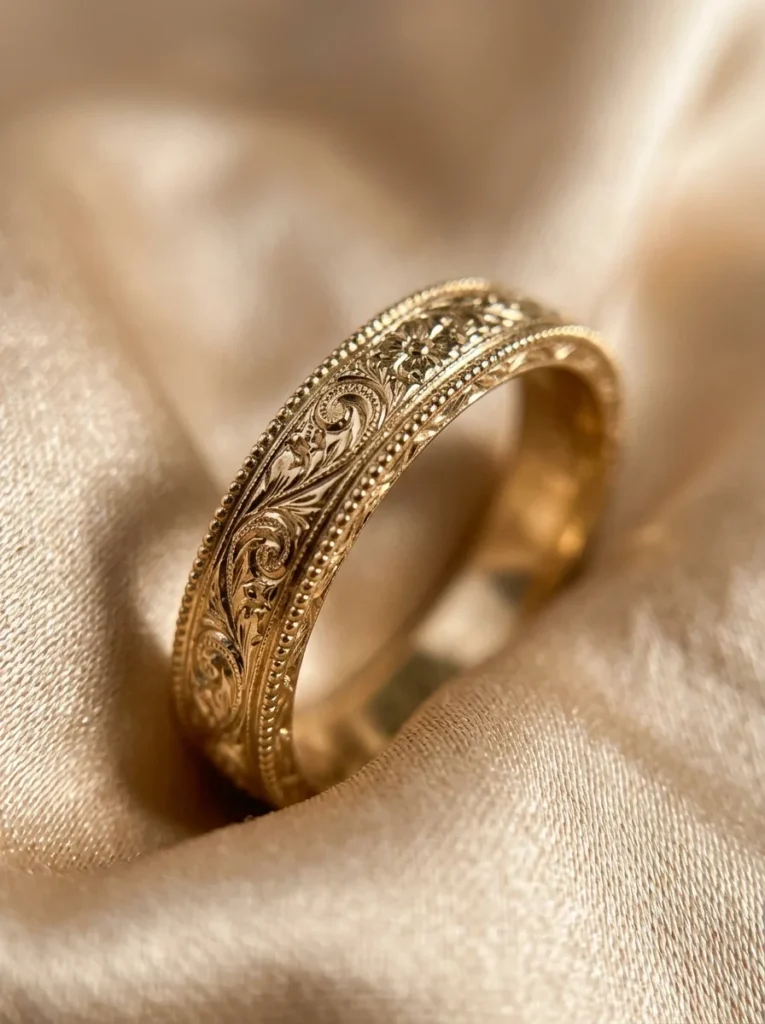
Choose an engraved gold band for a subtle antique appearance or a diamond band with intricate detailing for a more decorative style. Vintage-inspired designs can look especially cohesive beside an engagement ring with similar craftsmanship.
If your engagement ring has a clean, modern silhouette, a vintage band can also create an interesting contrast. Keep the metal color and overall proportions in mind so the combination feels intentional.
Best for: Romantic styles, heirloom-inspired jewelry, and brides who appreciate intricate details.
6. Modern Minimalist Wedding Band
A minimalist wedding band focuses on clean lines, simple shapes, and thoughtful proportions. It may be a plain narrow ring, a softly rounded band, or a sleek geometric design without decorative stones.
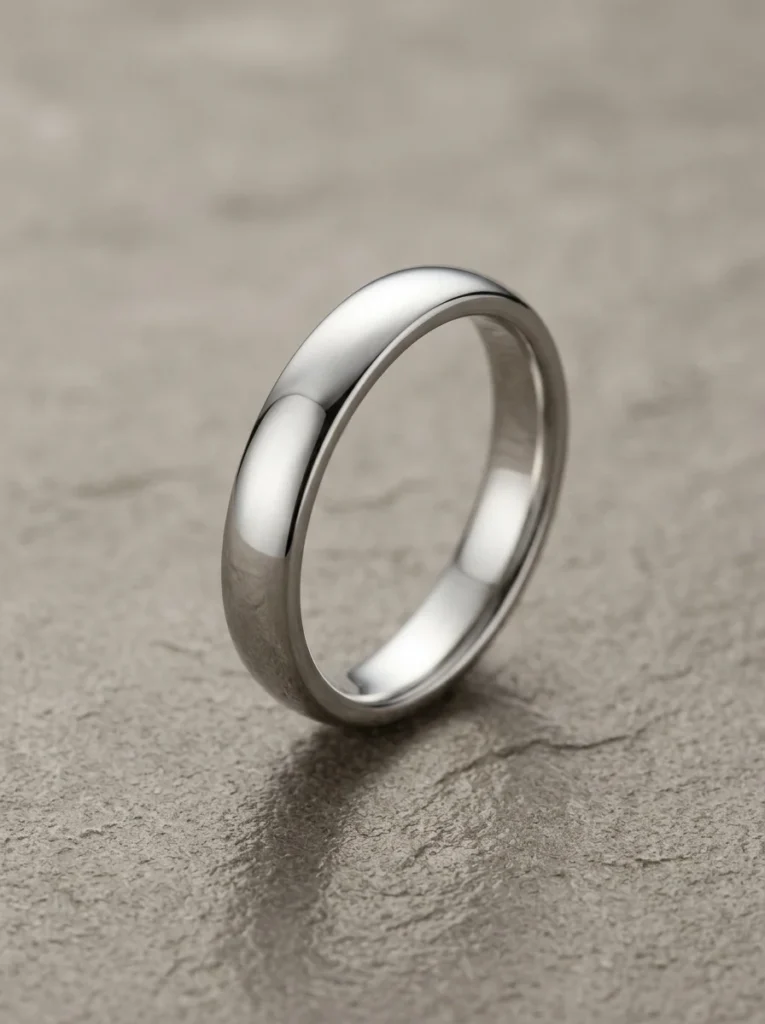
The beauty of this style is its versatility. It works with a wide range of engagement rings and is easy to incorporate into everyday outfits, from casual clothing to formal occasion wear.
For a modern finish, consider a smooth platinum band or a simple white gold ring. If you prefer warmth, yellow gold offers the same clean aesthetic with a more traditional color.
Best for: Minimalist jewelry lovers, understated bridal looks, and people who prefer simple everyday accessories.
7. Eternity Wedding Band
An eternity wedding band features gemstones arranged around the ring, often in a continuous circle. The design symbolizes lasting love and offers sparkle from multiple viewing angles.
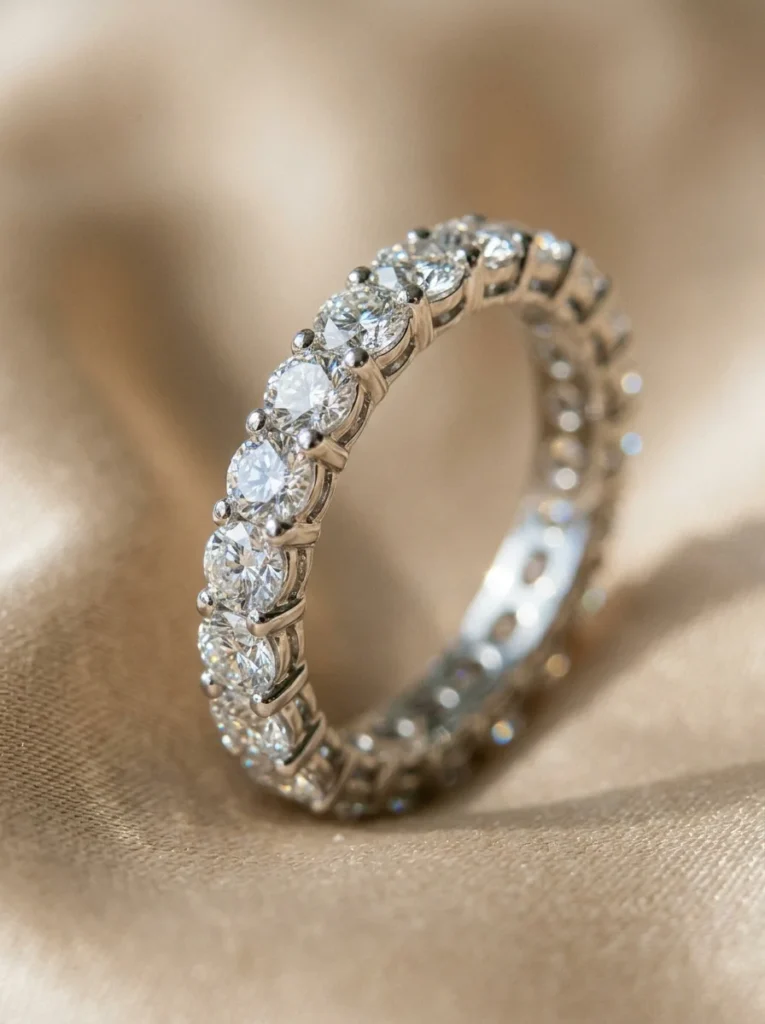
Full-eternity bands have stones around the entire circumference, while half-eternity designs place them across the visible upper portion. A half-eternity band may be easier to resize, depending on its construction, while a full-eternity ring can offer a continuous look all the way around.
Consider comfort, maintenance, and fit before choosing. Stone settings around the entire ring can make future resizing more complicated, so ask the jeweler about available options.
Best for: Couples who love all-around sparkle and want a decorative wedding band.
8. Mixed-Metal Wedding Band
A mixed-metal wedding band combines two metal colors, such as yellow gold and white gold, to create a distinctive yet wearable design. Some rings feature two clearly separated bands of color, while others blend the metals into a woven or intertwined pattern.
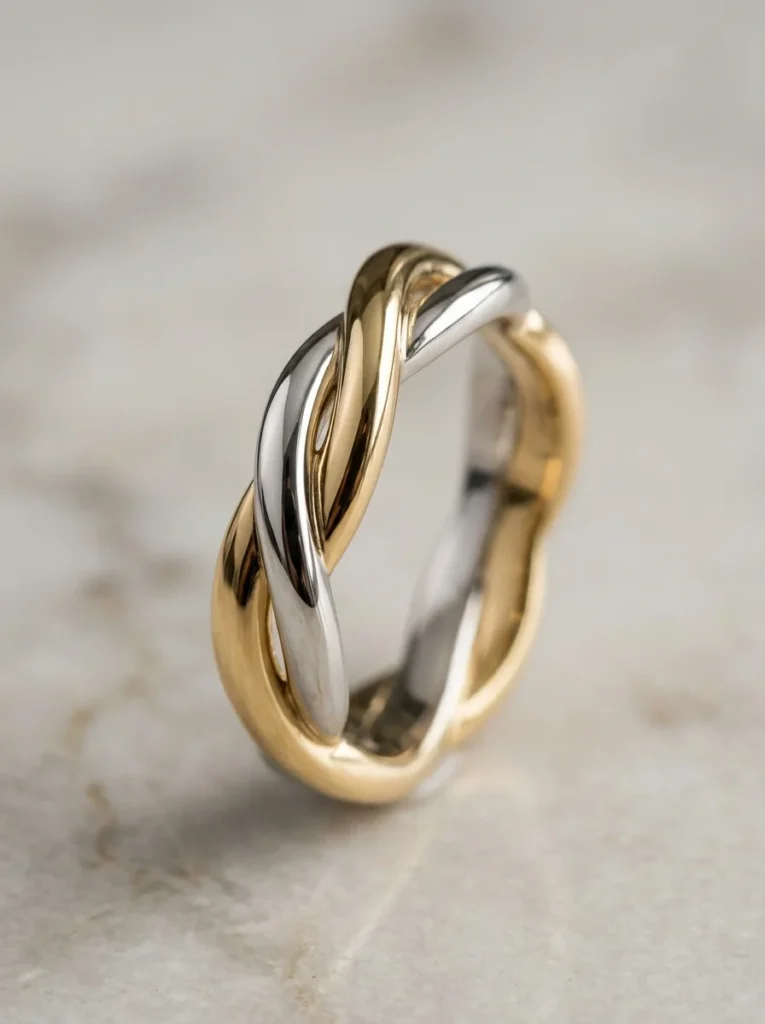
This option is useful if your engagement ring and everyday jewelry do not share the same metal color. Instead of matching everything exactly, a two-tone band can connect the different finishes.
Look at the proportions of each metal and decide whether you prefer a subtle contrast or a bold, graphic design. Ask your jeweler about care and repair considerations for the specific combination.
Best for: Modern couples, mixed-metal jewelry collections, and anyone who enjoys a little contrast.
9. Rose Gold Wedding Band
A rose gold wedding band has a soft pinkish tone created by combining gold with copper. Its warm color gives a romantic feel without requiring diamonds or elaborate decoration.
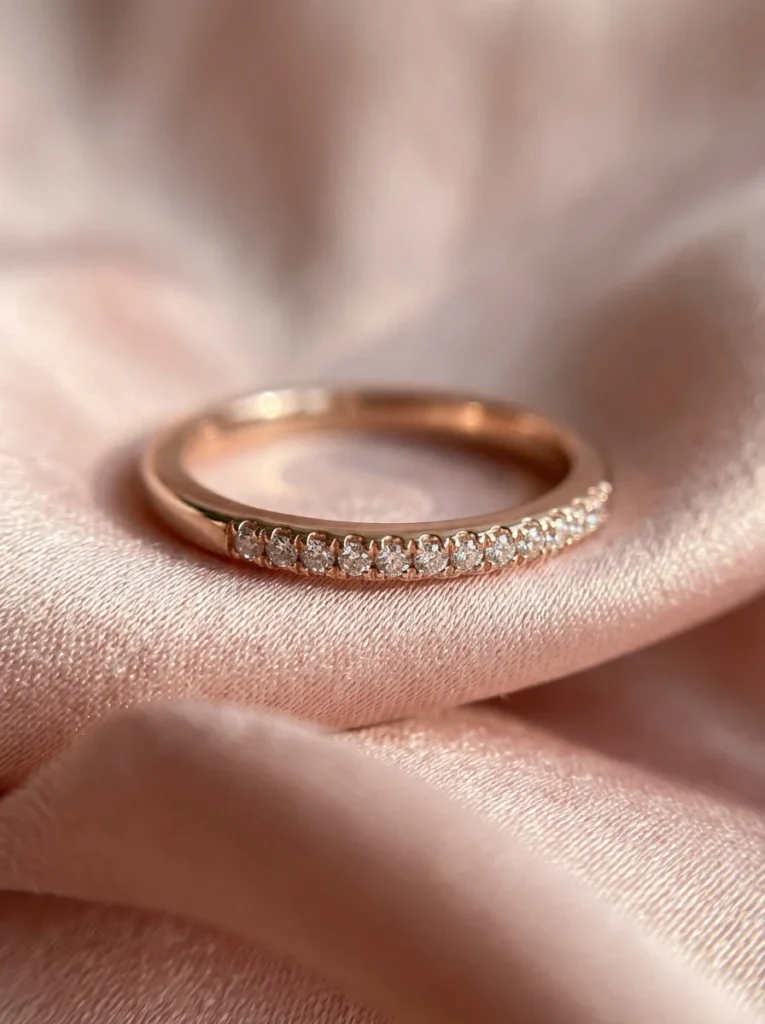
A plain rose gold band offers a delicate, understated look, while a diamond-accented version adds a little extra shine. Rose gold can also create a striking contrast beside a white gold or platinum engagement ring.
Remember that rose gold’s exact color varies with its alloy composition. Compare the band with your engagement ring in natural and indoor lighting before making a final choice.
Best for: Romantic bridal styles, warm-toned jewelry, and couples seeking an alternative to traditional yellow or white gold.
10. Bezel-Set Diamond Wedding Band
A bezel-set wedding band features diamonds or other gemstones surrounded by a rim of metal. Unlike exposed prong settings, the metal border wraps around each stone and creates a clean, defined appearance.
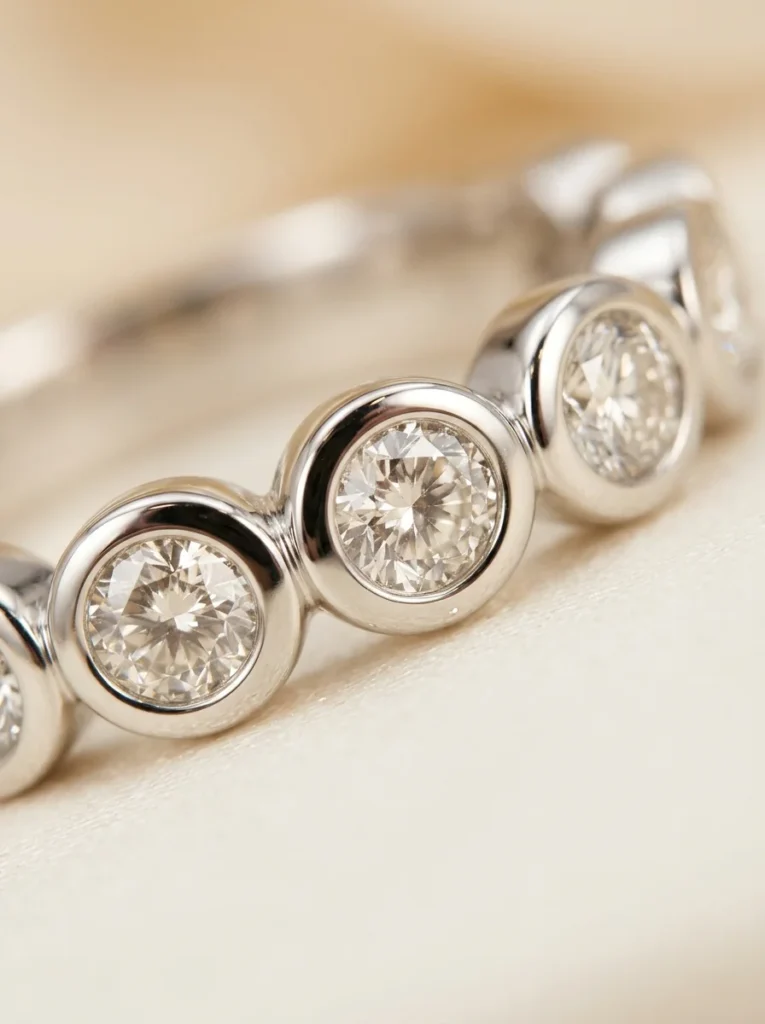
This design offers a modern alternative to traditional diamond bands. The metal rims can help shield the edges of the stones, although the ring still needs regular inspection and proper care.
Bezel-set bands can feature individual round diamonds, a line of closely spaced stones, or geometric arrangements. Their slightly different profiles make trying on the ring especially important when pairing it with an engagement ring.
Best for: Modern bridal jewelry, streamlined designs, and people who prefer a more enclosed gemstone setting.
11. Twisted Wedding Band
A twisted wedding band features two or more strands of metal woven or intertwined to create a sense of movement. The design can look delicate and romantic or bold and sculptural, depending on the width and shape.
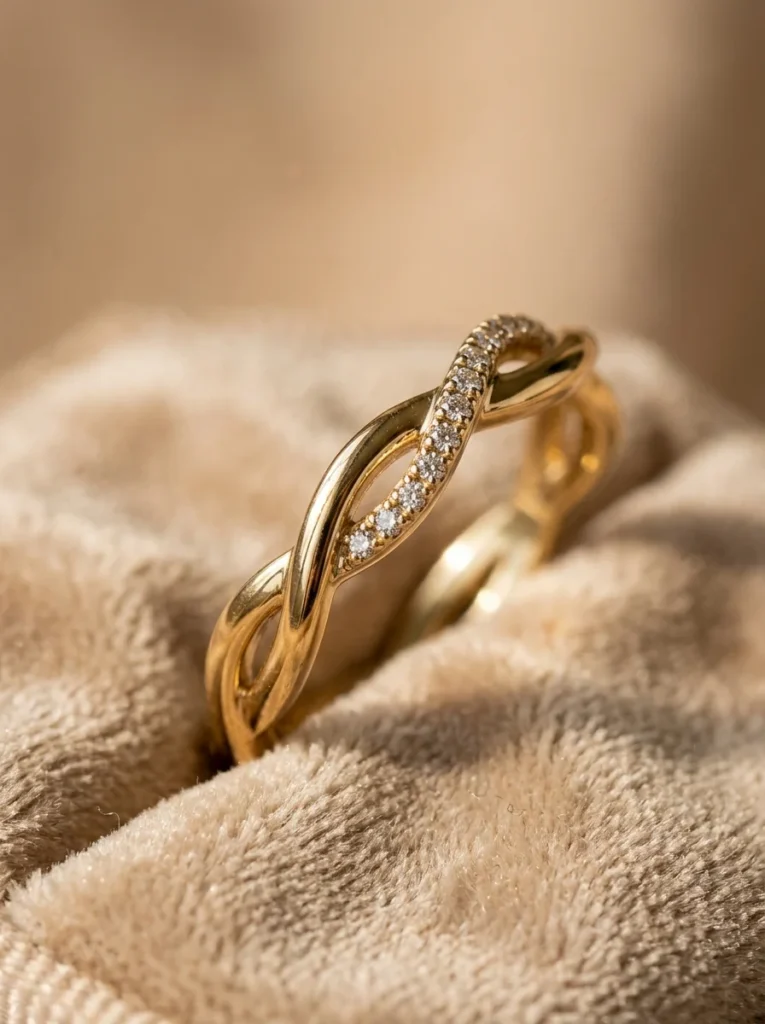
Some twisted bands are made entirely of plain metal, while others incorporate small diamonds along one or both strands. A simple version pairs well with a classic solitaire, while a diamond-accented design can create a more decorative bridal set.
Check how the band sits against your engagement ring, particularly if the center setting has a wide base. The twist should complement the engagement ring rather than compete with its shape.
Best for: Romantic, contemporary, and slightly unconventional bridal styles.
12. Nature-Inspired Wedding Band
A nature-inspired wedding band draws on organic shapes such as leaves, vines, flowers, or gently textured branches. Some designs use engraved patterns, while others incorporate small diamonds to suggest dewdrops or flower centers.
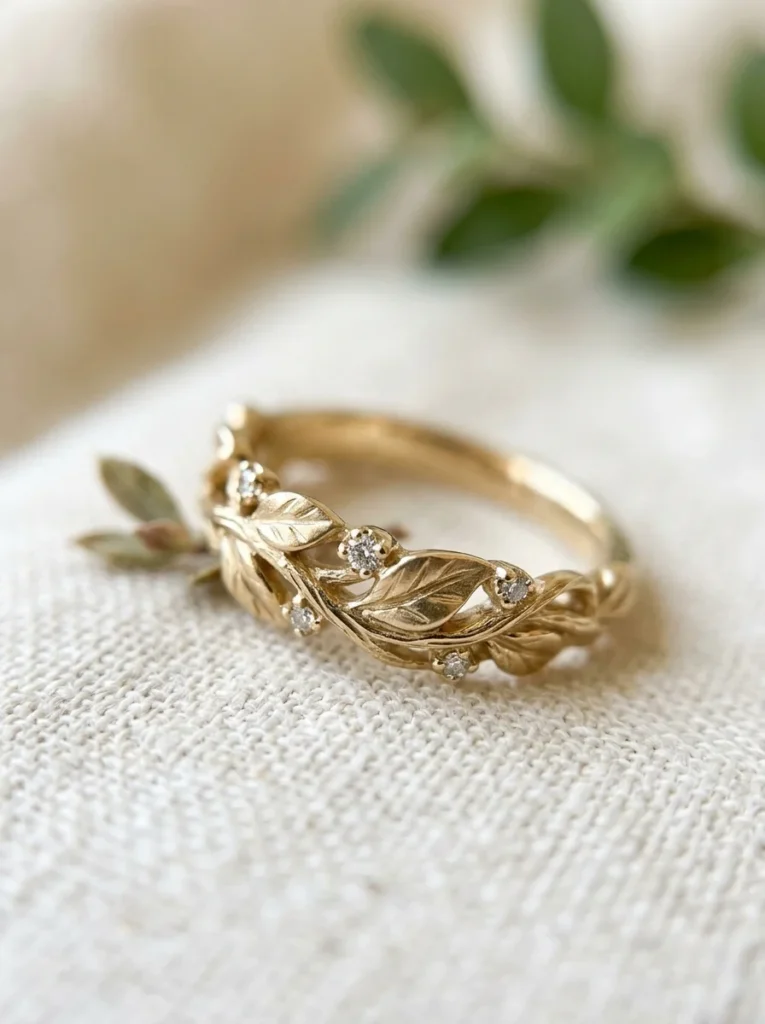
These bands offer an alternative to perfectly straight lines and uniform settings. They work especially well with botanical engagement rings, vintage-inspired designs, and outdoor wedding aesthetics.
Consider how much texture you want on a ring you will wear daily. Raised leaves and intricate details may need more careful cleaning than a smooth band, especially if you frequently wear gloves or work with your hands.
Best for: Nature lovers, garden-inspired weddings, and brides who want jewelry with an organic feel.
13. Wide Gold Wedding Band
A wide gold wedding band makes a confident statement through its shape rather than its sparkle. Its broader surface can highlight a polished finish, subtle engraving, or a softly rounded profile.
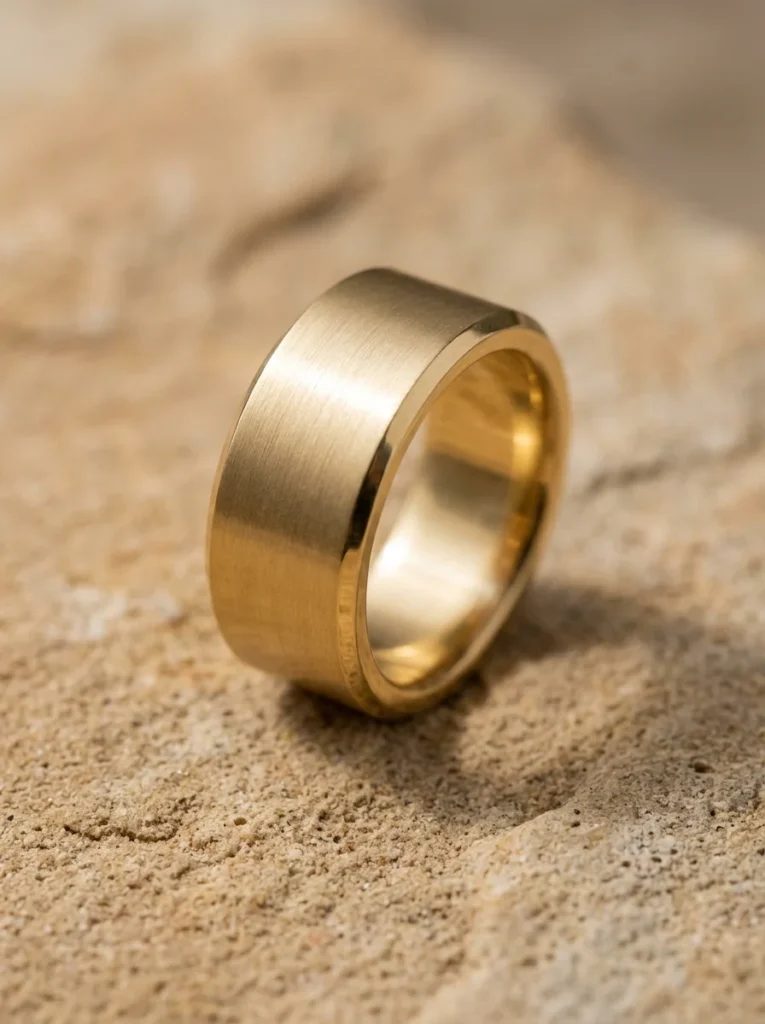
Choose a plain, substantial band for a modern look or a textured design for more character. Wider rings can feel different from narrow bands, so compare several widths before settling on one.
Fit is especially important because a wider band covers more of your finger. Ask your jeweler to check the size and comfort rather than assuming your usual narrow-ring size will feel identical.
Best for: Bold minimalist jewelry, contemporary styles, and couples who prefer a more substantial ring.
14. Black Wedding Band
A black wedding band offers a distinctive alternative to traditional gold and silver-colored rings. It can feature a smooth, glossy finish, a matte surface, or contrasting details such as a narrow metal inlay.
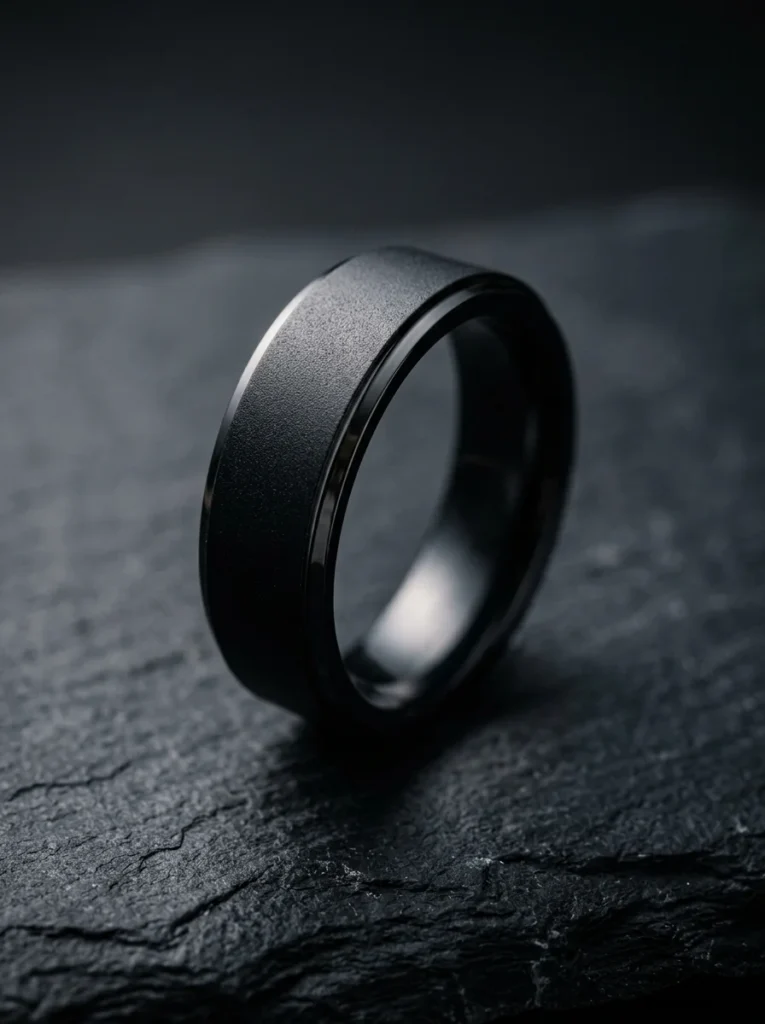
Black bands are available in different materials, including tungsten carbide, ceramic, and other metals or coated designs. These materials have different properties, so do not assume that every black ring has the same durability or resizing options.
Before purchasing, confirm the material, care requirements, and whether the ring can be resized. Some materials are difficult or impossible to resize using conventional jewelry techniques.
Best for: Modern couples, alternative bridal styles, and anyone who prefers a bold, unconventional finish.
15. Personalized Engraved Wedding Band
A personalized wedding band makes a classic design more meaningful through a private message or important date. You might choose your wedding date, initials, a short phrase, or a symbol that represents your relationship.
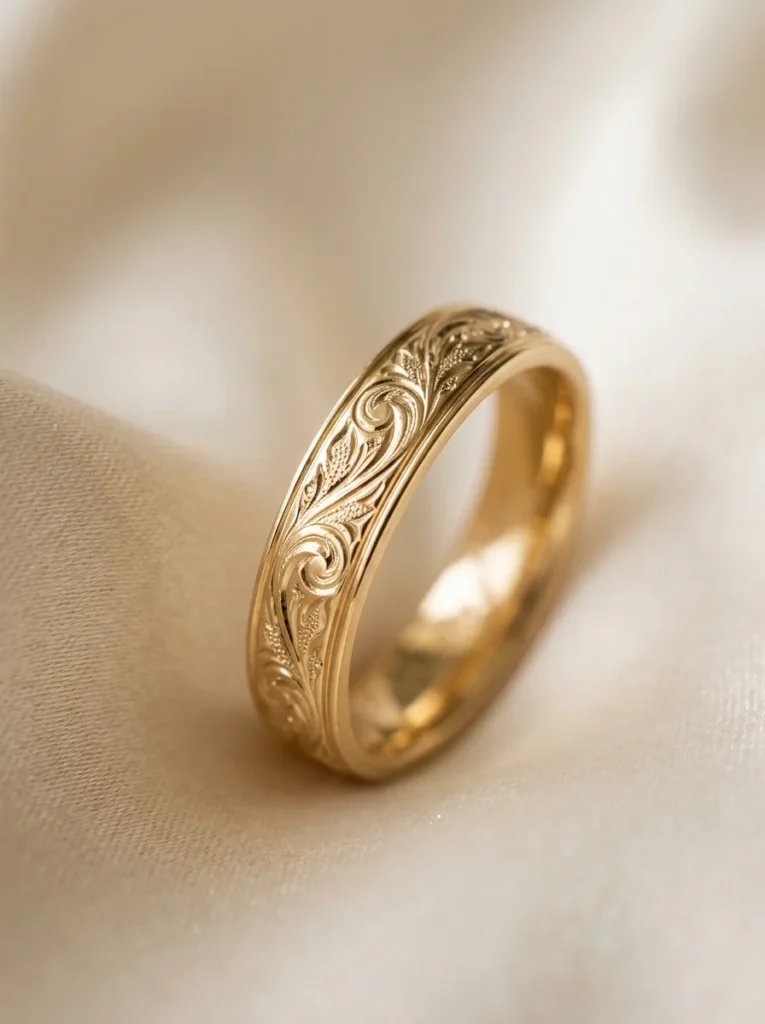
Engraving can be added to many plain gold or platinum bands, although the available space depends on the ring’s width, thickness, and construction. Some couples prefer a message on the inside, while others choose decorative engraving on the outside.
Confirm the spelling, date format, and character limit before approving the engraving. If you may need resizing later, ask whether the chosen design will affect that process.
Best for: Sentimental couples, understated jewelry, and anyone who wants a personal detail without a heavily decorated ring.
How to Choose the Right Wedding Band
Once you have a few favorite wedding band ideas, compare them against your engagement ring, everyday routine, and budget. A beautiful ring should not only look right in a photograph; it should also feel comfortable and work with the jewelry you already wear.
Match the Band to Your Engagement Ring
Start with the engagement ring’s shape, setting, and metal color. A straight band often works well with a low-profile solitaire, while a curved or contoured band may suit a setting that leaves a gap beneath the center stone.
You do not have to match every detail. A plain gold band beside a diamond engagement ring can create an elegant contrast, while a diamond wedding band can make the complete set feel more coordinated.
Choose a Metal That Suits Your Needs
Yellow gold, white gold, rose gold, and platinum each offer a different appearance and care routine. Compare the specific alloy, finish, and maintenance requirements rather than choosing based on color alone.
Gold purity also matters. For example, 14-karat gold contains a different proportion of pure gold than 18-karat gold, which can affect its color, composition, and practical properties.
Think About Daily Comfort
Consider your work, hobbies, and how often you use your hands. A smooth band may be easier to wear during everyday activities than a design with prominent settings or intricate raised details.
Try the ring on at different times if possible, since finger size can vary throughout the day. The band should feel secure without pinching, restricting movement, or becoming uncomfortable when your fingers are slightly swollen.
Set a Realistic Budget
The cost of a wedding band depends on its metal, weight, gemstone quality, craftsmanship, and design complexity. A plain gold band may cost less than a diamond-covered design, but actual prices vary considerably by retailer and specifications.
Decide which details matter most before shopping. If sparkle is important, compare diamond size and setting style; if everyday simplicity is your priority, a well-made plain band may be the better fit.
Check the Fit Before Ordering
Ring sizing is worth checking before you purchase, especially if you are ordering online or choosing a wide band. The fit can vary with band width, ring shape, and the way the ring passes over your knuckle.
Use a reliable ring-sizing method as an initial guide, then confirm the size with a jeweler when possible. If you are considering a full-eternity ring or a band made from a material that is difficult to resize, getting the fit right before ordering is particularly important.
Wedding Band Styles at a Glance
| Wedding band style | Overall look | Consider if you prefer |
| Classic yellow gold | Timeless and warm | Simple, traditional jewelry |
| Delicate diamond | Subtle sparkle | A refined, feminine look |
| Pavé diamond | Bright and glamorous | More visible diamond detail |
| Curved band | Contoured and coordinated | A close fit beside your engagement ring |
| Vintage-inspired | Ornate and romantic | Engraving and antique-style details |
| Minimalist | Clean and understated | Everyday simplicity |
| Eternity band | Continuous sparkle | Gemstones around the ring |
| Mixed-metal | Contrasting and modern | More than one metal color |
| Rose gold | Warm and romantic | A pink-toned metal finish |
| Bezel-set diamond | Sleek and defined | Metal-surrounded stones |
| Twisted band | Textured and flowing | An intertwined design |
| Nature-inspired | Organic and detailed | Botanical patterns |
| Wide gold | Bold and substantial | A statement-making plain band |
| Black band | Distinctive and contemporary | An unconventional color |
| Personalized band | Meaningful and individual | Engraved details |
Frequently Asked Questions About Wedding Bands
Should a wedding band match an engagement ring?
No. Matching the metal color and design can create a coordinated set, but contrasting styles can look equally beautiful. Focus on comfort, proportion, and whether the rings sit well together.
Can you wear a curved wedding band with a solitaire engagement ring?
Yes. A curved band can follow the outline of a solitaire setting and reduce the gap between the rings. The exact shape you need depends on the center stone, setting height, and base of your engagement ring.
Are diamond wedding bands suitable for everyday wear?
Many diamond wedding bands are designed for daily use, but durability depends on the setting, materials, and how you wear the ring. Regular inspections and appropriate care can help identify loose stones or worn settings before they become bigger problems.
Is a wide wedding band less comfortable than a thin one?
Not necessarily, but a wide band covers more of your finger and may feel tighter than a narrow band of the same nominal size. Try the actual width and profile before purchasing, and ask a jeweler to check the fit.
Can you mix gold and platinum wedding jewelry?
Yes. Mixing metal colors can create a distinctive, intentional look. Ask your jeweler about the specific metals, their finishes, and how the rings may wear when they sit directly against each other.
Should a wedding band have diamonds all the way around?
That depends on your preferences. A full-eternity band provides stones around the entire circumference, while a half-eternity band concentrates the diamonds across the visible portion and may offer more flexibility for resizing.
When should you buy your wedding band?
Start shopping early enough to compare styles, confirm sizing, and allow time for custom work or engraving. The ideal timeline depends on the jeweler and whether your ring is ready-made or made to order.
Final Thoughts
The best wedding band is one that feels right for your relationship, your engagement ring, and the way you live. A classic gold band offers lasting simplicity, while diamond, curved, vintage, and personalized designs let you express a more distinctive style.
Shortlist two or three designs, try them beside your engagement ring, and compare comfort as carefully as appearance. Once you find a band that fits well and feels like you, the final choice becomes much easier.
Join the Conversation