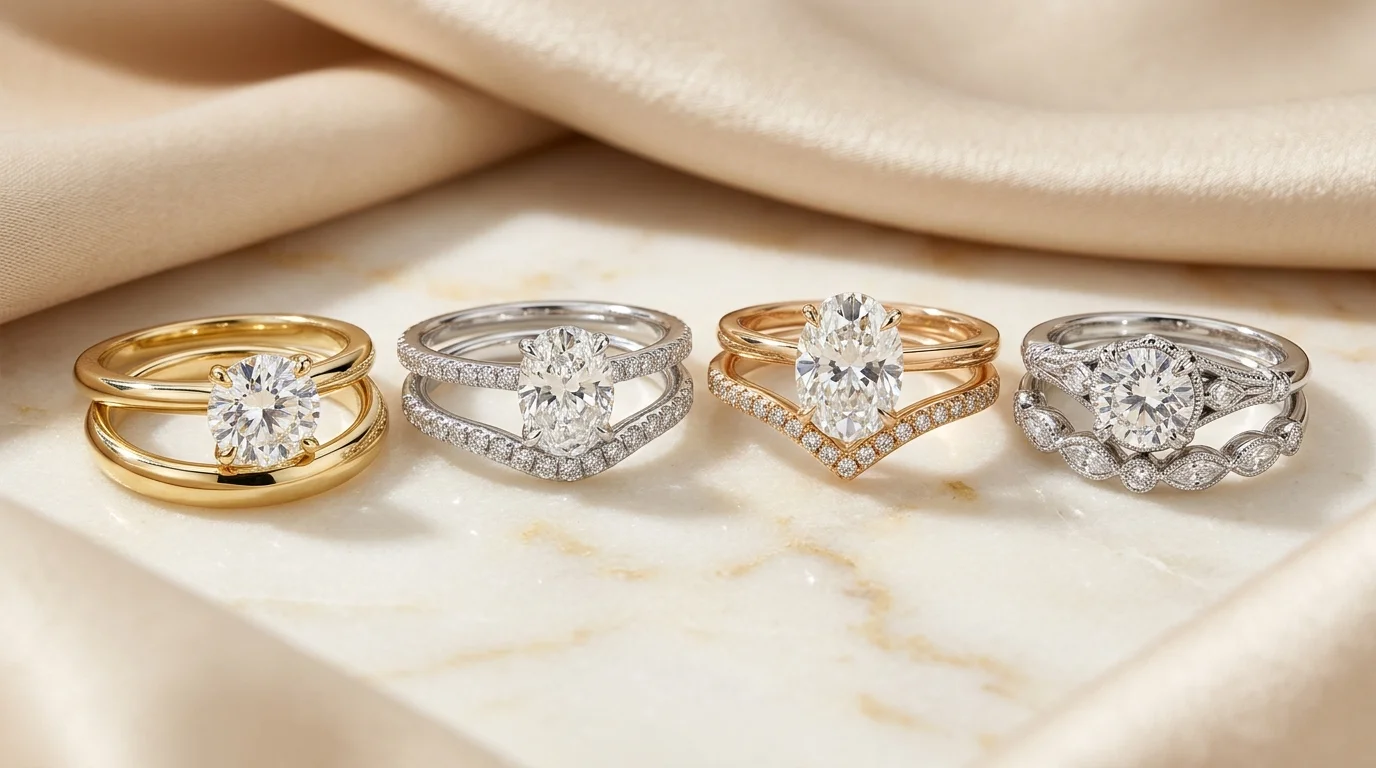
A curved wedding band can make an engagement ring look beautifully complete without forcing the two rings into an awkward fit. Whether your engagement ring features an oval diamond, a pear-shaped center stone, a vintage setting, or a delicate solitaire, the right curve can create a graceful, coordinated look.
These 15 curved wedding band ideas range from barely-there contours to sparkling diamond accents and distinctive vintage-inspired designs. You’ll also discover how to choose the right curve, when a small gap is perfectly fine, and what to check before ordering a band for everyday wear.
15 Curved Wedding Bands That Sit Beautifully With an Engagement Ring
1. Classic Plain Gold Curved Wedding Band
A simple curved gold wedding band is an elegant choice when you want your engagement ring to remain the center of attention. Its smooth, understated design follows the outline of the engagement ring, creating a coordinated look without adding extra sparkle.
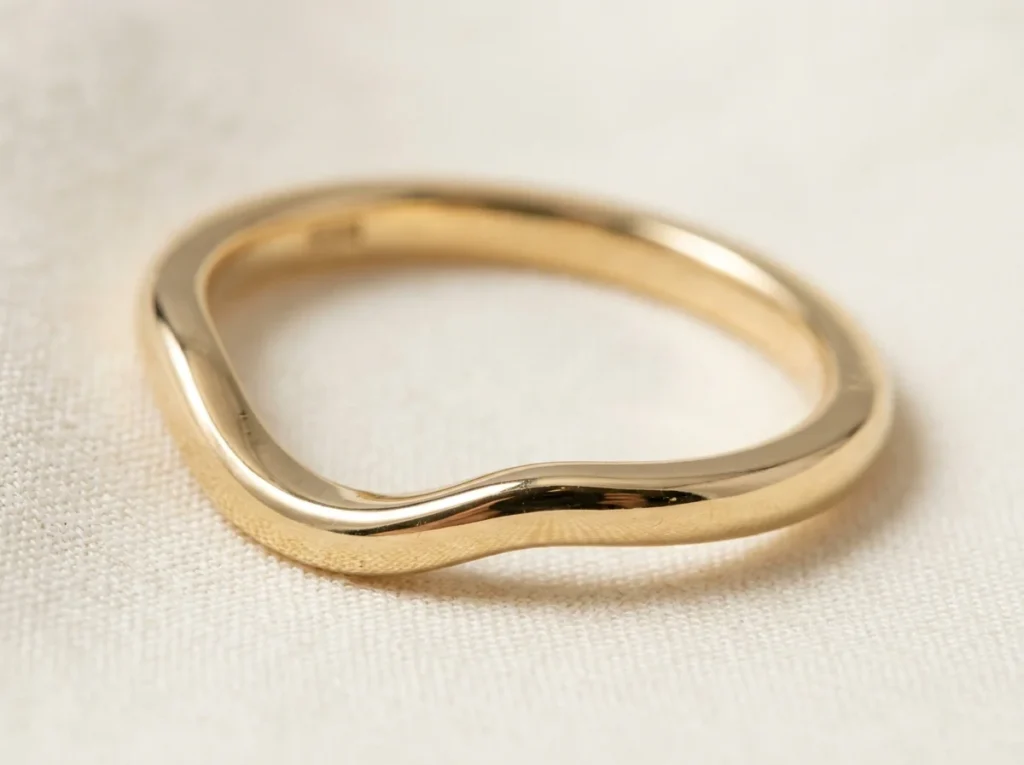
Choose yellow gold for a traditional, warm finish, white gold for a subtle contemporary appearance, or rose gold for a softer romantic touch. A slim profile works especially well with delicate solitaire rings.
Best for: Classic solitaires, minimalist engagement rings, and brides who prefer timeless jewelry.
2. Curved Diamond Pavé Wedding Band
A diamond pavé curved wedding band features small diamonds set closely together along the visible surface of the band. The curve helps the diamonds follow the engagement ring’s outline, while the extra sparkle creates a more detailed bridal set.
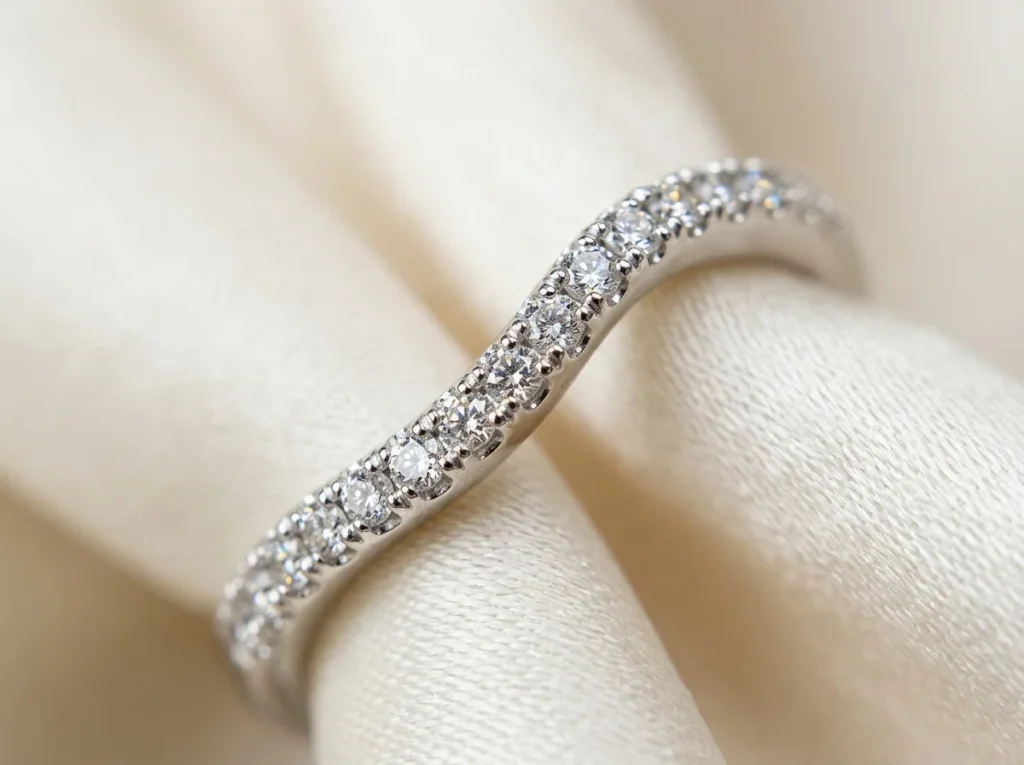
This design works beautifully beside a round or oval center stone, particularly when the engagement ring already has delicate diamond accents. For a balanced appearance, compare the size and brightness of the accent stones before choosing your band.
Best for: Diamond solitaires, halo engagement rings, and brides who love a little extra brilliance.
3. Deep V-Shaped Curved Wedding Band
A deep V-shaped wedding band forms a noticeable point that can frame the bottom of an engagement ring. Instead of following a gentle arc, its sharper contour creates a modern geometric look.
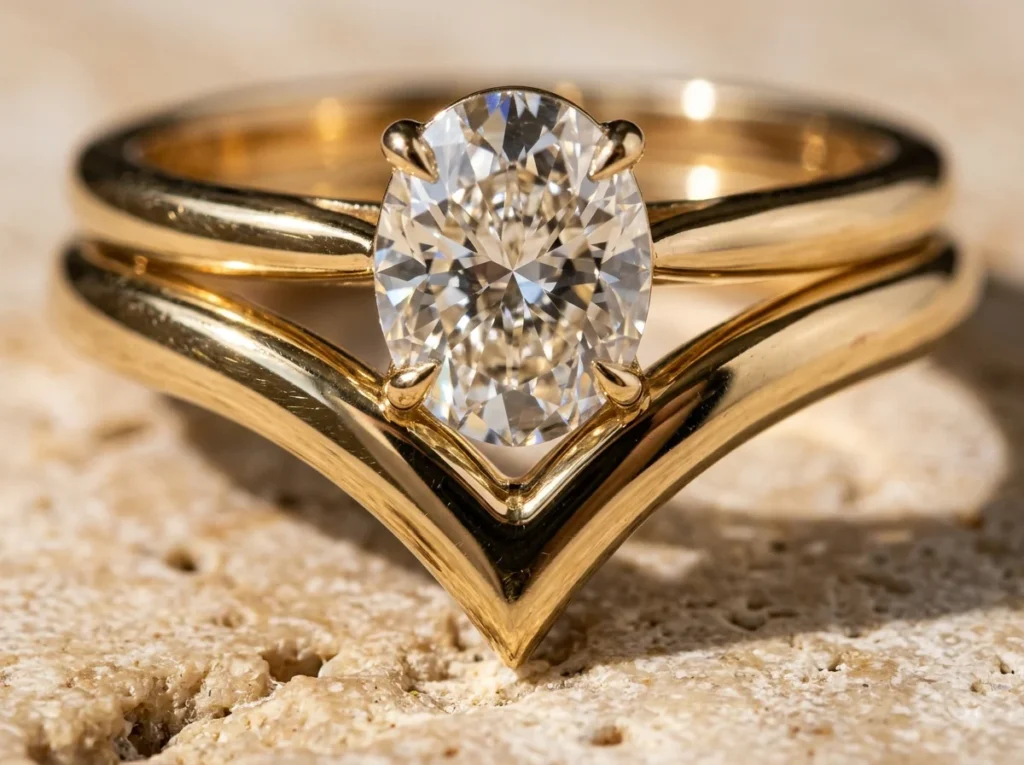
This style is worth considering when your engagement ring has an elongated center stone or a setting that leaves space for a more pronounced curve. Check the band’s height and angle carefully, because a deep V will not suit every ring profile.
Best for: Contemporary settings, angular designs, and brides who prefer distinctive jewelry.
4. Soft Chevron Wedding Band
A soft chevron band offers a gentler version of the pointed V shape. Its shallow dip creates a delicate frame around the engagement ring without looking too sharp or dramatic.
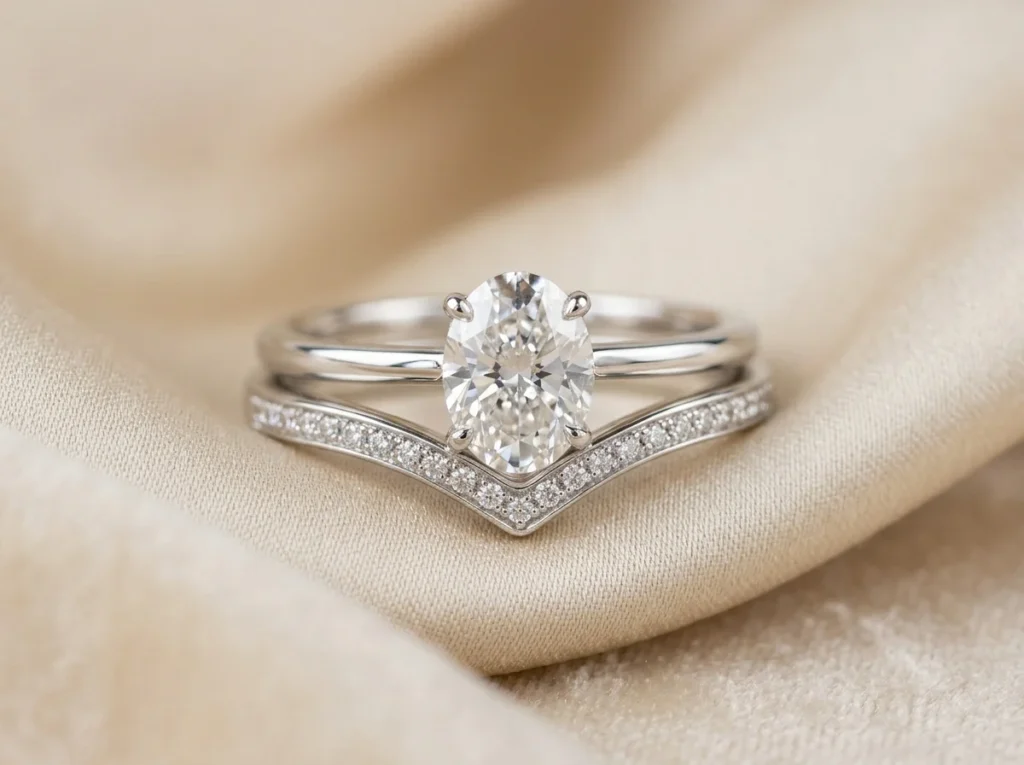
Try this style with an oval, round, or pear-shaped engagement ring. A narrow plain-metal chevron feels understated, while a diamond-set version adds a little more definition to the ring stack.
Best for: Delicate engagement rings, modern bridal sets, and minimalist styling.
5. Curved Wedding Band for an Oval Engagement Ring
Oval engagement rings have an elongated silhouette that looks graceful with a wedding band designed to complement its lower outline. A shallow curved band can create a neat pairing while keeping the oval center stone visually prominent.
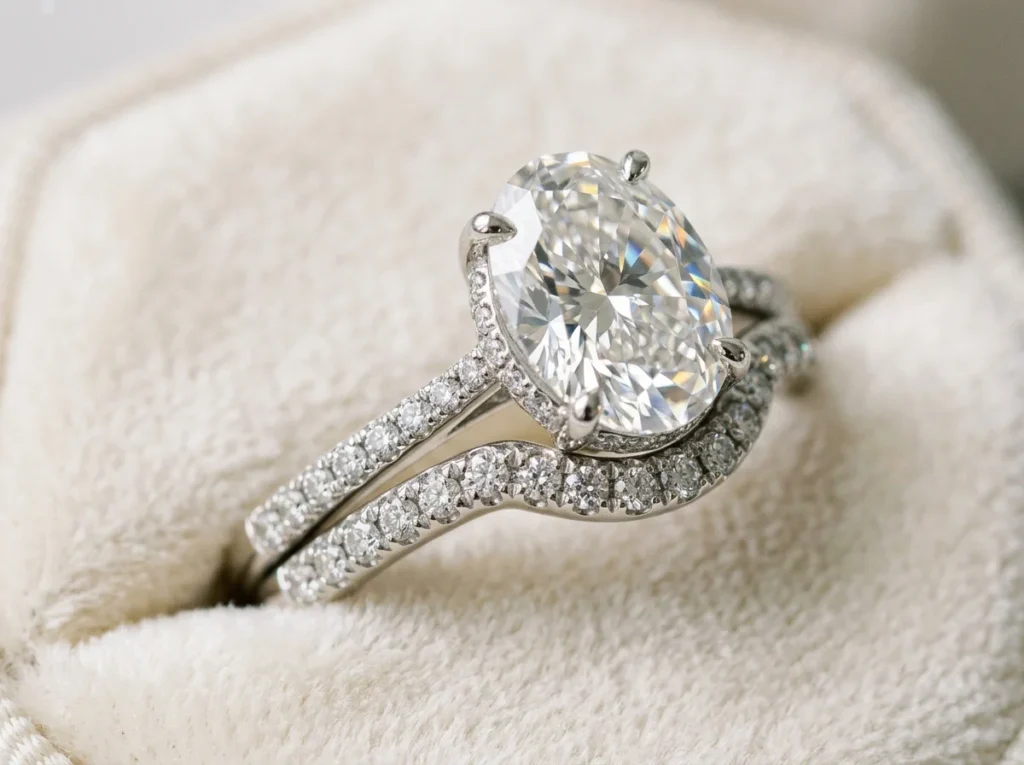
For a subtle finish, choose a plain band with a matching metal color. If you prefer more sparkle, consider a slim pavé band that echoes any accent diamonds on the engagement ring.
Remember that not every oval setting needs a curved band. The basket, prongs, and height of the center stone determine how closely a wedding band can sit beside it.
Best for: Oval solitaires, oval halo rings, and elongated center stones.
6. Pear-Shaped Engagement Ring Curved Band
A pear-shaped engagement ring has a rounded end and a pointed tip, giving it a distinctive teardrop silhouette. A curved wedding band can be designed to accommodate the shape near the base of the setting while preserving the engagement ring’s elegant outline.
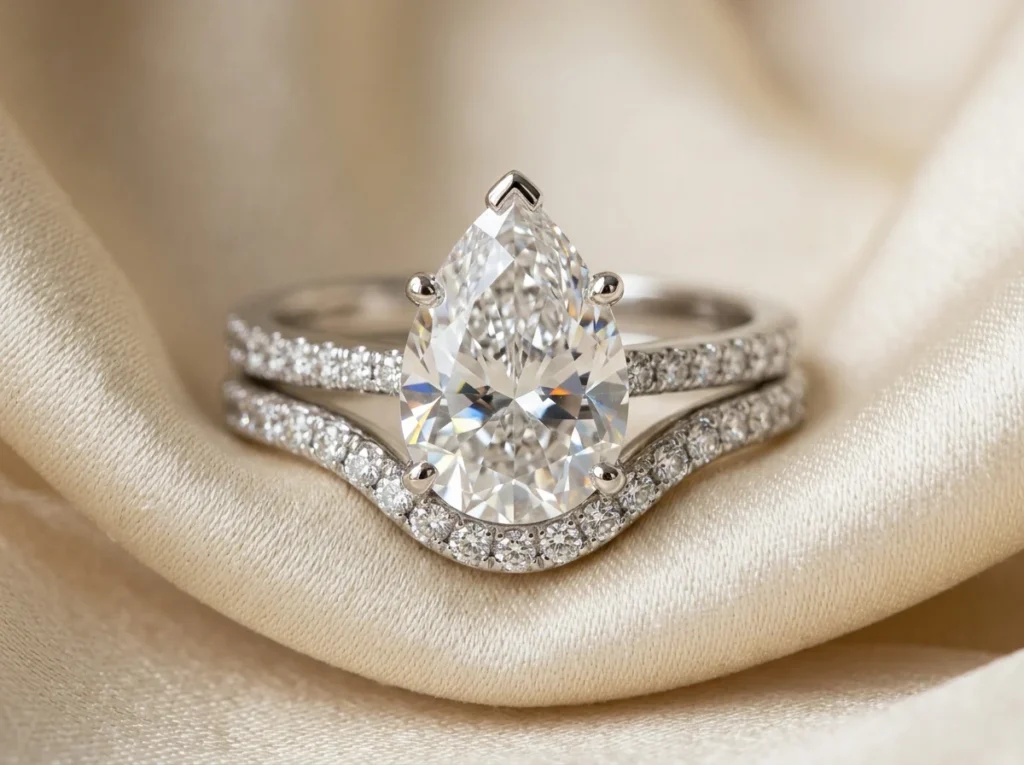
Some pear-shaped rings pair well with a band that dips gently around the setting, while others need a more pronounced contour. Decide whether you want the band to follow the pear’s outline closely or simply complement it from below.
Best for: Pear-shaped diamonds, teardrop gemstones, and romantic bridal jewelry.
7. Marquise Curved Wedding Band
Marquise engagement rings feature elongated stones with pointed ends. Their distinctive shape can make choosing a straight wedding band challenging, especially when the setting extends beyond the center stone.
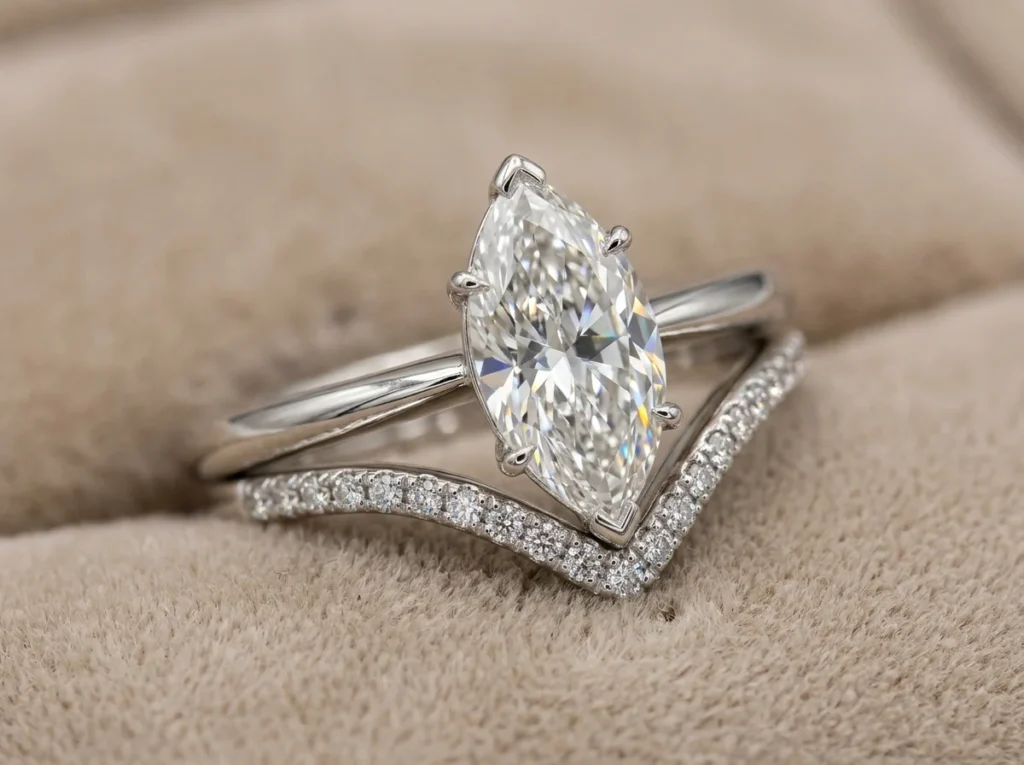
A contoured band can follow the lower edge of the engagement ring and create a more connected appearance. A narrow, polished design keeps the look refined, while a diamond-accented curve adds extra sparkle.
Before purchasing, check the placement of the marquise’s pointed ends and the band’s contour. The goal is a comfortable pairing that does not press against delicate prongs.
Best for: Marquise diamonds, elongated vintage-inspired rings, and distinctive center stones.
8. Curved Wedding Band With a Bezel-Set Engagement Ring
A bezel setting surrounds a gemstone with a rim of metal rather than holding it with individual prongs. This clean outline can look particularly elegant with a curved wedding band that follows the lower edge of the setting.
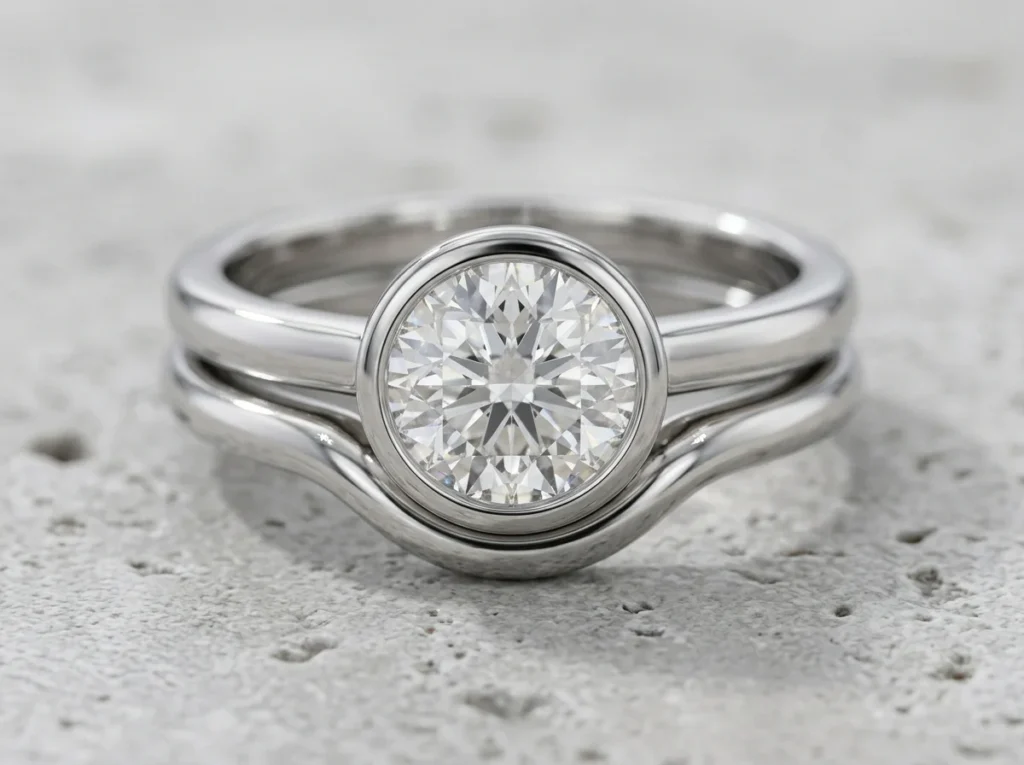
A plain gold contour creates a sleek, coordinated set, while a narrow diamond band introduces contrast. Because bezel settings vary in width and shape, compare the actual ring profiles rather than choosing a band based on the gemstone shape alone.
Best for: Modern engagement rings, low-profile settings, and streamlined jewelry.
9. Vintage-Inspired Curved Wedding Band
A vintage-inspired curved wedding band brings character to a bridal set through milgrain edging, engraved details, delicate scrollwork, or antique-style metalwork. Its contour helps it fit around an engagement ring while maintaining the charm of an heirloom-inspired design.
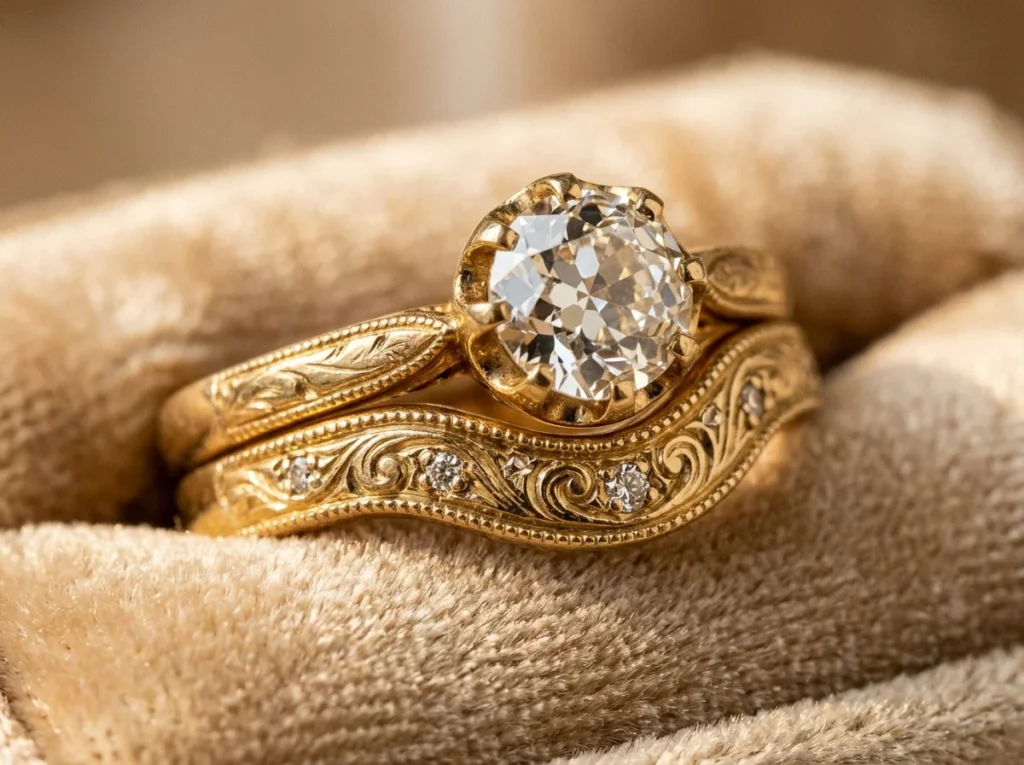
Pair an ornate band with an engagement ring that shares similar decorative details, or use a simpler curved design to balance a highly detailed center setting. Yellow gold and platinum-colored metals can both work beautifully, depending on the look you want.
Best for: Art Deco-inspired rings, antique-style settings, and romantic bridal jewelry.
10. Curved Wedding Band With Baguette Diamonds
Baguette diamonds have an elongated rectangular shape that creates a clean, architectural appearance. Arranged along a curved wedding band, they offer a refined alternative to the traditional sparkle of round accent stones.
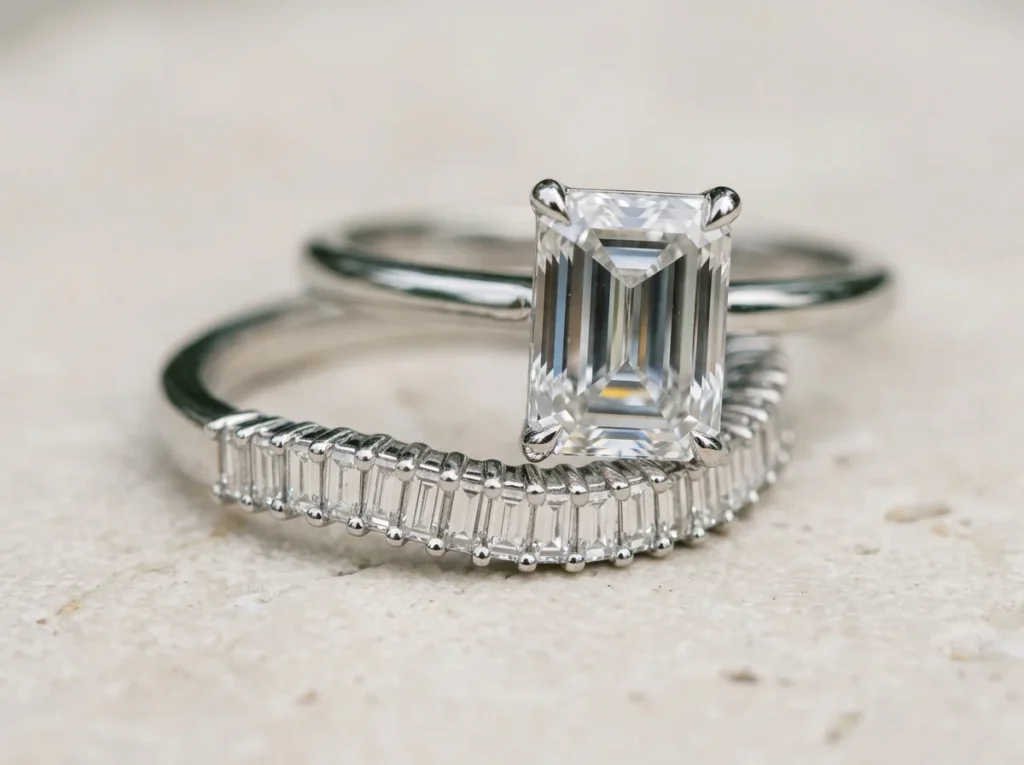
This design pairs especially well with emerald-cut engagement rings and other geometric settings. A slim band can preserve the ring’s elegant proportions, while a slightly wider version creates a more noticeable contrast.
Pay attention to how the baguettes are arranged along the curve. Their alignment and spacing should feel balanced when the band is worn beside the engagement ring.
Best for: Emerald-cut engagement rings, geometric designs, and understated glamour.
11. Open Curved Wedding Band
An open wedding band has two ends that do not meet, creating a deliberate gap in the ring’s design. Some styles feature two simple metal tips, while others finish with tiny diamonds or decorative details.
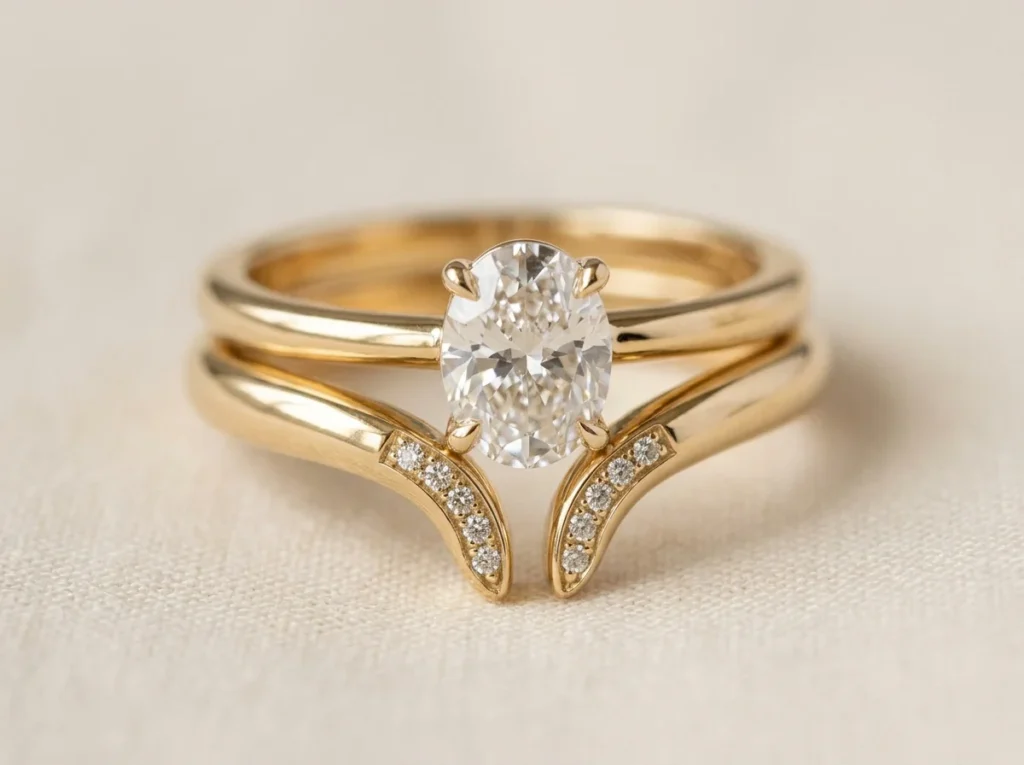
This shape can provide room around a distinctive engagement ring setting while creating a modern, airy appearance. It can also work as a standalone ring when you want a lighter look without your engagement ring.
Open bands vary in construction, so check whether the ends are designed to remain in position during everyday wear. Avoid repeatedly bending the band to adjust its fit, as this can weaken the metal.
Best for: Modern bridal sets, sculptural engagement rings, and contemporary jewelry lovers.
12. Curved Wedding Band With a Hidden Halo Look
A curved wedding band with small, closely set accent diamonds can complement an engagement ring that features a hidden halo. The two rings create layers of sparkle without requiring the wedding band to compete with the center stone.
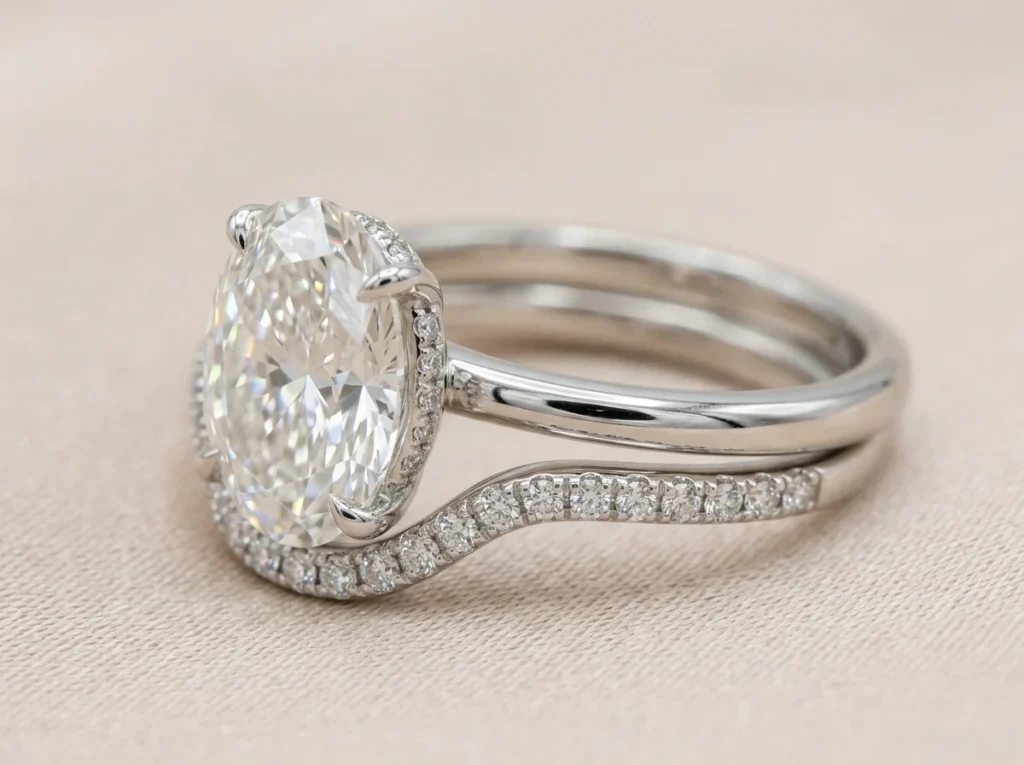
For a balanced result, choose a band with a similar level of detail to the engagement ring’s setting. A narrow diamond curve often looks more harmonious than a thick band covered in larger stones.
Remember that a hidden halo sits beneath the center stone, so the wedding band must be selected according to the actual setting profile rather than the halo alone.
Best for: Hidden-halo engagement rings, diamond solitaires, and subtle sparkle.
13. Rose Gold Curved Wedding Band
A rose gold curved wedding band adds a warm pinkish tone to a bridal set. Its gentle contour can frame an engagement ring while introducing a soft color contrast, particularly when the center stone is a white diamond.
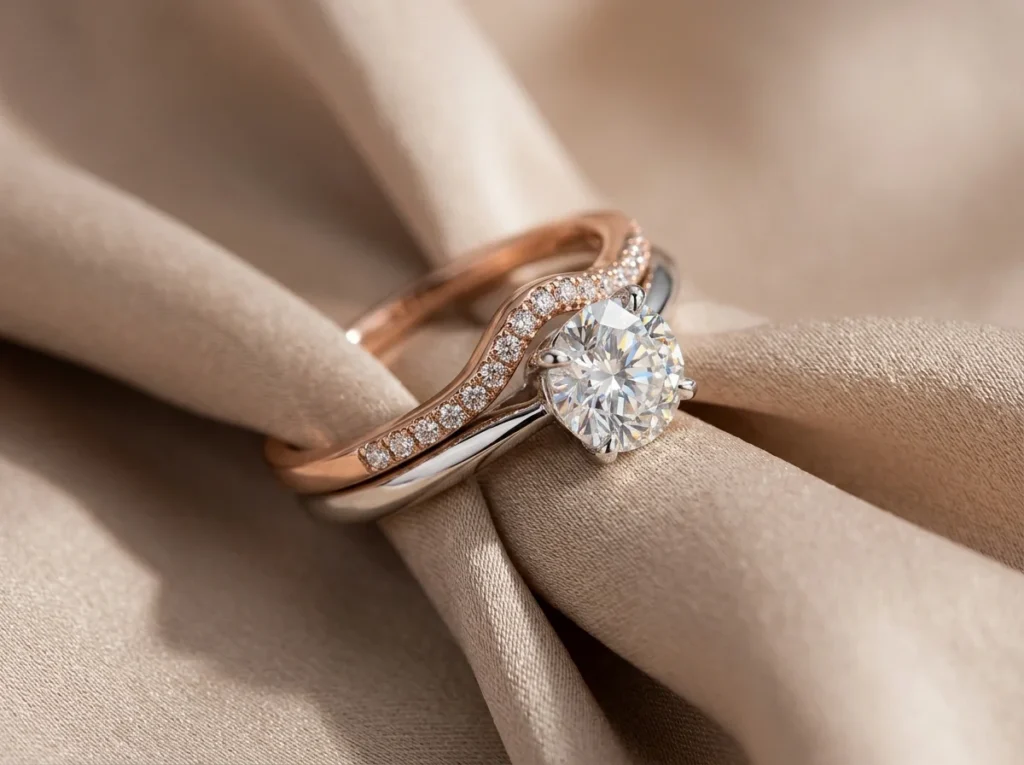
You can match rose gold with a rose gold engagement ring for a coordinated appearance or combine it with white gold or platinum-colored metal for a two-tone look. The mixed-metal approach can feel intentional when the shapes and proportions work together.
Compare the actual metal alloys and finishes before purchasing, since the precise color of rose gold varies between pieces.
Best for: Romantic bridal sets, mixed-metal jewelry, and warm-toned designs.
14. Curved Eternity-Style Wedding Band
An eternity-style curved wedding band features diamonds or other gemstones set along the visible surface or around the full circumference of the ring. Its sparkling curve creates a decorative frame for the engagement ring.
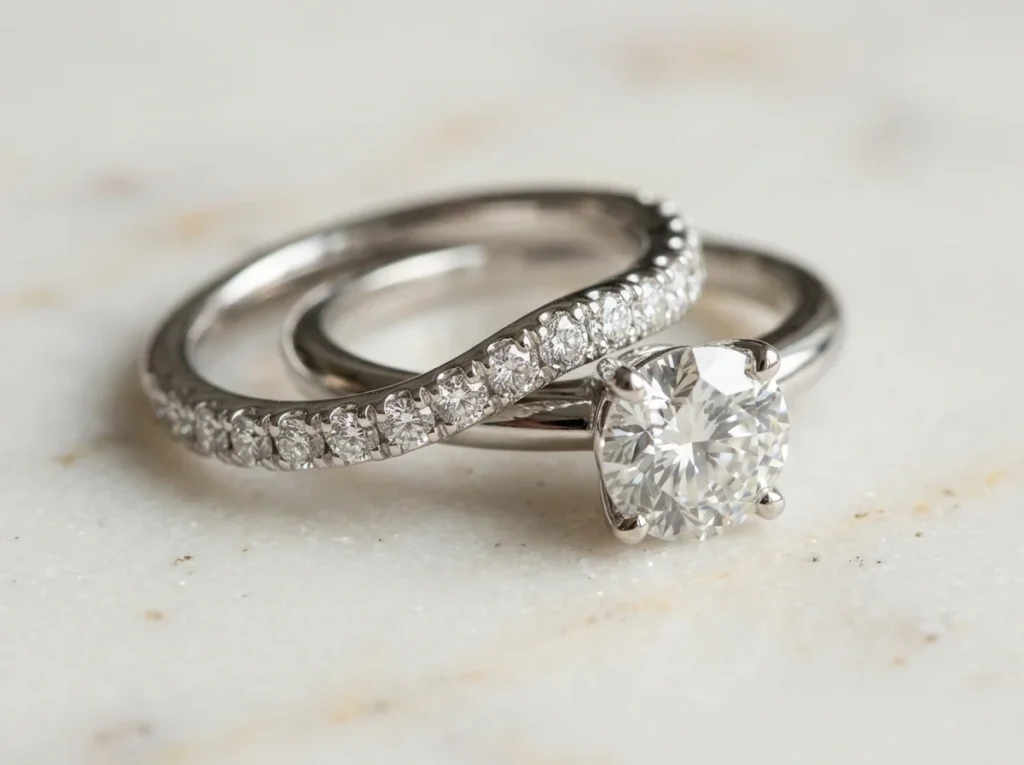
A half-eternity design, with stones across the top portion, may be easier to resize or maintain than a full-eternity band, depending on its construction. A full-eternity design offers continuous sparkle but can be more challenging to resize because stones extend around the entire band.
Before choosing either style, consider comfort, maintenance, and how the band will sit beside the engagement ring’s setting.
Best for: Diamond engagement rings, glamorous bridal sets, and brides who love continuous sparkle.
15. Custom Contoured Wedding Band
When standard curved wedding bands leave a large gap or interfere with an engagement ring’s setting, a custom contour may be the most practical solution. A jeweler can design the band’s shape around the existing ring’s profile and create a more coordinated pairing.
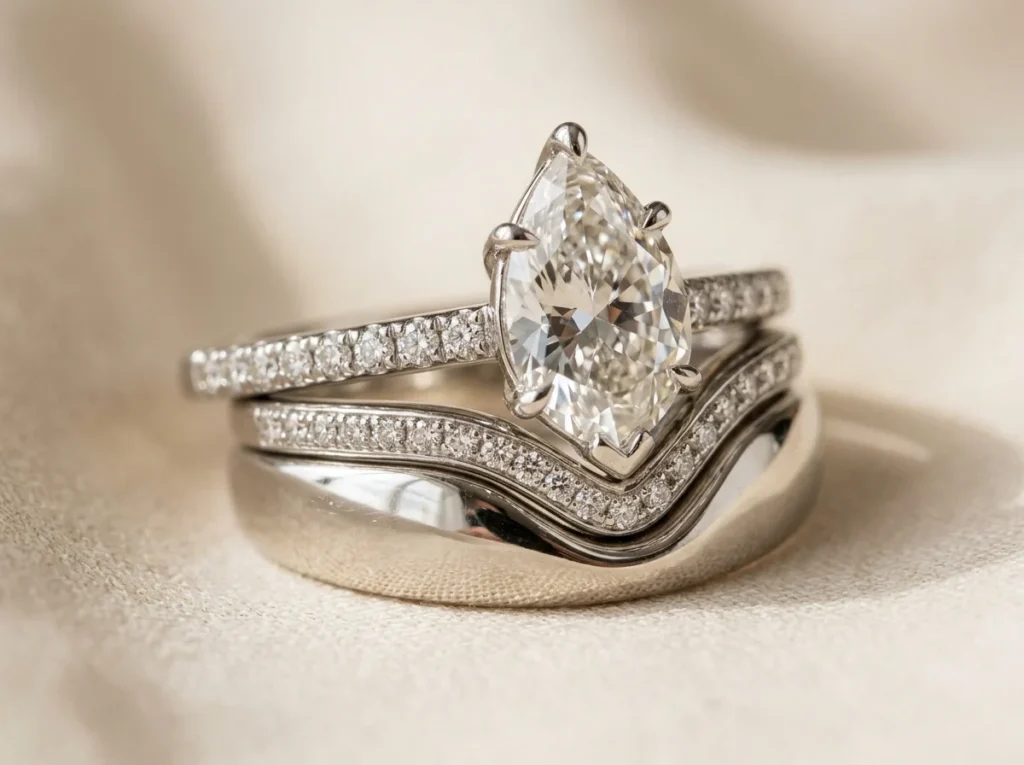
This option can be especially useful for unusual center stones, raised baskets, asymmetrical settings, and engagement rings with intricate side details. You can choose a plain metal finish, add small diamonds, or incorporate engraving to make the band feel personal.
Bring both rings to the jeweler so the proposed contour can be checked against the actual setting. A custom design should prioritize secure clearance, comfortable wear, and a shape that still looks attractive when the engagement ring is removed.
Best for: Unusual engagement rings, difficult fits, and personalized bridal sets.
How to Choose the Right Curved Wedding Band
The best curved wedding band is one that complements your engagement ring’s shape, fits comfortably, and suits the way you plan to wear your jewelry. A beautiful design is only part of the decision.
Check the Engagement Ring’s Setting
Look at the ring from the side as well as from above. The center stone’s basket, prongs, gallery, and setting height determine whether a curved band can sit closely beside the engagement ring.
If the engagement ring has a low setting or a wide basket, even a carefully shaped band may leave a small gap. Ask a jeweler to assess the fit before you order.
Decide How Much of a Gap You Prefer
Some brides want their wedding band to sit flush against the engagement ring, while others prefer a small space that highlights each ring individually. Neither option is inherently better; the right choice depends on your preferred appearance and the construction of your rings.
A contoured band can reduce the gap, but it may not eliminate it entirely. Trying the two rings together is the most reliable way to judge the result.
Match the Metal or Mix Different Colors
Matching the metals creates a coordinated look, but mixing colors can be just as attractive. White gold with yellow gold, rose gold with platinum-colored metal, or a two-tone design can add contrast without looking mismatched.
When combining metals, consider the finish, band width, and overall design. If the rings will touch during everyday wear, ask your jeweler whether the chosen metals and finishes are suitable for that combination.
Choose a Comfortable Band Width
A narrow curved band often complements a delicate engagement ring, while a wider band can create a bolder appearance. However, width affects how a ring feels on your finger and how much space it occupies beside the engagement ring.
Try the full set on your finger rather than judging the width from product photographs alone. If you’re ordering online, review the band’s measurements and return or exchange policy before making your decision.
Check Your Ring Size Before Ordering
Ring fit matters just as much as appearance. The combined width of an engagement ring and wedding band can feel different from wearing either ring alone, and wider bands may feel snugger than narrow ones.
Use the Find My Ring Size tool to get an initial estimate before shopping, then confirm your size with a jeweler when possible. The final fit should allow the rings to pass over your knuckle comfortably without feeling loose during normal movement.
Curved vs. Straight Wedding Bands: Which Should You Choose?
A curved wedding band is not automatically the better choice for every engagement ring. Comparing the two styles can help you decide whether you need a custom contour or simply prefer the appearance of a straight band.
|
Feature |
Curved Wedding Band | Straight Wedding Band |
|
Shape |
Designed with a dip or contour |
Runs in a straight line |
|
Appearance |
Frames the engagement ring’s outline |
Creates a clean, simple line |
|
Fit |
May accommodate a raised or unusual setting |
May leave a gap around some settings |
|
Standalone wear |
Depends on the depth of the curve |
Often easier to wear on its own |
| Design choices | Plain, pavé, chevron, or custom contours |
Classic, textured, diamond-set, or engraved styles |
Choose a curved band if you love the way it follows your engagement ring’s shape. A straight band is worth considering if you want a versatile ring that looks equally good on its own, even if the two rings do not sit completely flush.
Common Mistakes to Avoid When Buying a Curved Wedding Band
- Choosing by appearance alone: A band may look perfect in a photograph but fail to clear the engagement ring’s setting.
- Assuming every curve creates a flush fit: The band’s contour must match the actual shape and height of the engagement ring.
- Ignoring comfort: The rings should feel comfortable together, not pinch your finger or press awkwardly against one another.
- Overlooking resizing limitations: Full-eternity and intricate diamond-set bands may be harder to resize than plain metal designs.
- Forgetting standalone wear: If you sometimes wear your wedding band without your engagement ring, check that its shape still looks appealing on its own.
- Ordering without checking measurements: Confirm ring size, band width, metal details, and the seller’s return policy before purchasing.
Frequently Asked Questions About Curved Wedding Bands
Do curved wedding bands fit every engagement ring?
No. The best fit depends on the engagement ring’s center stone, setting height, basket, and prong placement. Some rings work with standard contours, while others need a custom band or a small intentional gap.
Can you wear a curved wedding band by itself?
Yes, although it depends on the design. A shallow curve or simple chevron may look balanced on its own, while a deeply contoured band may look more distinctive without the engagement ring beside it.
Are curved wedding bands more expensive than straight bands?
Not necessarily. Price depends on the metal, band width, gemstones, craftsmanship, and whether the design is custom-made. A plain curved band may cost less than a straight band featuring diamonds or intricate detailing.
Can a curved wedding band be resized?
Some can, but the process depends on the metal and design. Plain bands are often simpler to adjust than intricate diamond-set or full-eternity styles, so ask a jeweler about resizing before purchasing.
Should your wedding band touch your engagement ring?
No, not unless that is the look you prefer. Some ring sets sit flush, while others have a small gap because of the center stone or setting. The important considerations are comfort, secure construction, and the appearance you like.
Can you mix metals in an engagement ring and wedding band?
Yes. Yellow gold, white gold, rose gold, and platinum-colored metals can create an attractive mixed-metal combination. Choose shapes and proportions that look intentional together, and ask about wear between the two rings if they will touch frequently.
Is a curved wedding band better than a straight band for an oval engagement ring?
It depends on the oval ring’s setting and your preferred style. A curved band can follow the setting’s outline, but a straight band may look just as beautiful if you like a small gap or plan to wear the wedding band alone.
Find a Curved Wedding Band You’ll Love Wearing
The right curved wedding band should complement your engagement ring without sacrificing comfort or personal style. From simple gold contours and delicate chevrons to diamond pavé designs and custom-made bands, there are plenty of ways to create a bridal set that feels uniquely yours.
Before making your final choice, try the rings together, check the side profile, and confirm the fit with a jeweler. A little attention to these details can help you choose a wedding band that looks beautiful alongside your engagement ring and feels comfortable for everyday wear.
Join the Conversation