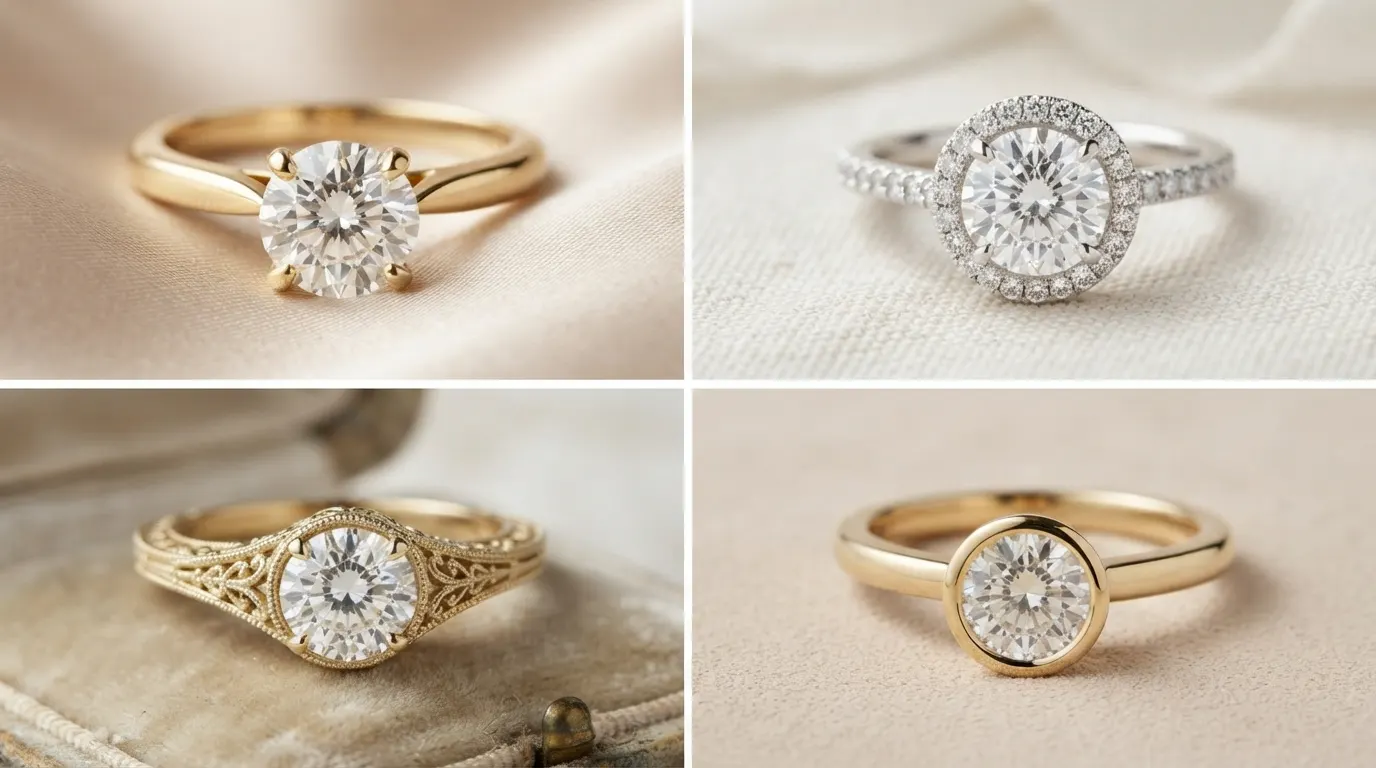
A round engagement ring has a way of looking beautiful without following short-lived fashion trends. Its balanced shape, brilliant sparkle, and timeless appeal make it a favorite for couples who want a ring they can treasure for a lifetime.
But round engagement rings are not limited to one traditional design. From delicate solitaire settings and sparkling halos to vintage-inspired details and modern bezel bands, there are countless ways to make this classic diamond shape feel personal. These 15 round engagement ring ideas will help you discover a design that matches your style, preferences, and vision for the perfect proposal.
Why Are Round Engagement Rings So Timeless?
Round engagement rings remain a classic choice because their shape works beautifully with many different settings, metals, and band designs. A round brilliant diamond is designed with 57 or 58 facets that help create brightness, colorful flashes, and sparkle.
Another reason couples love round diamonds is their versatility. They look equally beautiful in traditional yellow gold settings, modern white gold bands, romantic rose gold designs, and intricate vintage-inspired rings.
Whether you prefer a simple ring or something with extra sparkle, a round center diamond gives you plenty of room to create a design that feels personal.
15 Round Engagement Rings That Will Never Go Out of Style
1. Classic Round Solitaire Engagement Ring

A classic round solitaire engagement ring is one of the most recognizable designs in bridal jewelry. It features a single round brilliant diamond held above a simple metal band, allowing the center stone to remain the main attraction.
This style works beautifully for someone who appreciates clean lines and traditional elegance. A slim gold or platinum band creates a delicate appearance, while a slightly thicker band gives the ring a more substantial feel.
Styling tip: Choose a four-prong or six-prong setting depending on the appearance and stone security you prefer. A plain band also makes it easier to pair the engagement ring with different wedding band styles.
2. Six-Prong Round Diamond Engagement Ring

A six-prong round engagement ring brings a traditional diamond design to life with six small metal supports surrounding the center stone. The additional prongs create a distinctive setting that frames the round shape beautifully.
This design is especially appealing to people who love classic jewelry with a little extra structure. Six prongs can also emphasize the diamond’s circular outline when viewed from above.
Yellow gold, white gold, and platinum all work well with this setting. The best metal depends on the look you prefer and how you plan to wear the ring.
Styling tip: Consider delicate claw-shaped prongs for a refined appearance, or rounded prongs for a softer traditional finish. Have the prongs inspected regularly to make sure the diamond remains secure.
3. Four-Prong Round Solitaire Ring

A four-prong round solitaire is a beautiful option for anyone who wants a simple engagement ring with a slightly more contemporary appearance. Four metal supports hold the diamond in place while leaving much of its outline visible.
Compared with six-prong designs, four prongs can create a subtly squared appearance around a round diamond. This small detail gives the traditional solitaire a slightly different personality without making it look overly decorative.
It looks particularly elegant with a narrow white gold band, although yellow gold and platinum are equally suitable choices.
Styling tip: Look for well-finished prongs that sit smoothly against the diamond. A comfortable setting height can also make the ring easier to wear every day.
4. Round Halo Engagement Ring
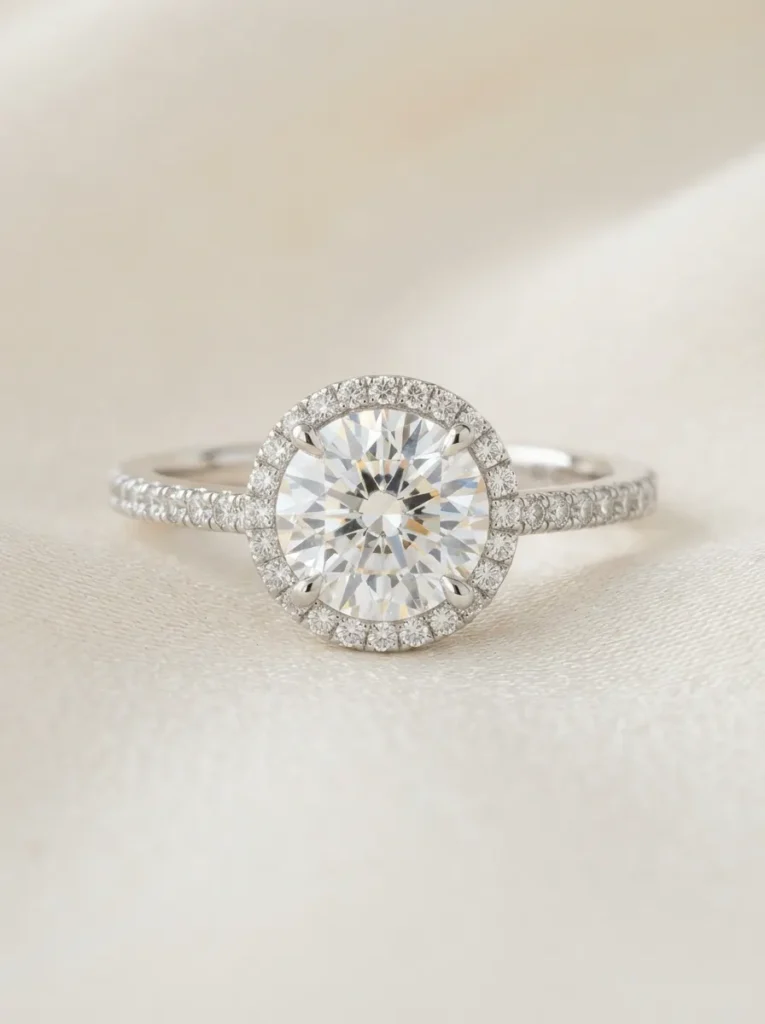
A round halo engagement ring surrounds the center diamond with a circle of smaller accent stones. The arrangement creates additional sparkle and gives the ring a more decorative appearance.
The halo also creates a larger visual outline around the center stone. This can make a smaller center diamond appear more prominent without requiring a larger carat weight.
This design is lovely for someone who enjoys glamorous jewelry and wants more sparkle than a traditional solitaire offers. A white gold band with a delicate diamond halo creates a bright, coordinated look.
Styling tip: Choose a delicate halo if you prefer a refined design. A larger halo creates a more noticeable statement, but remember that additional small stones may require extra cleaning and occasional inspections.
5. Hidden Halo Round Engagement Ring
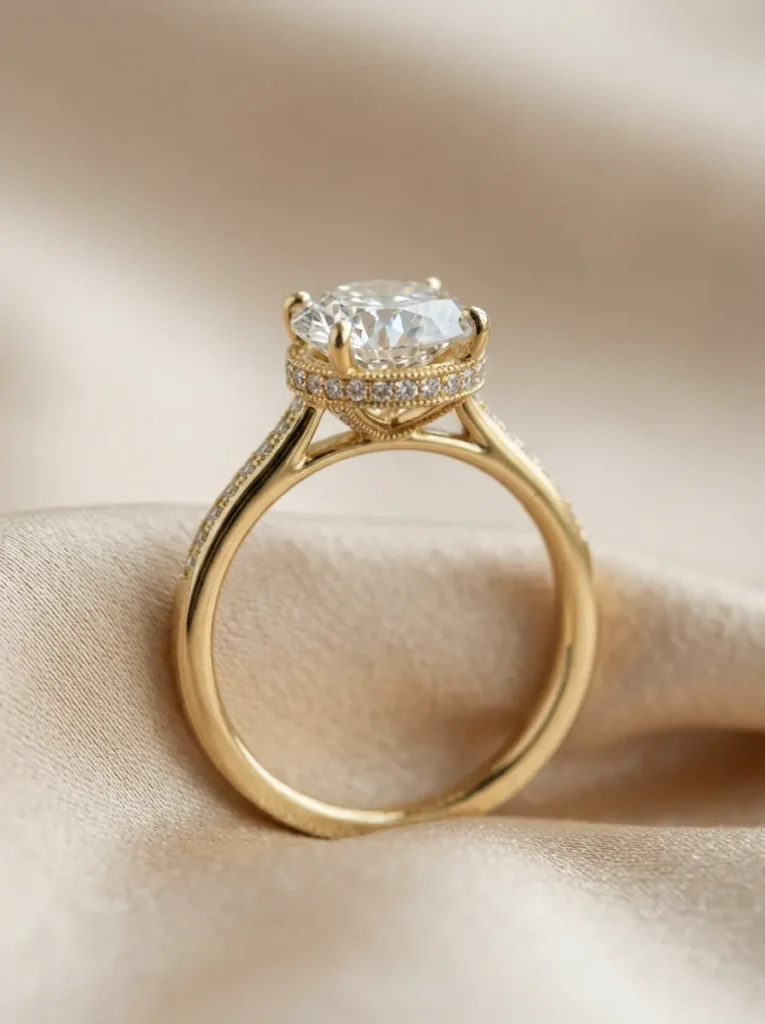
A hidden halo engagement ring offers a lovely surprise from the side. Instead of surrounding the center diamond from above, small accent diamonds sit underneath the main stone, creating a subtle layer of sparkle.
From the top, the ring can look almost like a classic solitaire. When viewed from an angle, however, the hidden diamonds add an extra decorative detail that makes the design feel more special.
This style works particularly well for someone who likes understated jewelry but still wants something a little different.
Styling tip: Pay attention to the side profile when choosing this design. The hidden halo should complement the center diamond without making the setting feel too tall or uncomfortable.
6. Round Diamond Pavé Band Engagement Ring

A round diamond engagement ring with a pavé band combines a brilliant center stone with tiny diamonds set closely together along the band. The smaller stones create a continuous line of sparkle that makes the entire ring look more decorative.
This design is a beautiful choice for someone who loves traditional diamond jewelry but wants more detail than a plain solitaire band. It also looks especially elegant in white gold or platinum.
The center diamond remains the focal point, while the pavé details add extra brightness around the finger.
Styling tip: Choose a band with carefully set accent stones and ask about resizing limitations. Some pavé designs are more difficult to resize because of the small diamonds along the shank.
7. Yellow Gold Round Engagement Ring

A yellow gold round engagement ring brings warmth and traditional beauty to one of the most recognizable diamond shapes. The golden metal creates a beautiful contrast against a bright round brilliant diamond.
This combination works with everything from a simple solitaire setting to a delicate halo or vintage-inspired design. It also offers a timeless appearance that does not depend on changing jewelry trends.
For someone who loves warm-toned jewelry, yellow gold can make an engagement ring feel both classic and personal.
Styling tip: Consider a 14K or 18K yellow gold band based on your preferences, budget, and everyday wear needs. Ask your jeweler about the differences in gold content, durability, and maintenance.
8. White Gold Round Diamond Engagement Ring

A white gold round engagement ring offers a bright, polished appearance that keeps the focus on the center diamond. Its silvery finish creates a coordinated look with the stone and gives traditional engagement ring designs a fresh feel.
This metal is particularly attractive in solitaire, halo, and pavé settings. It also works beautifully with delicate bands and more elaborate diamond arrangements.
White gold is often selected by people who enjoy cool-toned jewelry and a clean, understated finish.
Styling tip: Ask whether the white gold ring has a rhodium finish and what maintenance it may need over time. This helps you understand how to care for its original bright appearance.
9. Rose Gold Round Engagement Ring
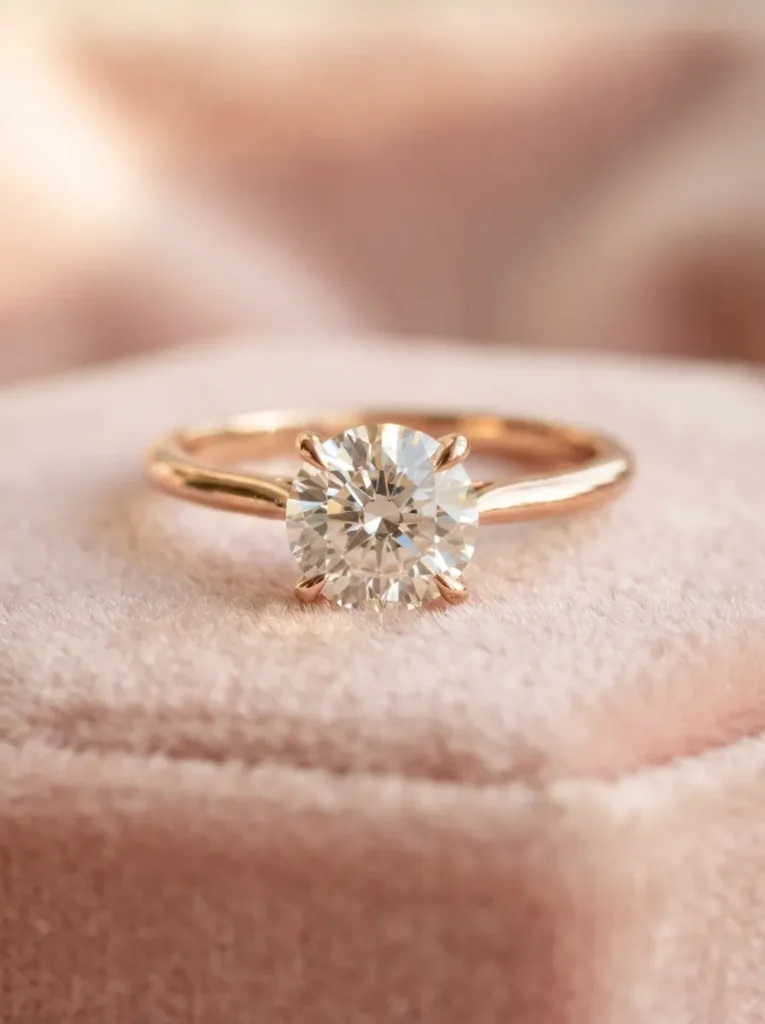
A rose gold round engagement ring combines a romantic metal color with the familiar sparkle of a round brilliant diamond. Its soft pinkish tone creates a warm appearance that feels slightly different from traditional yellow or white gold.
This combination is especially attractive in delicate solitaire settings, vintage-inspired bands, and rings with small diamond accents.
Rose gold can suit someone who enjoys warm colors and wants a traditional diamond ring with a distinctive finish.
Styling tip: Compare different rose gold alloys before making a decision. The exact shade can vary depending on the metal composition, so viewing samples in person can help you find the finish you like.
10. Bezel-Set Round Engagement Ring

A bezel-set round engagement ring surrounds the diamond’s outer edge with a smooth metal rim. Unlike a traditional prong setting, this design creates a clean border around the center stone.
The result is a modern engagement ring with a streamlined appearance. It is also a practical option for people who prefer fewer exposed edges around their center diamond.
Bezel settings can be particularly appealing for everyday wear because their smooth metal edges are less likely to catch on clothing. However, the design covers more of the diamond’s edge than a typical prong setting.
Styling tip: Choose a slim bezel for a delicate appearance or a slightly wider metal border for a bolder design. Compare the diamond’s appearance from different angles before selecting the final setting.
11. Cathedral Round Engagement Ring

A cathedral round engagement ring features graceful metal arches that rise from the band toward the center diamond. These curved supports create a beautiful side profile and give the ring a more structured appearance.
The design adds height and visual interest without requiring a complicated arrangement of accent stones. It works especially well with round solitaire diamonds because the raised setting keeps the center stone prominent.
For someone who loves traditional bridal jewelry with architectural details, a cathedral setting can be an appealing choice.
Styling tip: Look at the ring from the side as well as the top. Consider the setting height and whether the design will sit comfortably beside your preferred wedding band.
12. Three-Stone Round Engagement Ring

A three-stone round engagement ring features a central round diamond accompanied by two smaller side stones. The arrangement creates a balanced design with additional sparkle and a meaningful appearance.
Many couples appreciate the traditional symbolism associated with three stones, often connecting them with the past, present, and future. The design can also be customized with different diamond sizes and metal colors.
Choose matching round diamonds for a coordinated appearance or explore subtle variations in stone size to make the center diamond stand out.
Styling tip: Make sure the side stones are proportionate to the center diamond. A balanced arrangement helps the ring look elegant rather than overcrowded.
13. Vintage-Inspired Round Engagement Ring

A vintage-inspired round engagement ring brings old-world charm into a design that can still feel beautiful today. Decorative metalwork, milgrain edges, delicate engraving, and intricate diamond details give these rings their distinctive character.
Some designs take inspiration from Edwardian jewelry, while others feature the geometric patterns associated with Art Deco styles. A round center diamond works particularly well with these decorative details because its familiar shape balances the more elaborate setting.
This option is ideal for someone who loves romantic details and jewelry that feels connected to an earlier era.
Styling tip: Look for a design that combines decorative details with a comfortable band. Intricate settings may need more careful cleaning and periodic professional inspections.
14. Split-Shank Round Engagement Ring

A split-shank round engagement ring features a band that separates into two sections as it approaches the center diamond. This creates an open, graceful appearance and gives the ring more visual detail than a traditional single-band design.
The split band can be plain, decorated with pavé diamonds, or finished with subtle metalwork. Each variation creates a different look while keeping the round center stone as the main attraction.
This design is a lovely choice for someone who wants a ring that feels elegant and distinctive without moving away from a classic diamond shape.
Styling tip: Compare how the split sections meet the center setting. Smooth transitions and balanced proportions help the design look refined from every angle.
15. Petite Round Diamond Engagement Ring

A petite round diamond engagement ring proves that a beautiful design does not need an oversized center stone. Its smaller diamond and delicate band create a light, understated appearance that feels comfortable and elegant.
This style is particularly appealing to someone who prefers minimalist jewelry or wants an engagement ring that fits naturally into an everyday wardrobe.
A simple solitaire setting, tiny pavé accents, or a delicate hidden halo can all add personality without making the ring look overly elaborate.
Styling tip: Pay attention to the proportions between the center stone and the band. A carefully balanced design can look beautiful at different carat weights, so choose based on your preferences rather than size alone.
How to Choose the Right Round Engagement Ring
After exploring these round engagement ring styles, think about the details that matter most to you. The right ring should reflect your taste while also fitting your everyday lifestyle and budget.
Consider the Diamond Cut
For a round engagement ring, the round brilliant cut is especially popular because of its carefully arranged facets and light performance. Diamond cut quality has a major effect on how bright and lively the stone appears.
When comparing diamonds, pay attention to the cut grade on the grading report. The Gemological Institute of America (GIA) evaluates standard round brilliant diamonds on a scale ranging from Excellent to Poor.
You can explore the GIA diamond cut guide to understand brightness, fire, scintillation, and the factors that influence a diamond’s appearance.
Choose a Setting That Matches Your Lifestyle
Your setting affects more than the appearance of your engagement ring. It also influences how exposed the diamond is, how easily the ring catches on clothing, and how much maintenance it may need.
- Solitaire: A simple design that highlights the center diamond.
- Halo: Adds surrounding diamonds for extra sparkle.
- Bezel: Creates a smooth metal border around the stone.
- Pavé: Adds small diamonds along the band.
- Cathedral: Features raised metal arches beneath the center setting.
- Three-stone: Combines a center diamond with two side stones.
If you work with your hands frequently, prefer a lower setting, or want fewer exposed edges, discuss suitable designs with a qualified jeweler before purchasing.
Select Your Preferred Metal
The metal can change the entire appearance of a round engagement ring. Yellow gold offers a warm traditional look, white gold creates a bright silvery finish, platinum provides a naturally white precious-metal option, and rose gold introduces a softer pink tone.
Think about the jewelry you already wear and whether you prefer warm or cool metal colors. Also compare durability, maintenance, and price before choosing.
Find a Comfortable Ring Size
A beautiful engagement ring should also fit comfortably. A ring that is too loose may slip off, while one that is too tight can become uncomfortable throughout the day.
Measure the correct finger and consider the width of the band before ordering. Wider bands can feel snugger than narrow ones, so the final size should be checked with the actual ring design in mind.
For an initial estimate, you can use the Ring Size Calculator to compare your finger measurement or an existing ring with US ring sizes. It is a helpful starting point, but a professional jeweler should confirm the size before an important purchase.
Set a Comfortable Budget
Round diamonds are available at many price points, so you do not need to choose a particular carat weight to create a beautiful engagement ring.
Compare the diamond’s cut, color, clarity, and carat weight together. These four characteristics are commonly known as the 4Cs, and they help you understand the differences between individual diamonds.
Consider lab-grown and natural diamonds as well. Both can be beautiful choices, but they differ in origin, pricing, and resale considerations. Choose the option that fits your preferences and financial plans.
What Makes Round Engagement Rings Different From Other Diamond Shapes?
Round diamonds have a balanced outline that works with a wide range of jewelry settings. Their brilliant facet arrangement is designed to create impressive light performance, making them a popular option for traditional and contemporary engagement rings.
Other diamond shapes offer different visual effects. Oval diamonds create an elongated appearance, emerald cuts feature a more geometric look, and pear-shaped diamonds combine a rounded end with a pointed tip.
The best shape depends on the appearance you enjoy most. If you prefer symmetry, traditional styling, and brilliant sparkle, a round diamond may be exactly what you are looking for.
Common Mistakes to Avoid When Buying a Round Engagement Ring
Choosing an engagement ring is an important purchase, and a little preparation can help you avoid unnecessary problems.
- Choosing carat weight over cut quality: A larger diamond is not automatically more attractive. Compare the cut and overall appearance before focusing on carat weight.
- Ignoring the setting height: A tall setting may look beautiful, but it can catch on clothing or feel less practical for everyday wear.
- Forgetting about maintenance: Halo and pavé designs contain additional small stones that may require more frequent cleaning and inspection.
- Ordering without checking the size: An online size estimate is not a substitute for a professional fitting.
- Ignoring the wedding band: Some engagement ring settings do not sit flush against a straight wedding band. Consider the complete set before purchasing.
- Spending beyond your budget: A meaningful ring does not need to cost more than you can comfortably afford.
Frequently Asked Questions About Round Engagement Rings
Are round engagement rings still in style?
Yes. Round engagement rings remain a classic jewelry choice because their balanced shape and brilliant sparkle work with many different settings and metal colors. Their versatility makes them suitable for both traditional and modern designs.
Why are round diamonds so popular for engagement rings?
Round brilliant diamonds are known for their symmetrical shape and carefully arranged facets, which create brightness, fire, and scintillation. They also pair easily with many engagement ring settings, making them a versatile choice.
Does a round diamond look bigger than other diamond shapes?
Not necessarily. The visible size of a diamond depends on its carat weight, proportions, and face-up measurements. Different shapes distribute their weight differently, so compare the actual dimensions rather than relying on carat weight alone.
Which setting looks best with a round engagement ring?
There is no single setting that works best for everyone. Solitaire settings highlight the center diamond, halos add extra sparkle, bezels create a smooth modern finish, and pavé bands introduce additional diamond details.
Is a round solitaire engagement ring a good everyday choice?
A well-made round solitaire can be a practical everyday option, particularly when the setting is designed for comfortable wear. Consider the height of the center stone and have the prongs inspected regularly to help keep the diamond secure.
Which metal is best for a round engagement ring?
Yellow gold, white gold, platinum, and rose gold can all work beautifully with round diamonds. Your choice should depend on your preferred appearance, budget, maintenance expectations, and everyday jewelry habits.
Are round engagement rings more expensive than other shapes?
Round brilliant diamonds can cost more than some other diamond shapes of comparable carat weight, although prices vary by cut quality, color, clarity, origin, and individual stone characteristics. Compare several diamonds before deciding which one offers the right balance for your budget.
Final Thoughts on Round Engagement Rings
Round engagement rings continue to appeal to couples because they combine beautiful proportions, brilliant sparkle, and remarkable design versatility. From a traditional solitaire to a sparkling halo or a modern bezel setting, there is a style for many different preferences.
Take time to compare the diamond, setting, metal, and fit before making your choice. The most meaningful engagement ring is one that feels right for the person wearing it and remains comfortable and beautiful through everyday life.
Join the Conversation