
An east west engagement ring offers a beautiful way to make a familiar diamond shape feel completely different. Instead of positioning the center stone vertically along the finger, this design turns it horizontally, creating a modern silhouette that feels distinctive without losing the romance of a traditional engagement ring.
From elegant oval diamonds and architectural emerald cuts to pointed marquise stones and soft pear shapes, there are many ways to explore this look. The right combination of stone shape, metal, and setting can make an east-west ring feel minimalist, vintage-inspired, luxurious, or beautifully understated.
Here are 15 east west engagement ring ideas to inspire your search, along with practical details about settings, proportions, comfort, and choosing a design you’ll enjoy wearing every day.
What Is an East West Engagement Ring?
An east west engagement ring features a center stone positioned horizontally across the finger rather than vertically toward the fingertip. This is also called a sideways or horizontal setting.
The stone itself does not need to be different. A traditional oval, emerald, marquise, or pear diamond can take on an entirely new appearance simply by changing its orientation.
Unlike a classic north-south setting, which emphasizes the length of an elongated diamond, an east-west design creates a wider visual line across the finger. It is an appealing choice for someone who appreciates traditional diamond shapes but wants a more contemporary look.
15 Beautiful East West Engagement Ring Ideas
1. Classic East West Oval Solitaire Engagement Ring

An east-west oval solitaire is one of the most elegant ways to embrace this style. The smooth, elongated oval diamond sits horizontally across a simple polished band, allowing its graceful outline to become the main attraction.
Yellow gold creates a warm and timeless appearance, while platinum and white gold give the design a cooler, more contemporary finish. Four or six carefully positioned prongs can hold the center stone while keeping the overall look delicate.
Style tip: Choose an oval with balanced proportions. A slightly elongated shape creates a noticeable horizontal silhouette without making the ring feel too wide.
2. East West Emerald Cut Engagement Ring
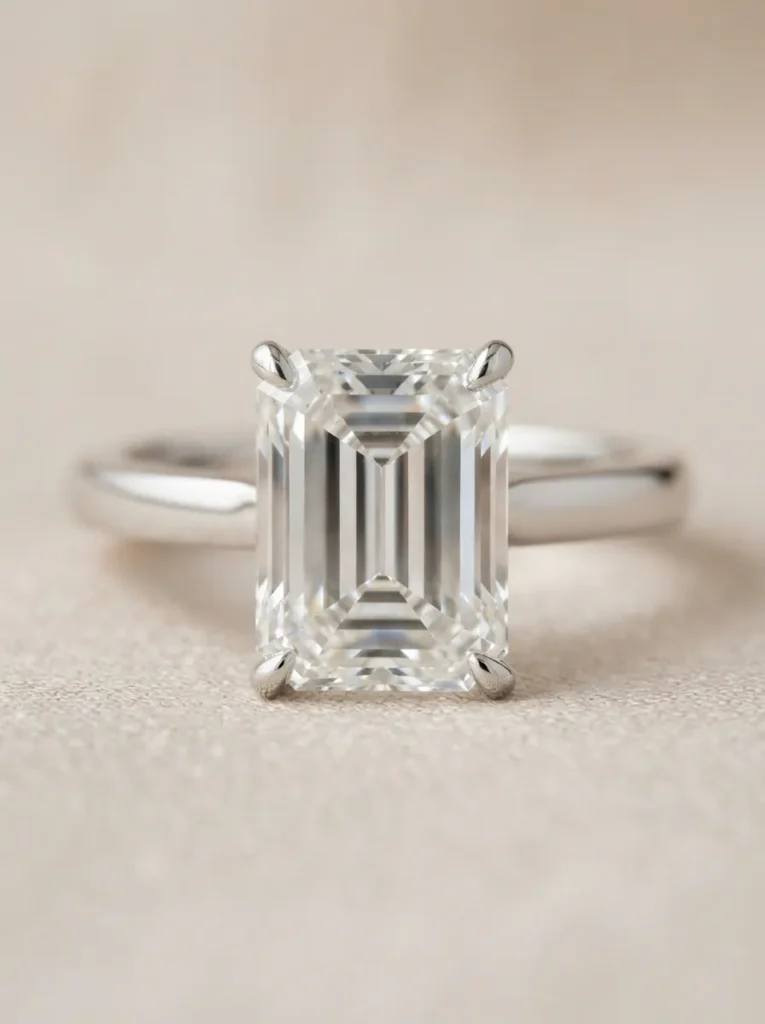
An east-west emerald cut engagement ring is perfect for someone who appreciates clean lines and understated luxury. The rectangular diamond sits sideways, creating a striking geometric appearance that feels inspired by vintage Art Deco jewelry.
The large step-cut facets produce broad flashes of light rather than the smaller, glittering sparkle associated with brilliant cuts. A slim platinum or white gold band keeps the design sophisticated, while yellow gold adds warmth and contrast.
Style tip: Examine the diamond’s clarity carefully. Emerald cuts have open, step-like facets that can make certain inclusions easier to notice.
3. East West Marquise Solitaire Ring

A marquise diamond has two pointed ends and a beautifully elongated outline. Turning it horizontally creates a dramatic design that looks artistic and different from a traditional marquise engagement ring.
The sideways placement gives the diamond a distinctive boat-like appearance across the finger. A simple yellow gold band keeps the design balanced, while a delicate white gold setting creates a more modern finish.
Because the pointed ends face the sides of the finger, protective V-shaped prongs or a carefully designed bezel are important considerations.
Style tip: Compare the width of the marquise diamond with your finger. Its pointed ends should not create an uncomfortable fit against neighboring fingers.
4. East West Pear Shaped Engagement Ring
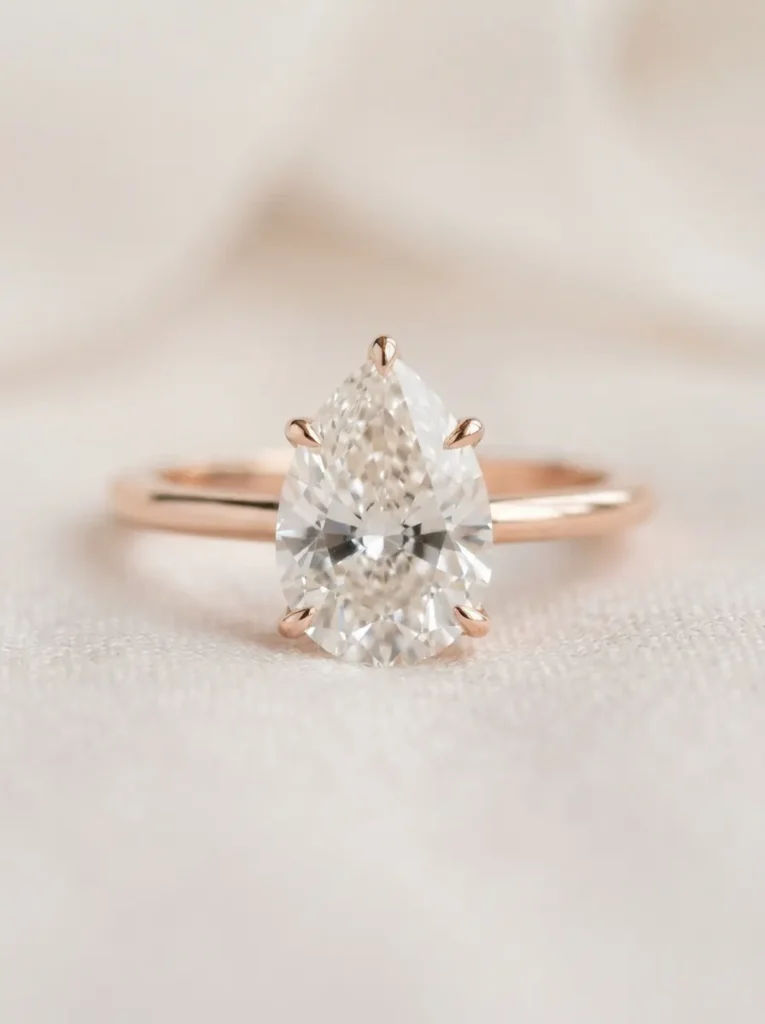
An east-west pear engagement ring offers a creative interpretation of the familiar teardrop diamond. Instead of pointing toward the fingertip, the pear sits sideways, creating an asymmetrical silhouette with a beautiful combination of curves and angles.
This design looks particularly attractive in a simple solitaire setting. A rose gold band adds a romantic finish, while platinum creates a clean and contemporary appearance.
The direction of the pointed tip can be selected to suit your preferred design. A well-fitted protective setting helps reduce exposure around the vulnerable point.
Style tip: Ask to see the ring from above and from the side. Check that the pear’s tip is protected and that its horizontal position feels comfortable.
5. East West Bezel Set Engagement Ring

A bezel-set east-west engagement ring combines two distinctive design choices: horizontal stone placement and a smooth metal frame surrounding the center diamond.
The metal border follows the outline of the stone, creating a clean and structured appearance. This combination works beautifully with oval, emerald, marquise, and elongated cushion diamonds.
Yellow gold creates a bold contrast against a bright diamond, while platinum offers a more understated look. The bezel also helps protect the stone’s edges from everyday contact when properly designed.
Style tip: Pay attention to the thickness of the metal frame. A slim bezel creates a delicate appearance, while a wider border gives the ring a stronger architectural character.
6. East West Oval Diamond With a Hidden Halo

A hidden halo adds a delicate surprise to an otherwise simple east-west engagement ring. Small accent diamonds sit beneath the center stone rather than surrounding its upper outline.
From above, the oval diamond remains the main attraction. When viewed from the side, the additional sparkle creates a beautiful detail that makes the ring feel more intricate without changing its clean silhouette.
A slim white gold or yellow gold band works particularly well with this design. You can also choose a slightly raised setting to make the hidden halo more visible.
Style tip: Check the height of the hidden halo and how it sits beside a wedding band. A beautiful side detail should not make your future ring stack uncomfortable.
7. East West Emerald Cut With Tapered Baguette Side Stones
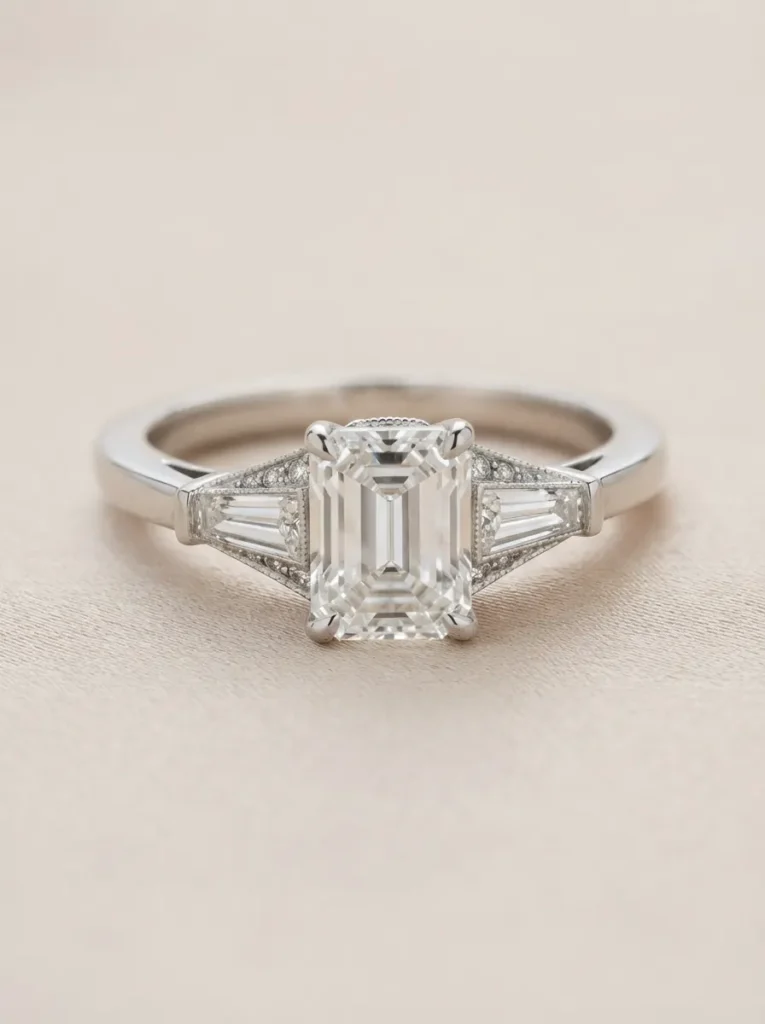
For someone who loves geometric jewelry, an east-west emerald cut with tapered baguette side stones is a sophisticated option. The horizontal center diamond creates a strong focal point, while the smaller rectangular accents add structure along the band.
This design has a subtle vintage character that works beautifully in platinum and white gold. Yellow gold can make the combination feel warmer and more distinctive.
The side stones can be kept small for a refined appearance or made slightly more prominent for a decorative engagement ring.
Style tip: Look for balanced spacing between the center diamond and the baguette accents. The additional stones should complement the horizontal shape rather than overwhelm it.
8. East West Elongated Cushion Cut Engagement Ring
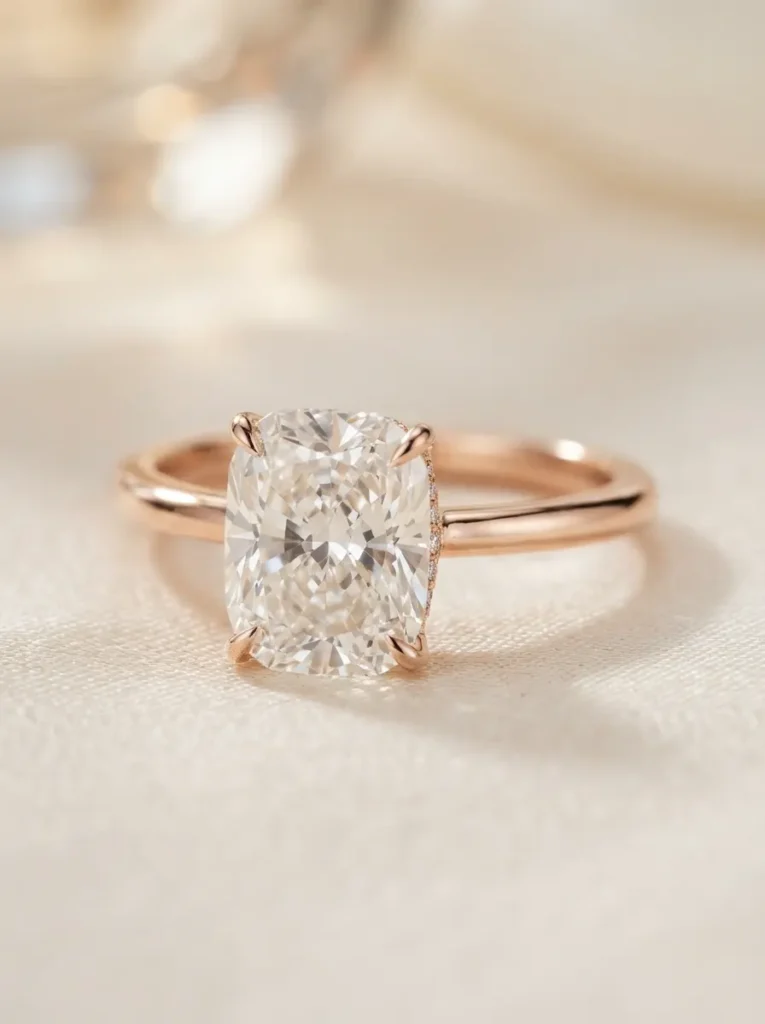
An elongated cushion diamond combines the soft corners of a traditional cushion cut with a longer rectangular outline. When positioned horizontally, it creates a romantic design with a modern twist.
The rounded edges make this style feel softer than a traditional emerald cut. Depending on the diamond’s faceting, it can offer broad flashes of light or a more delicate, sparkling appearance.
A simple rose gold band gives the ring a warm finish, while yellow gold makes it feel classic. A delicate pavé band can introduce extra sparkle without taking attention away from the center stone.
Style tip: Compare the diamond’s length and width before choosing. The proportions should look balanced when the stone is turned sideways.
9. East West Diamond Ring With a Pavé Band
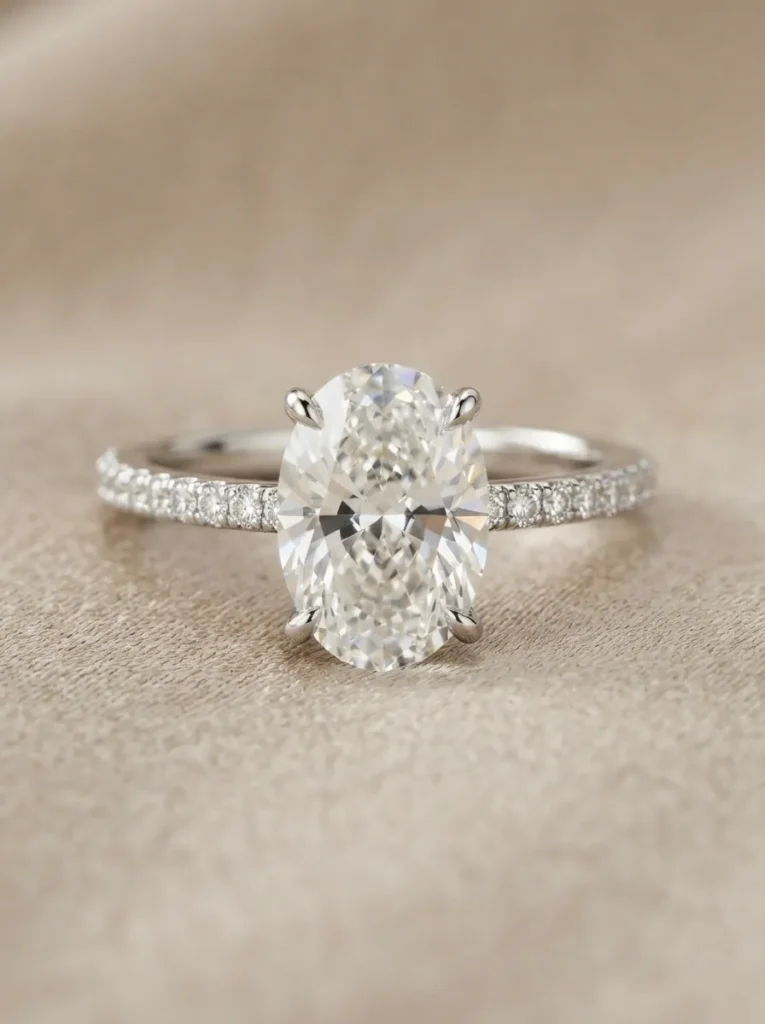
A pavé band brings extra sparkle to the clean horizontal silhouette of an east-west engagement ring. Small diamonds are set closely together along the upper surface of the band, creating a delicate line of brilliance leading toward the center stone.
An east-west oval or emerald diamond works particularly well with this setting. White gold and platinum create a coordinated appearance, while yellow gold gives the ring a beautiful contrast.
This design is ideal if you want more detail than a traditional solitaire but still prefer the center diamond to remain the focal point.
Style tip: Consider the maintenance involved with small accent stones. Have the settings checked periodically and choose a band that feels comfortable against your neighboring fingers.
10. East West Three Stone Engagement Ring

An east-west three-stone engagement ring creates a fuller design by combining a horizontal center diamond with two smaller accent stones. The arrangement adds visual interest while preserving the distinctive sideways silhouette.
Round side diamonds create a soft contrast against an emerald or oval center stone. Tapered baguettes produce a more geometric appearance, while smaller pear-shaped accents introduce a graceful touch.
Platinum and white gold emphasize the clean lines, while yellow gold gives the ring a more traditional character.
Style tip: Pay attention to the overall width of all three stones together. The ring should look balanced and leave enough room for comfortable movement between your fingers.
11. East West Vintage Inspired Engagement Ring
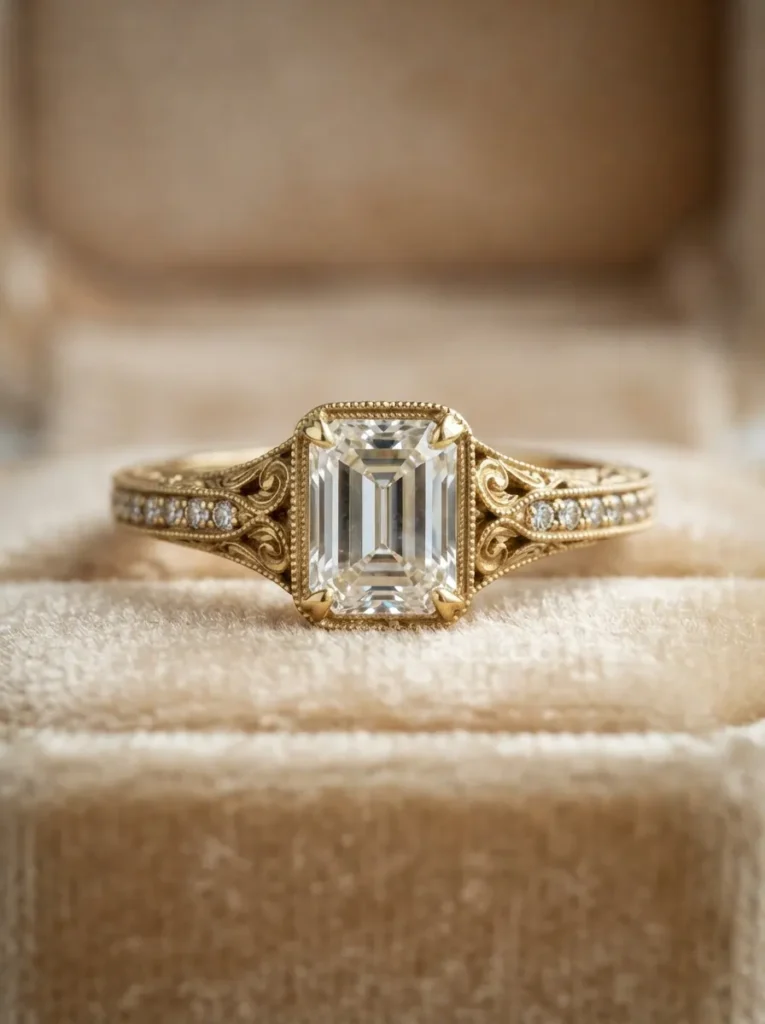
A vintage-inspired east-west engagement ring brings together old-fashioned charm and contemporary design. Think delicate milgrain edges, engraved metalwork, decorative prongs, and small accent diamonds surrounding a horizontally positioned center stone.
An emerald cut creates an Art Deco-inspired appearance, while an oval or cushion diamond offers a softer romantic look. Yellow gold is especially attractive for someone who appreciates traditional jewelry details.
You can keep the band simple or choose a setting with delicate engraved shoulders for additional character.
Style tip: Choose one or two vintage details as the main features. Too many decorative elements can make the horizontal center stone lose its visual impact.
12. East West Bypass Engagement Ring
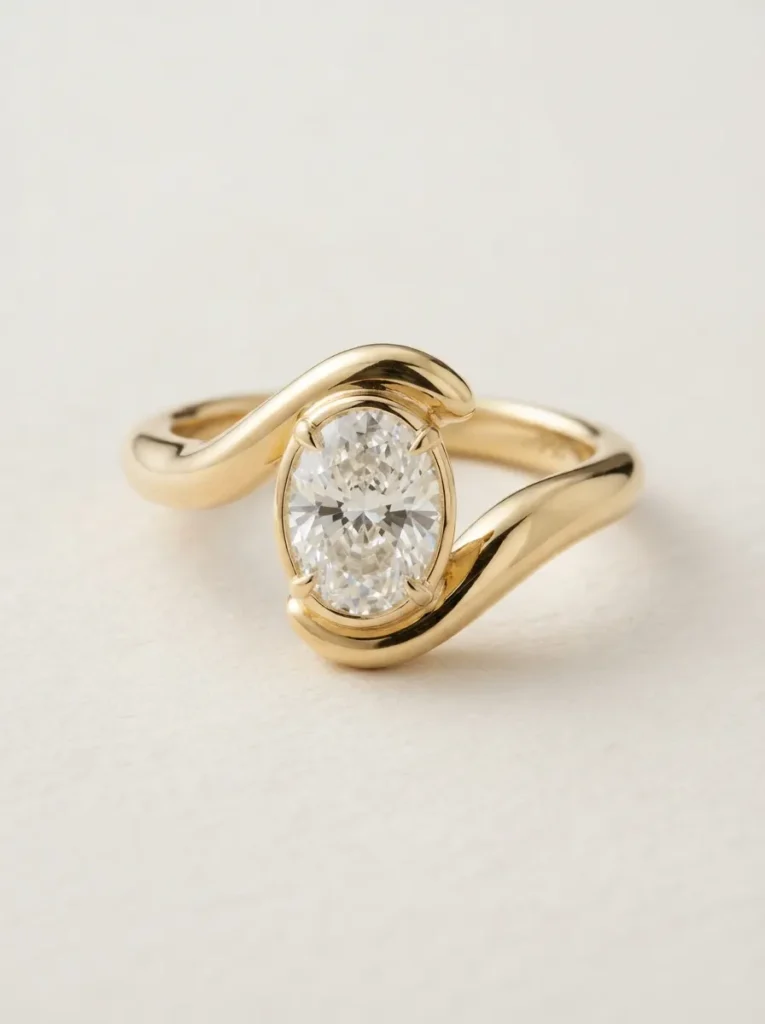
A bypass engagement ring offers a more sculptural interpretation of the east-west style. Instead of meeting directly beneath the center diamond, the two sides of the band curve around each other to create an open, flowing appearance.
A horizontal oval or pear diamond can sit between the curved sections, creating a design that feels artistic and contemporary. The open band also adds movement without requiring a large number of accent stones.
Yellow gold gives the design a warm finish, while white gold creates a sleek appearance. Small diamond accents can be added along one side for extra detail.
Style tip: Look carefully at how the bypass band supports the center stone. The setting should feel secure and balanced rather than relying on decorative curves alone.
13. East West Oval Engagement Ring With a Split Shank

A split-shank engagement ring features a band that separates into two sections as it approaches the center setting. Combined with a horizontal oval diamond, this detail creates an elegant design with a little more visual movement.
The two sections can remain plain for a minimalist appearance or feature small pavé diamonds for extra sparkle. A white gold setting creates a refined look, while yellow gold makes the design feel warmer.
This style works well for someone who wants a distinctive engagement ring without choosing an oversized center stone.
Style tip: Compare the spacing between the two sections. A balanced split shank should frame the center diamond without making the band feel too wide.
14. East West Radiant Cut Engagement Ring
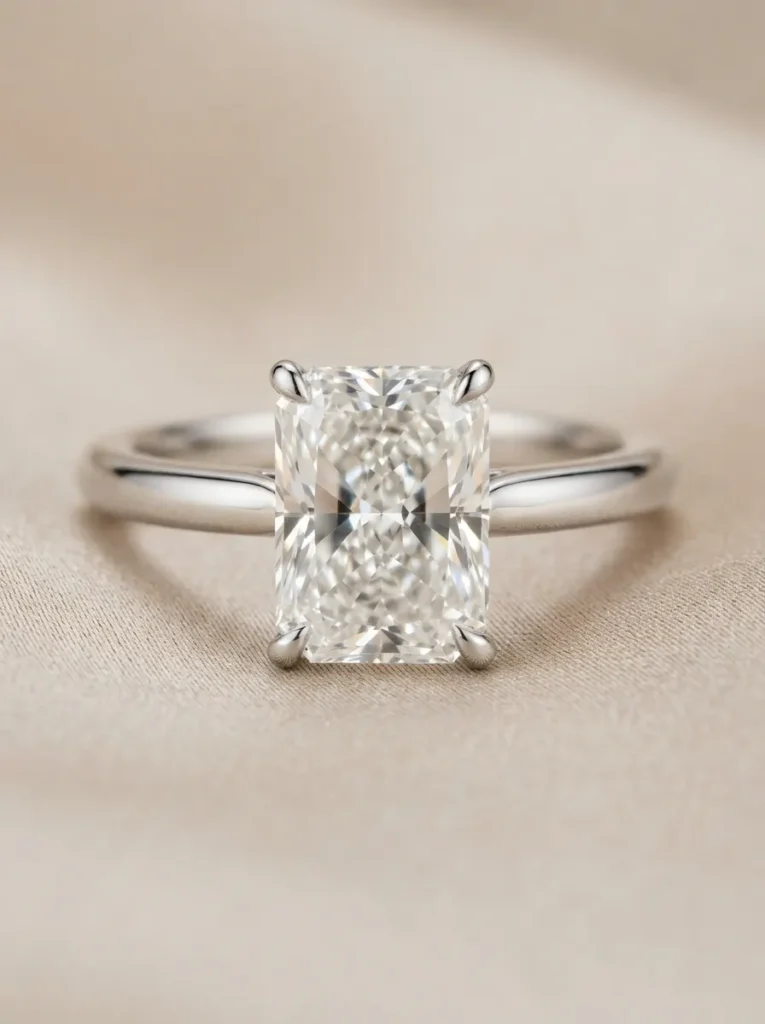
A radiant cut diamond combines a rectangular or square outline with brilliant-style faceting. Turning an elongated radiant diamond sideways creates a beautiful horizontal design with plenty of sparkle.
The clipped corners give the stone a softer appearance than a traditional emerald cut, while its faceting creates lively flashes of light. A simple platinum solitaire keeps the overall design contemporary, and yellow gold creates a more classic contrast.
A slim hidden halo or delicate accent stones can add another layer of detail if you prefer a more decorative ring.
Style tip: Make sure the radiant diamond has enough length to create a noticeable horizontal silhouette. Compare its face-up appearance in different lighting before choosing.
15. Minimalist East West Engagement Ring With a Slim Gold Band

If you prefer jewelry that feels simple and effortless, a minimalist east-west engagement ring is a beautiful choice. The design features a horizontally positioned elongated diamond with a narrow, polished gold band and very little additional decoration.
An oval or emerald cut works especially well because the clean outline creates enough visual interest without needing a halo or pavé details. Yellow gold offers a timeless appearance, while rose gold adds a soft romantic touch.
This design is particularly appealing if you want an engagement ring that feels modern but can still complement everyday jewelry.
Style tip: Do not choose a band based on appearance alone. A very delicate band should still have appropriate construction and support for the center stone.
Which Diamond Shapes Look Best in East West Settings?
Elongated diamond shapes usually create the most recognizable east-west appearance because they have a clear long axis that can be turned horizontally. However, each shape produces a different effect.
| Diamond Shape | Overall Appearance | Design Character |
| Oval | Soft and smoothly elongated | Romantic and timeless |
| Emerald | Clean rectangular outline | Architectural and elegant |
| Marquise | Long with pointed ends | Dramatic and distinctive |
| Pear | Asymmetrical teardrop shape | Artistic and romantic |
| Elongated Cushion | Rectangular with rounded corners | Soft and vintage-inspired |
| Radiant | Rectangular with brilliant sparkle | Bold and contemporary |
Round diamonds can also be placed in unusual orientations, but their circular shape looks the same when rotated. An elongated stone makes the horizontal setting much more noticeable.
If you love distinctive diamond outlines, explore our marquise engagement ring ideas for more inspiration.
Which Setting Is Best for an East West Engagement Ring?
The setting determines how the center diamond is held and contributes significantly to the ring’s overall appearance. The right choice depends on your preferred style, the shape of the diamond, and how you plan to wear the ring.
Prong Setting
A prong setting uses small metal claws to hold the center stone in place. It allows more of the diamond’s outline to remain visible and works beautifully with oval, emerald, and elongated cushion shapes.
Bezel Setting
A bezel setting surrounds some or all of the diamond’s outer edge with a fitted metal border. It creates a smooth, modern appearance and can help protect exposed edges and pointed ends.
For more design inspiration, explore our guide to bezel engagement rings.
Hidden Halo Setting
A hidden halo places small accent diamonds beneath the center stone. It provides extra sparkle from the side while keeping the main diamond simple and uncluttered from above.
Three Stone Setting
This setting combines the center diamond with two smaller stones. It creates a fuller appearance and offers opportunities to mix different diamond shapes and proportions.
What Metal Should You Choose?
The metal can change the entire personality of an east-west engagement ring. Think about the jewelry you already wear, your preferred color, and how much maintenance you are comfortable with.
- Yellow gold: Creates a warm, classic appearance and pairs beautifully with vintage-inspired designs.
- White gold: Offers a bright, cool-toned finish that works well with minimalist and contemporary settings.
- Platinum: Provides a naturally white precious-metal option with a substantial feel.
- Rose gold: Adds a soft pink tone that creates a romantic and distinctive finish.
There is no single metal that works best for everyone. Compare samples beside your preferred diamond and consider the maintenance requirements before making a final decision.
How to Choose the Right East West Engagement Ring
A beautiful design should also feel comfortable and practical. Before choosing your favorite, consider these important details.
1. Check the Stone’s Proportions
Length-to-width ratio describes how long a diamond is compared with its width. It is particularly useful when comparing elongated stones for an east-west setting.
A longer diamond creates a more noticeable horizontal appearance, while a fuller shape produces a softer and wider silhouette. Compare actual stone measurements rather than relying on carat weight alone.
2. Consider the Ring’s Overall Width
Because the diamond sits across the finger, the total width of the center stone and setting deserves attention. A large horizontal design may come close to neighboring fingers, depending on your hand and ring size.
Try the ring on if possible. Check whether you can comfortably bend your fingers and move your hand without the setting rubbing against adjacent fingers.
3. Choose a Secure Setting
East-west rings can be suitable for regular wear when they are designed and maintained properly. However, pointed diamonds such as marquise and pear shapes need particular attention because their tips may be more exposed.
Ask your jeweler how the center stone is supported. Protective prongs, well-fitted bezels, and an appropriately designed setting can help reduce the risk of damage.
4. Think About Your Wedding Band
Not every east-west engagement ring sits perfectly beside a straight wedding band. The center setting, its height, and the shape of the band can affect how closely the two rings fit together.
A slim straight band may work with some designs, while others look better with a curved or contoured wedding band. If you want a close-fitting ring stack, discuss both pieces before purchasing the engagement ring.
5. Find the Correct Ring Size
Comfort matters just as much as appearance. Your ring should feel secure without becoming painfully tight, and the correct size can be affected by the width and construction of the band.
Before shopping, use our free Ring Size Calculator to estimate your US ring size. It provides a useful starting point, but a professional jeweler should confirm the final size before an important purchase.
East West vs. Traditional North South Engagement Rings
Both orientations can create beautiful engagement rings. The main difference is how the center stone sits across the finger and the visual character it creates.
| Feature | East West Setting | North South Setting |
| Stone direction | Horizontal across the finger | Vertical along the finger |
| Overall appearance | Modern and distinctive | Classic and familiar |
| Visual emphasis | Highlights finger width | Emphasizes stone length |
| Best-known shapes | Oval, emerald, marquise, pear | Oval, emerald, marquise, pear |
| Wedding band fit | Depends on setting design | Depends on setting design |
Choose east-west if you enjoy an unconventional silhouette and want a familiar diamond shape to feel fresh. Choose north-south if you prefer a traditional appearance that follows the natural length of the finger.
Common Mistakes to Avoid When Choosing an East West Ring
Small design details can make a noticeable difference in how an east-west engagement ring looks and feels. Keep these common mistakes in mind when comparing options.
- Ignoring the total width: A horizontal center stone can feel wider between your fingers than expected. Always consider its actual measurements.
- Choosing by carat weight alone: Diamonds with the same carat weight can have different face-up dimensions and proportions.
- Overlooking point protection: Marquise and pear diamonds need carefully designed protection around their pointed ends.
- Forgetting wedding band compatibility: A beautiful engagement ring may leave a gap beside a straight wedding band.
- Choosing a setting that is too delicate: The band and center setting need appropriate support for everyday wear.
- Not checking the diamond in different lighting: A diamond can look different under showroom lights and natural daylight.
Frequently Asked Questions About East West Engagement Rings
Are east west engagement rings still in style?
Yes. East-west engagement rings offer a distinctive alternative to traditional vertical settings. Their combination of familiar diamond shapes and modern orientation makes them appealing to people who want something different without choosing an unusual gemstone.
Does an east west engagement ring make a diamond look bigger?
The diamond does not become physically larger when turned sideways. However, its horizontal position can cover more of the finger’s width, creating a broader visual appearance.
Which diamond shape is best for an east west engagement ring?
Oval is a popular choice because its smooth outline looks elegant in a horizontal setting. Emerald, marquise, pear, elongated cushion, and radiant diamonds are also attractive options, depending on your preferred appearance.
Are east west engagement rings comfortable for everyday wear?
They can be comfortable when the center stone, band width, and setting are properly proportioned. Pay particular attention to how far the diamond extends toward neighboring fingers and whether the setting catches on clothing.
Can you wear a wedding band with an east west engagement ring?
Yes. A straight, curved, or contoured wedding band can work depending on the engagement ring’s setting. Try both rings together before making a final decision if you want them to sit closely against each other.
Are east west bezel engagement rings secure?
A properly made bezel can hold a diamond securely while providing coverage around its outer edge. The exact protection depends on the bezel’s construction and the shape of the stone, so have a qualified jeweler assess the design.
Can an existing engagement ring be converted to an east west setting?
Sometimes. A jeweler may be able to create a new setting that holds your existing diamond horizontally. The stone’s measurements, condition, and the ring’s construction will determine whether this is practical.
Final Thoughts on East West Engagement Rings
East west engagement rings show how a simple change in diamond orientation can create an entirely different look. Whether you prefer a classic oval solitaire, a geometric emerald cut, a dramatic marquise, or a detailed vintage-inspired design, there are plenty of ways to make this style your own.
Before choosing, compare the diamond’s proportions, setting security, overall width, and wedding band compatibility. Take time to try different designs and make sure the ring feels as comfortable as it looks beautiful.
The best east-west engagement ring is one that reflects your personal style while fitting naturally into your everyday life.
Join the Conversation