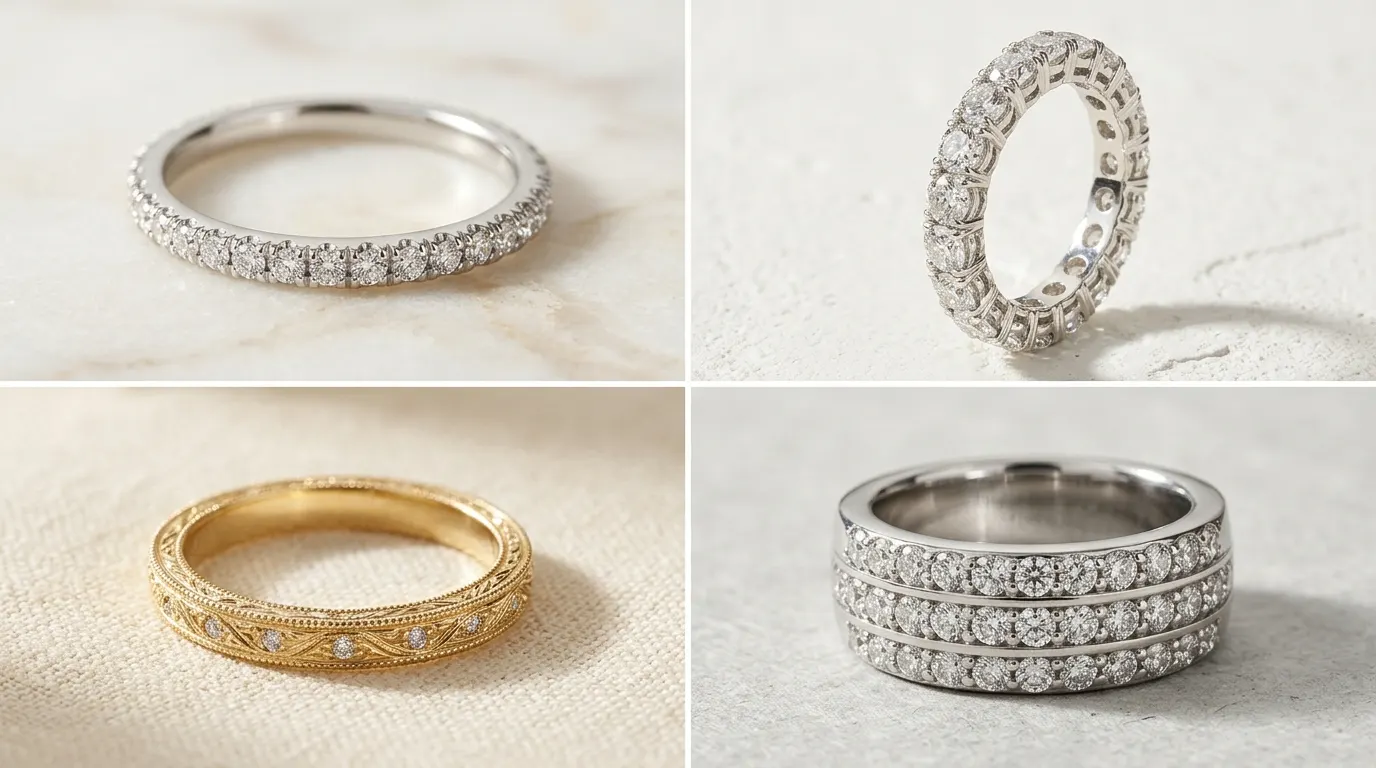
A diamond wedding band can be delicate and understated or bold enough to make a statement on its own. From slim pavé designs to sparkling eternity bands, there are many ways to add diamonds to a ring you will treasure for years.
The best diamond wedding band should match your personal style, feel comfortable for everyday wear, and work beautifully with your engagement ring if you plan to wear both together. Explore these 17 diamond wedding band ideas to find a design that feels right for you.
17 Diamond Wedding Band Ideas to Inspire Your Choice
1. Classic Pavé Diamond Wedding Band

A pavé diamond wedding band features small diamonds set closely together along the surface of the band. Tiny metal beads or prongs hold the stones in place, creating a delicate line of sparkle.
This style works beautifully with solitaire engagement rings because it adds brilliance without taking attention away from the center stone. Choose a slim pavé band for a subtle look or a slightly wider design for more visible sparkle.
2. Half-Eternity Diamond Wedding Band
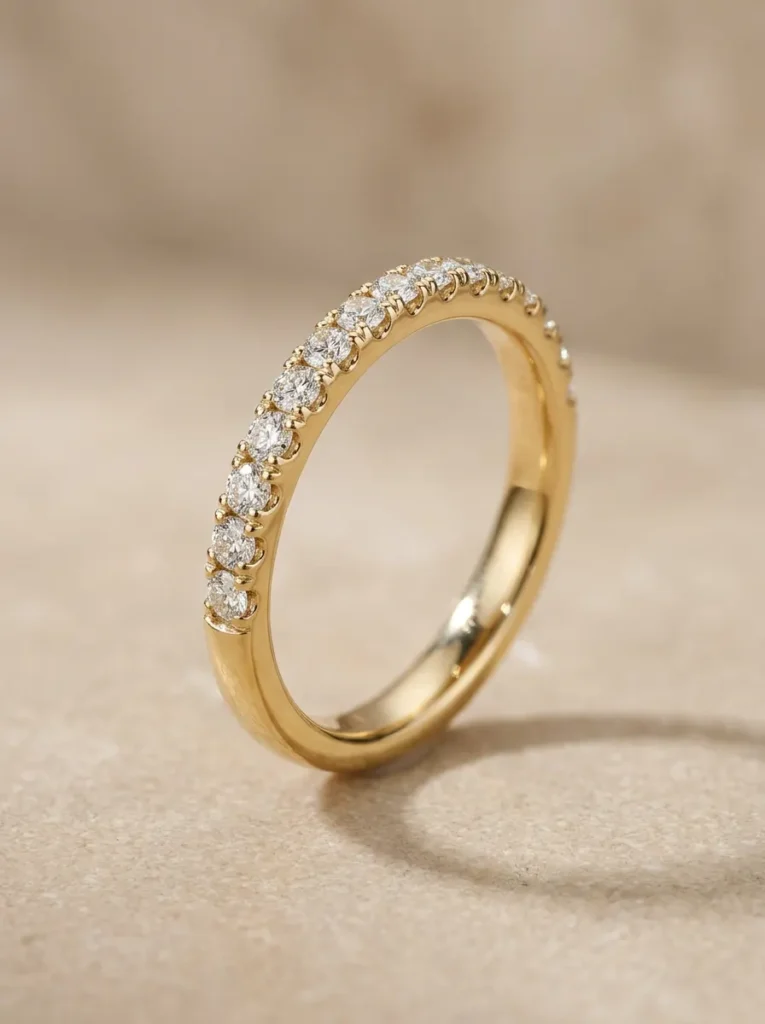
A half-eternity band features diamonds across the top portion of t,he ring, while the bottom remains plain metal. This design gives you plenty of sparkle from the top view without placing diamonds around the entire finger.
It can be a practical option if you want a diamond wedding band that may offer more flexibility for future resizing than a full-eternity design. Ask your jeweler about the exact construction and resizing options before purchasing.
3. Full-Eternity Diamond Wedding Band
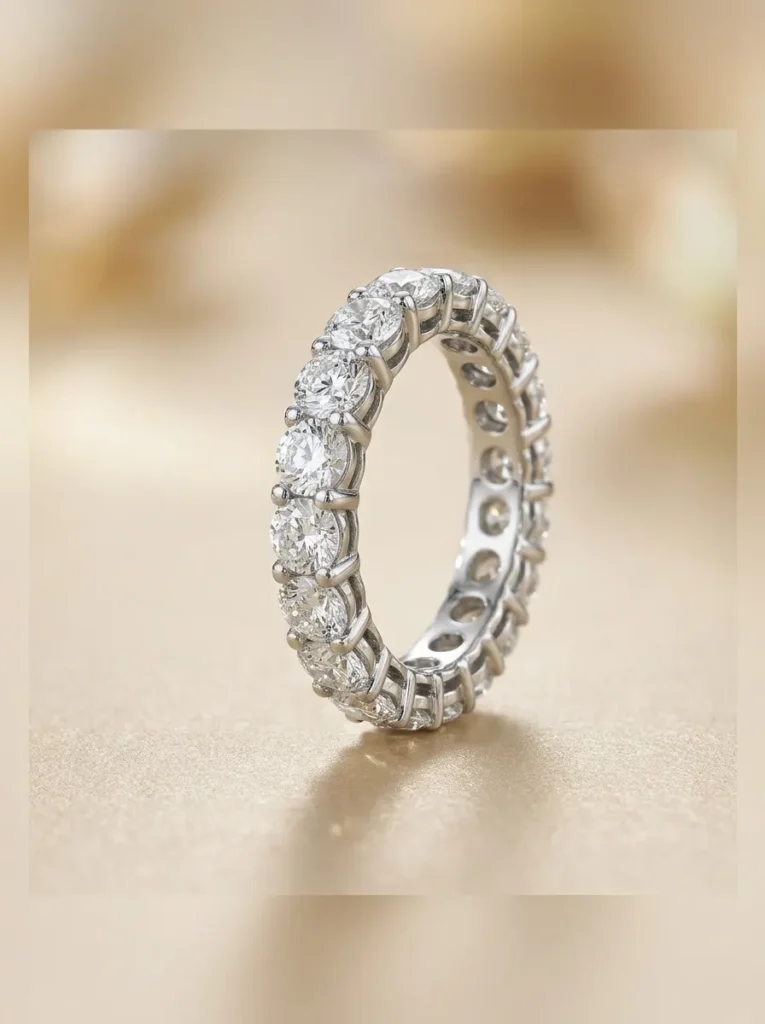
A full-eternity wedding band features diamonds that continue around the entire circumference of the ring. It creates an uninterrupted circle of sparkle and looks beautiful from different angles.
This style is especially appealing if you love an all-around diamond look. However, resizing can be difficult because diamonds cover the entire band, so accurate sizing before ordering is particularly important.
4. Channel-Set Diamond Wedding Band
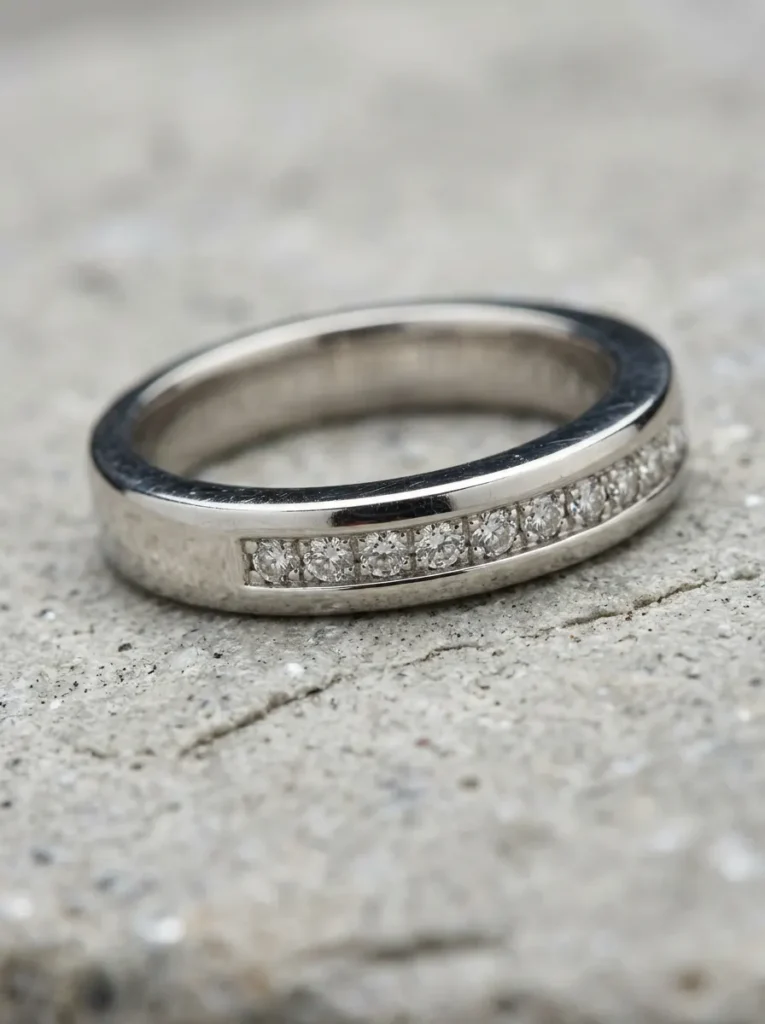
A channel-set wedding band holds diamonds between two parallel walls of metal. The stones sit inside the channel rather than on top of individual exposed prongs, creating a smooth and streamlined appearance.
This design is worth considering if you prefer a clean surface with a continuous line of diamonds. Check the edges and overall construction carefully, and ask your jeweler how the band can be cleaned, maintained, and resized.
5. Shared-Prong Diamond Wedding Band

A shared-prong diamond band uses small metal prongs to secure neighboring diamonds. The stones sit close together, allowing more of their surfaces to remain visible.The result is a bright, delicate design with plenty of sparkle. It works well for someone who wants a more noticeable diamond look without choosing a wide or heavily decorated band.
6. Bezel-Set Diamond Wedding Band

A bezel-set diamond wedding band surrounds each diamond with a thin rim of metal. The metal frames the stones and creates a neat, defined appearance.
This setting can feel modern and understated, especially when paired with a simple engagement ring. If you prefer a design where the diamonds appear securely framed rather than held by visible prongs, a bezel-set band is worth exploring.
7. Petite Diamond Wedding Band
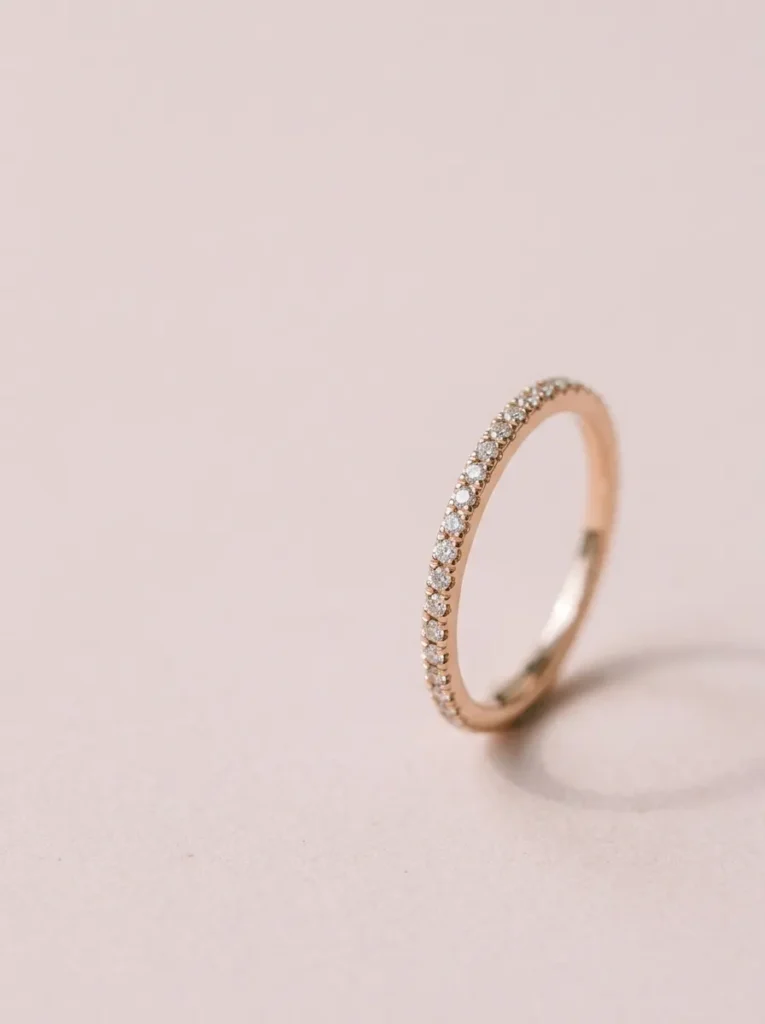
A petite diamond wedding band features a narrow profile and small diamonds that create a subtle sparkle. Its delicate proportions make it a lovely option for people who prefer minimalist jewelry.
Try this style beside a slim solitaire engagement ring or wear it alone for a simple everyday look. Pay attention to the band’s thickness and construction, since a very delicate appearance should still come with suitable craftsmanship for regular wear.
8. Graduated Diamond Wedding Band

A graduated diamond wedding band features stones that change in size across the design. The diamonds may become larger toward the center or follow another balanced arrangement.
This creates a little more visual interest than a band with identical stones throughout. It can also draw attention toward the center of your ring stack without requiring a large statement design.
9. Alternating Diamond Shape Wedding Band

Instead of using diamonds with one consistent shape, this design combines different cuts in a repeating pattern. Round and baguette diamonds are one possible pairing, while other designs may combine oval, pear, or marquise shapes.
The contrast creates texture and movement across the band. Choose a design with balanced proportions so the different diamond shapes feel coordinated rather than crowded.
10. Baguette Diamond Wedding Band
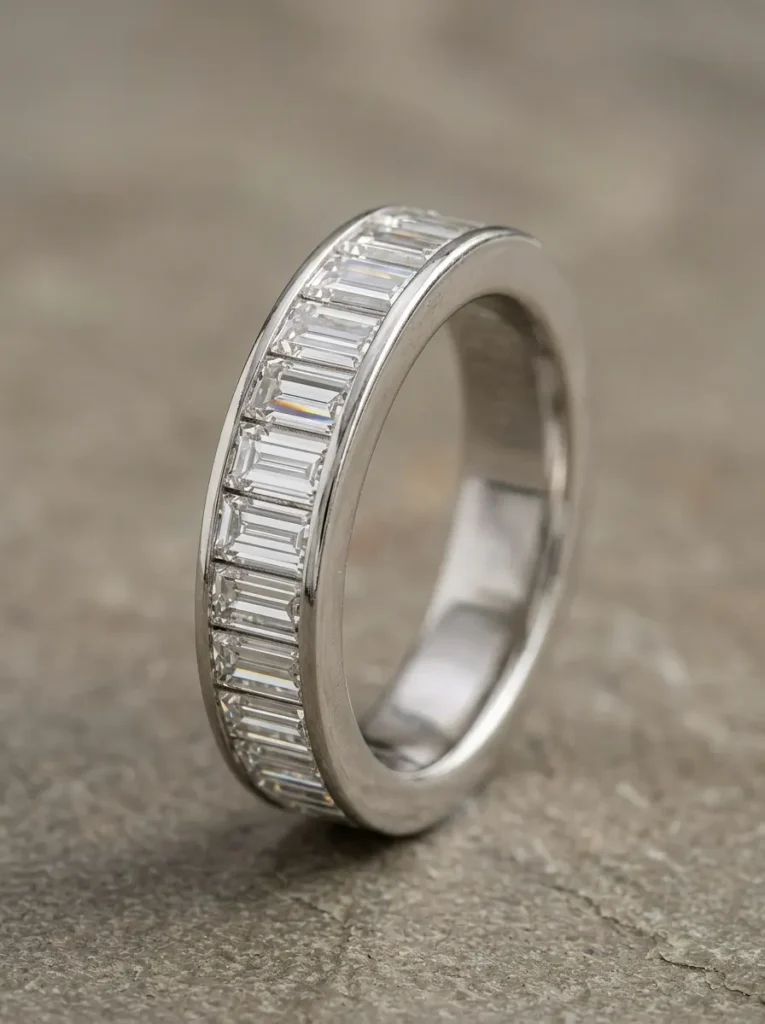
Baguette diamonds have a long, rectangular shape that cretes a clean and structured appearance. When arranged across a wedding band, they offer a different kind of sparkle from traditional round diamonds.
This style is especially appealing if you like geometric jewelry and modern designs. A baguette band can look striking beside a round or oval engagement ring because the contrast between the stone shapes adds interest.
11. Marquise Diamond Wedding Band

A marquise diamond wedding band features elongated diamonds with pointed ends. The stones can be arranged in a repeating pattern to create a distinctive, elegant look.
This design works well for someone who wants something less traditional than a standard row of round diamonds. Check the setting carefully, particularly around the pointed ends, and make sure the ring feels comfortable against neighboring fingers.
12. Vintage-Inspired Diamond Wedding Band

Vintage-inspired diamond bands often include decorative details such as milgrain edges, engraved metalwork, delicate patterns, and antique-style settings.
These details give the ring a romantic character without requiring a large center diamond. A vintage-inspired band can complement an heirloom engagement ring or add personality to a simple modern solitaire.
13. Floral Diamond Wedding Band
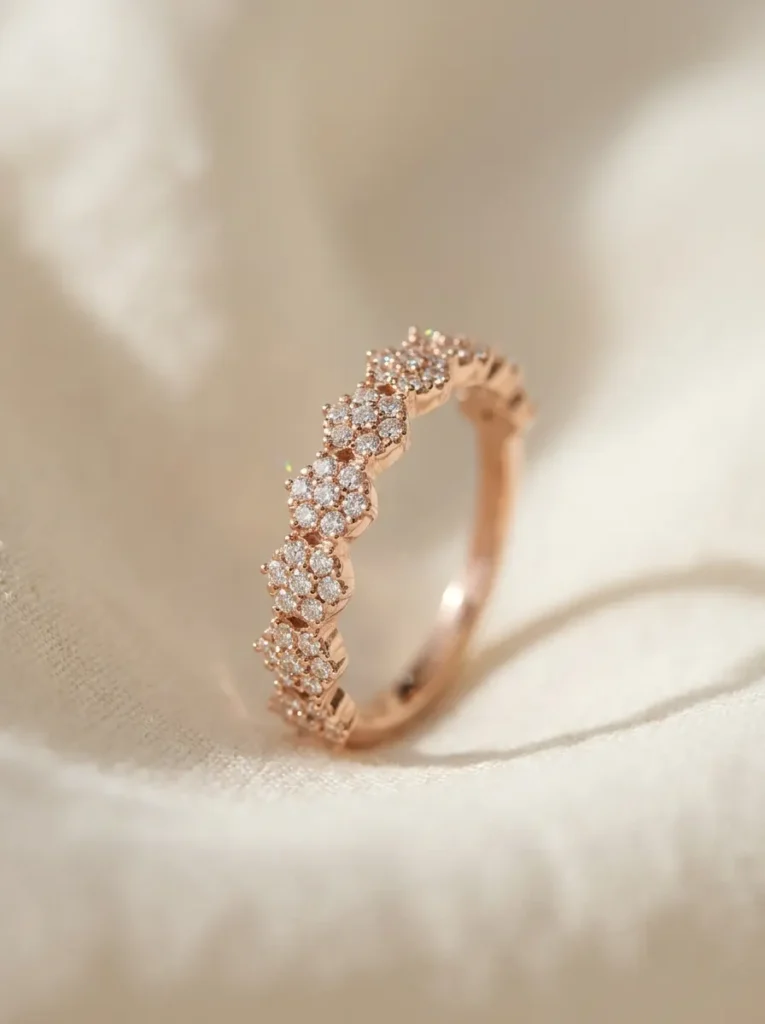
A floral diamond wedding band uses small diamonds arranged in flower-like patterns. Some designs feature a central diamond surrounded by smaller stones, while others repeat delicate floral motifs along the band.
This style offers a softer, decorative appearance that stands out from traditional straight rows of diamonds. It is a beautiful option if you enjoy nature-inspired jewelry and intricate details.
14. Curved Diamond Wedding Band

A curved diamond wedding band has a shaped front designed to follow the outline of an engagement ring. Some have a gentle wave, while others feature a deeper curve or notch.
The design can help the two rings sit closer together when the engagement ring’s setting creates a gap. Before choosing one, try it with your actual engagement ring to check the fit and overall appearance.
15. Chevron Diamond Wedding Band

A chevron wedding band features a V-shaped front that creates a distinctive point or angle. Diamonds may follow the shape of the band, adding sparkle along its curved edges.
This design can frame a solitaire or pear-shaped engagement ring beautifully, depending on the setting and proportions. It can also be worn alone if you enjoy a more architectural ring shape.
16. Mixed-Metal Diamond Wedding Band
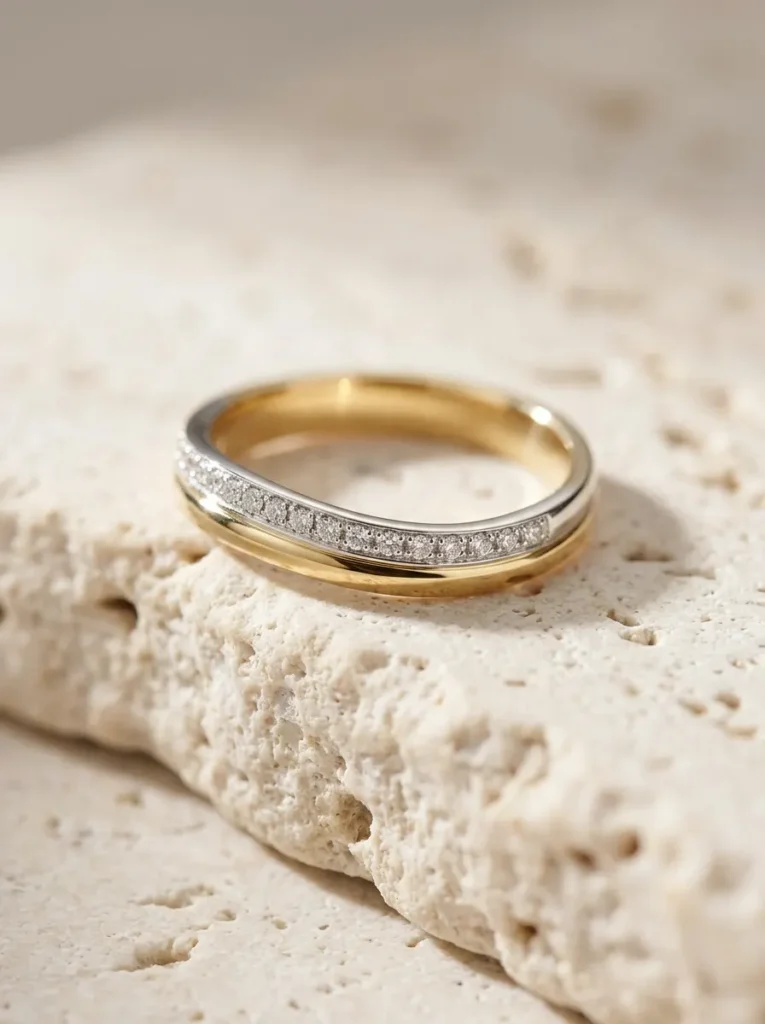
A mixed-metal diamond wedding band combines two or more metal colors in one design. For example, yellow gold may be paired with white gold, creating contrast around a row of diamonds.
This style is a good option if you enjoy combining different jewelry tones rather than matching everything exactly. Consider the metal colors of your engagement ring and other everyday jewelry before choosing a combination.
17. Wide Statement Diamond Wedding Band

A wide statement wedding band uses a broader surface to create a more noticeable design. It may feature multiple rows of diamonds, decorative patterns, or a combination of different stone shapes.
This style can work beautifully as a standalone wedding ring, especially if you prefer jewelry that feels bold and substantial. Since wider rings can feel different from narrow bands, try the actual width before settling on your size.
How to Choose the Right Diamond Wedding Band
Finding a beautiful design is only part of the decision. You should also consider how the band will fit, how often you plan to wear it, and whether it needs to sit beside an engagement ring.
Consider Your Engagement Ring
If you plan to wear your wedding band with an engagement ring, check how the two pieces sit together. A straight diamond band may work well with some settings, while a curved or contoured design may be more suitable for a ring with a low or extended setting.
You do not have to choose identical designs. A simple diamond band can complement an elaborate engagement ring, while a decorative band can add interest to a minimalist solitaire.
Choose a Diamond Setting That Suits Your Routine
Different settings affect the appearance and maintenance of a diamond wedding band.
- Pavé: Creates a continuous sparkle with closely set small diamonds.
- Channel: Places diamonds between metal walls for a smooth, structured appearance.
- Shared prong: Allows more of each diamond to remain visible.
- Bezel: Frames each stone with a rim of metal.
- Baguette arrangement: Creates a clean, geometric pattern with elongated stones.
Ask a jeweler about stone security, cleaning, repairs, and resizing before choosing a design. The quality of the construction matters just as much as the setting style.
Select the Right Metal
The metal affects the color and overall appearance of your wedding band.
- Yellow gold: Offers a warm, traditional look.
- White gold: Has a bright, silvery appearance.
- Rose gold: Creates a soft pink tone.
- Platinum: Provides a naturally white precious-metal option.
You can match your wedding band to your engagement ring for a coordinated appearance or mix metal colors for contrast. Consider maintenance requirements and the construction of the ring before making your choice.
Think About Comfort and Band Width
A beautiful ring should also feel comfortable during everyday activities. Narrow bands often have a more delicate appearance, while wider designs cover more of your finger and may feel snugger.
Try different widths before purchasing. Pay attention to the inside profile, edges, and how the band feels when you bend your fingers or wear it beside another ring.
Check Ring Size Before Ordering
Accurate sizing is particularly important for diamond wedding bands, especially full-eternity designs that may be difficult to resize.
Measure the correct finger and hand, and check the jeweler’s sizing information. If you are between sizes or choosing a wider band, ask a professional jeweler to assess the fit.
Diamond Wedding Band Care and Maintenance
A diamond wedding band may need regular attention to keep its stones secure and its surface looking clean.
Here are a few practical habits:
- Clean the ring according to the jeweler’s care instructions.
- Use a soft brush and an appropriate cleaning method when recommended for the specific ring.
- Avoid exposing the band to harsh chemicals or activities that could damage its setting.
- Have the diamonds and settings inspected periodically.
- Remove the ring when doing tasks that could cause knocks, scratches, or damage.
- Ask a jeweler to check loose stones or worn prongs promptly.
Bands with many small diamonds or intricate settings may need more attention than simpler designs. Always check with a jeweler before using an ultrasonic cleaner, particularly if a stone may already be loose.
Common Mistakes to Avoid When Choosing a Diamond Wedding Band
Choosing a Ring Only for Its Appearance
A ring may look beautiful in a photograph but feel uncomfortable when worn. Try it on and check its width, height, edges, and how it sits beside your engagement ring.
Ignoring Resizing Limitations
Some diamond wedding bands are more difficult to resize than plain metal rings. Full-eternity designs and intricate settings may have limited adjustment options.
Ask about resizing before purchasing, not after you discover that the ring does not fit.
Overlooking Everyday Maintenance
Small diamonds, detailed settings, and delicate metalwork may require regular cleaning and inspection. Choose a design whose care requirements suit your routine.
Choosing a Band That Does Not Pair Well With Your Engagement Ring
The two rings should sit comfortably together without unnecessary pressure or rubbing. Try them as a pair and check their proportions from different angles.
Forgetting About Comfort
A wider or heavily decorated band may feel different from a slim ring. Do not choose a design based on appearance alone. Comfort matters when you plan to wear it regularly.
Frequently Asked Questions About Diamond Wedding Bands
1. What is the most popular style of diamond wedding band?
Pavé, half-eternity, and channel-set designs are familiar choices for people who want diamonds across their wedding band. The right style depends on how much sparkle you prefer, your budget, and the look you want beside your engagement ring.
2. What is the difference between a half-eternity and full-eternity band?
A half-eternity band has diamonds across the top portion of the ring, while a full-eternity band has diamonds all the way around. Full-eternity designs offer continuous sparkle, but they can be more difficult to resize.
3. Are diamond wedding bands suitable for everyday wear?
Many diamond wedding bands are designed to be worn regularly, but everyday suitability depends on the setting, construction, and how you use your hands. Ask a jeweler about stone security, maintenance, and the best design for your routine.
4. Can I wear a diamond wedding band without an engagement ring?
Yes. A diamond wedding band can look beautiful on its own. A slim pavé band offers a delicate appearance, while a wide or multi-row design can create a more noticeable standalone look.
5. Should my diamond wedding band match my engagement ring?
No. Matching metals and similar design details can create a coordinated set, but contrasting styles can look just as attractive. Focus on comfortable fit, balanced proportions, and the overall appearance you prefer.
6. Can a diamond wedding band be resized?
Some can, but resizing depends on the design, metal, setting, and placement of the diamonds. Plain or half-eternity bands may offer more flexibility than full-eternity designs. Always confirm the options with your jeweler before buying.
7. How do I keep my diamond wedding band sparkling?
Follow the cleaning instructions provided by your jeweler and have the settings inspected periodically. A soft brush and suitable cleaning solution may work for some rings, but the correct method depends on the metal and setting.
Conclusion
The best diamond wedding band is one that reflects your style, feels comfortable, and suits the way you plan to wear it. Whether you prefer a petite pavé design, a classic eternity band, or a bold statement ring, there is a style for many different tastes.
Take time to compare settings, metals, diamond arrangements, and ring widths. Try your favorite designs beside your engagement ring, confirm the fit, and ask about maintenance and resizing before making your final choice.
Join the Conversation