
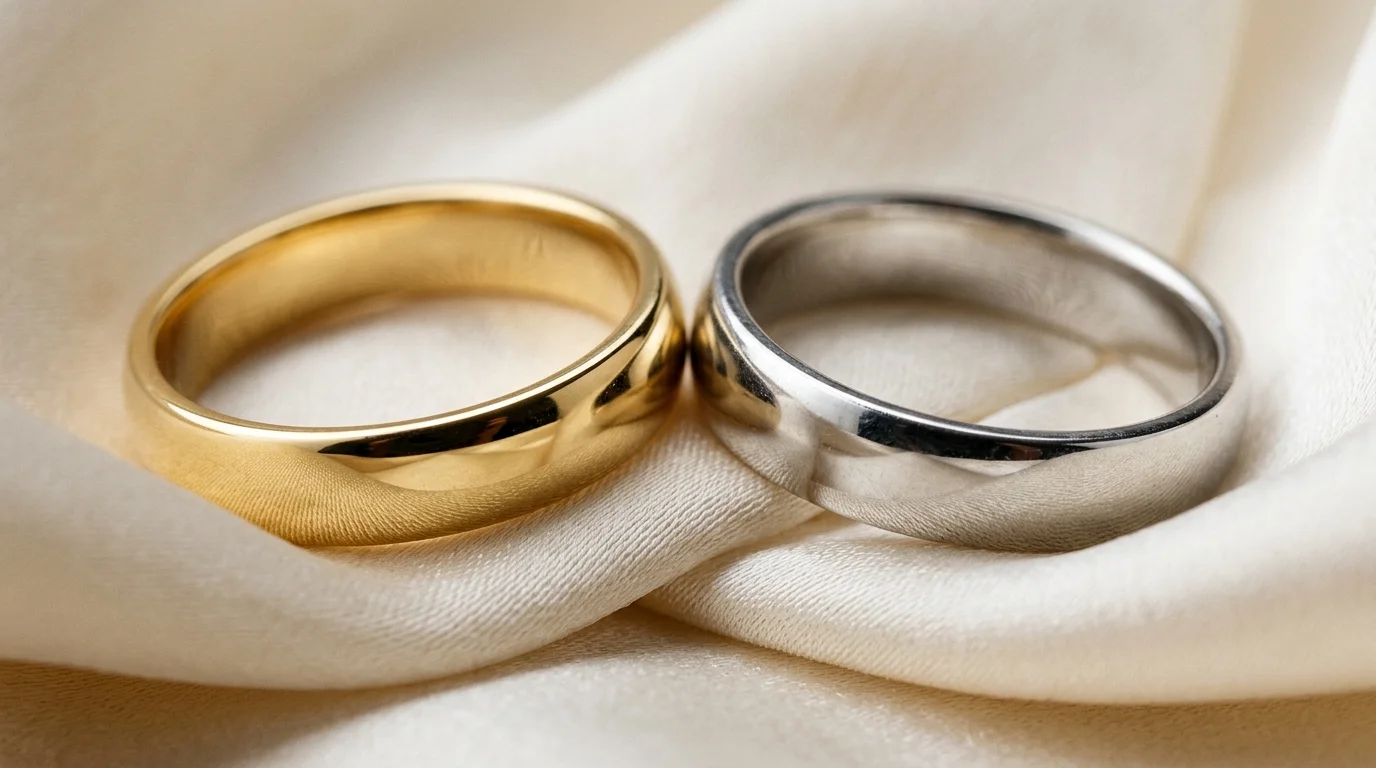
Choosing between gold and platinum wedding bands can feel surprisingly difficult. Both are beautiful, durable precious metals, but they differ in color, weight, purity, maintenance, price, and how they age over time.
The right choice depends on what matters most to you as a couple. This guide compares gold vs. platinum wedding bands so you can understand the practical differences before you buy.
Gold vs. Platinum Wedding Bands: Quick Comparison
| Feature | Gold Wedding Bands | Platinum Wedding Bands |
|---|---|---|
| Color | Yellow, white, or rose | Naturally white |
| Purity | Commonly 14K or 18K | Often 95% or more platinum |
| Weight | Generally lighter | Generally heavier and denser |
| Scratch appearance | Can show scratches and dents | Develops a soft patina with wear |
| Color maintenance | Depends on the gold type and finish | Does not need plating to keep its natural white color |
| Price | Usually less expensive than platinum | Usually more expensive |
| Metal allergies | Depends on the alloy | Often a consideration for people seeking a high-purity metal |
| Style options | Very wide range of colors and finishes | Classic white-metal appearance |
There is no single metal that works for every couple. Your lifestyle, budget, preferred color, comfort, and expectations for maintenance can all affect the decision.
What Is a Gold Wedding Band?
Gold wedding bands are made by combining gold with other metals. Pure 24K gold is soft, so jewelry gold is normally alloyed with other metals to improve its strength and everyday wear ability.
In the United States, 14K and 18K gold are common choices for jewelry. A 14K piece contains 14 parts gold out of 24, while 18K gold contains 18 parts gold out of 24.
The added metals also affect the appearance and properties of the ring. Gold can be yellow, white, or rose depending on the alloy and finish.
14K Gold Wedding Bands
14K gold contains less pure gold than 18K gold and more alloy metals. That composition makes it a practical choice for people who want a gold band designed for regular wear.
It is available in yellow, white, and rose gold, so couples have plenty of flexibility when matching the band to an engagement ring or personal style.
18K Gold Wedding Bands
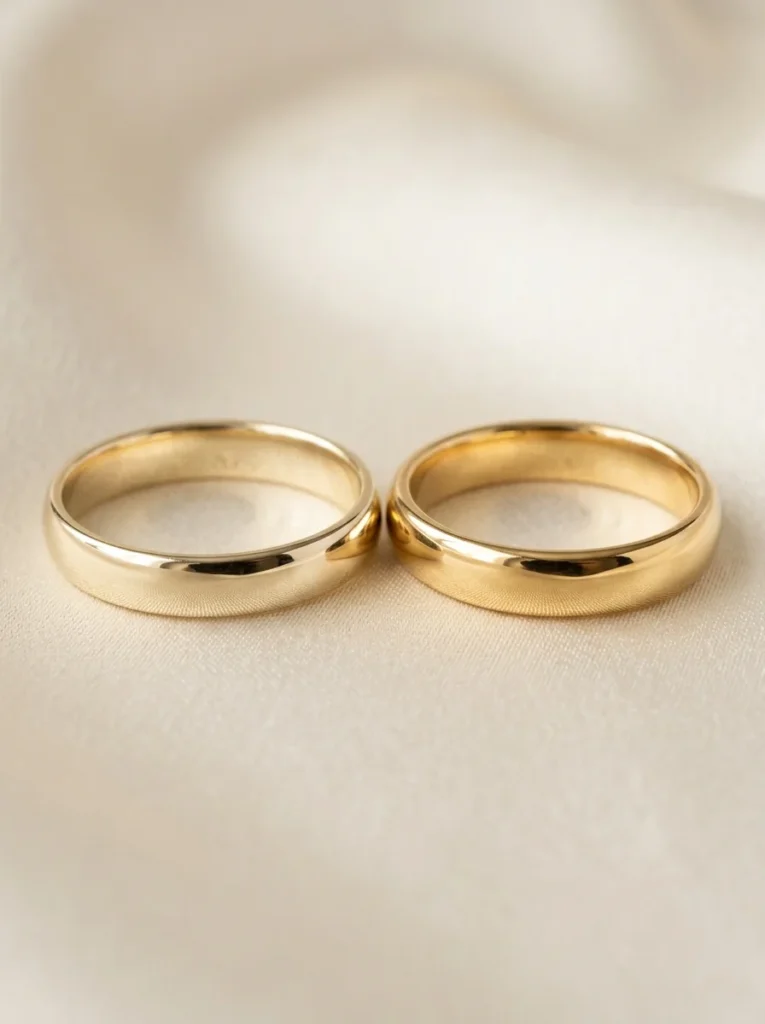
18K gold contains a higher percentage of pure gold. It has a richer gold content and is often chosen for its luxurious appearance.
Because higher-karat gold contains more pure gold, it can be softer than lower-karat gold. For an everyday wedding band, consider how much wear the ring will receive before choosing the karat.
What Is a Platinum Wedding Band?
Platinum is a naturally white precious metal that is commonly used for engagement rings and wedding bands. Unlike white gold, its white appearance comes from the metal itself rather than a surface coating.
In the United States, an item described simply as platinum should contain at least 95% pure platinum under the FTC Jewelry Guides. Platinum jewelry can also be made with other platinum-group or base metals, so checking the marking is important when comparing rings.
Platinum is also denser than gold. That means a platinum band of similar size can feel noticeably heavier on your finger.
Gold vs. Platinum: Durability
Both metals can work well for wedding bands, but they wear differently.
Gold can develop scratches and small dents over time. Its durability depends partly on the karat and alloy composition. Lower-karat gold contains more alloy metals, while higher-karat gold contains more pure gold and can be softer.
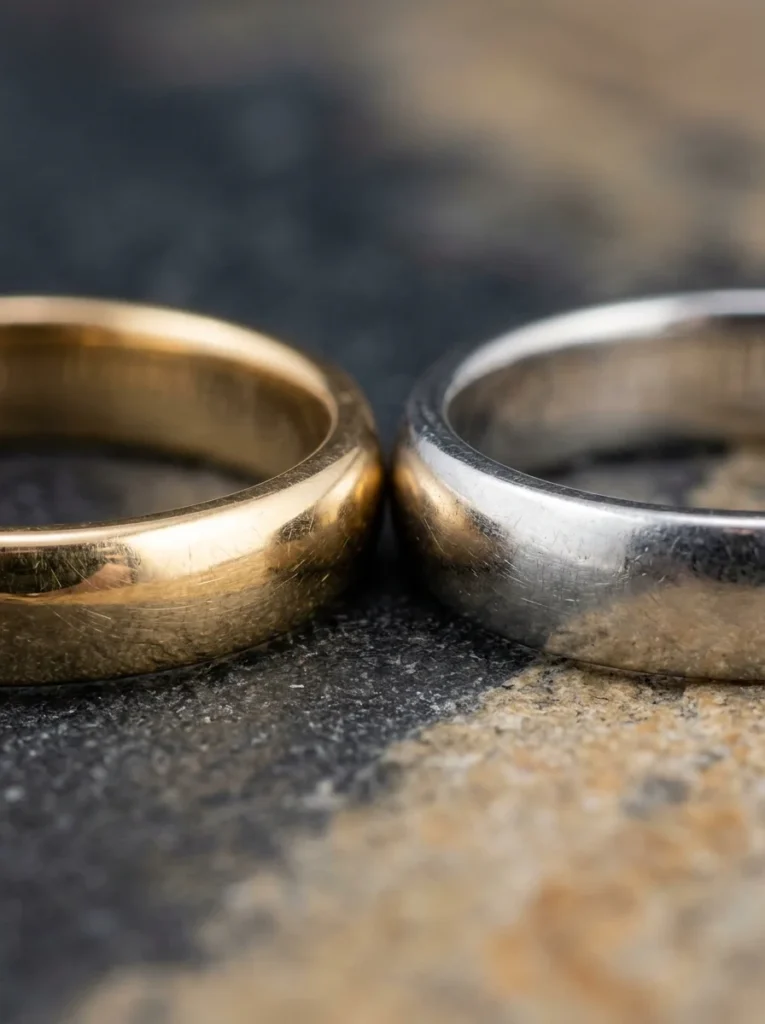
Platinum is dense and durable, but it can still become scratched. Instead of losing metal in the same way you might expect from a softer material, platinum commonly develops a soft patina as the surface changes with use.
For either metal, scratches are a normal part of wearing a ring every day. The more important question is which type of aging you prefer.
Which Is Heavier: Gold or Platinum?
Platinum generally feels heavier than gold because it has a higher density. Some people enjoy this substantial feeling because it makes the ring feel solid and substantial on the finger.
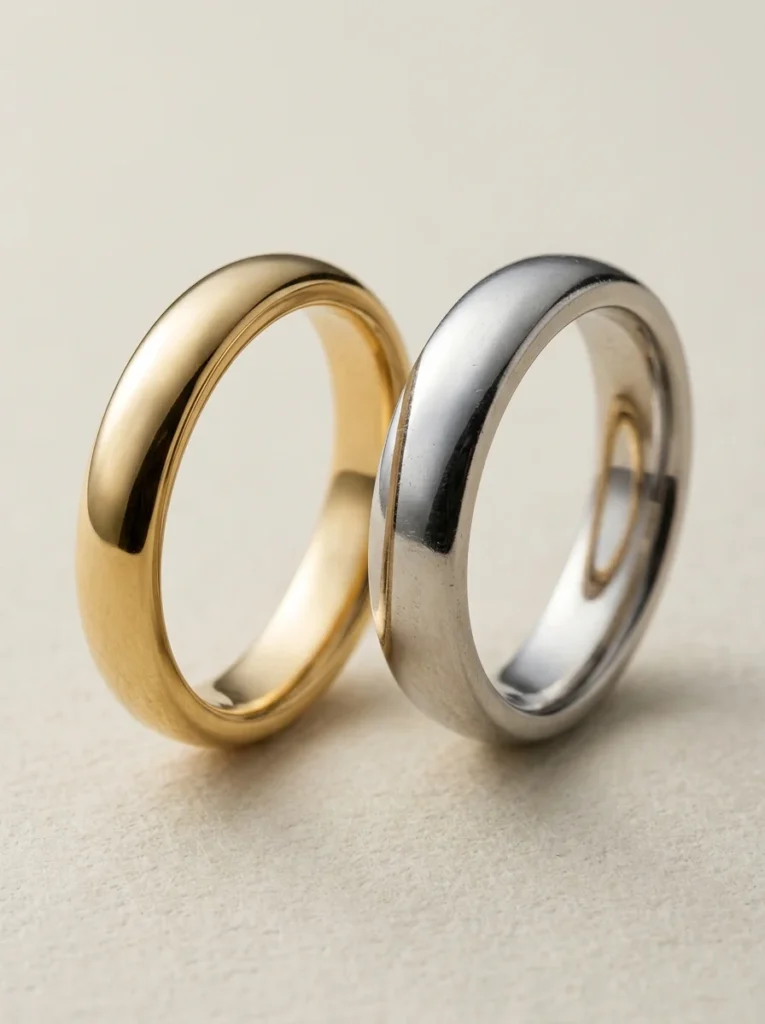
Others prefer gold because it can feel lighter and easier to forget during everyday activities.
If weight matters to you, try both metals in similar band widths before making your final decision. The difference can be easier to understand when you actually wear the rings.
Gold vs. Platinum Color
Gold gives you several color choices. Yellow gold has a warm traditional appearance, rose gold has a pinkish tone, and white gold offers a bright white-metal look.
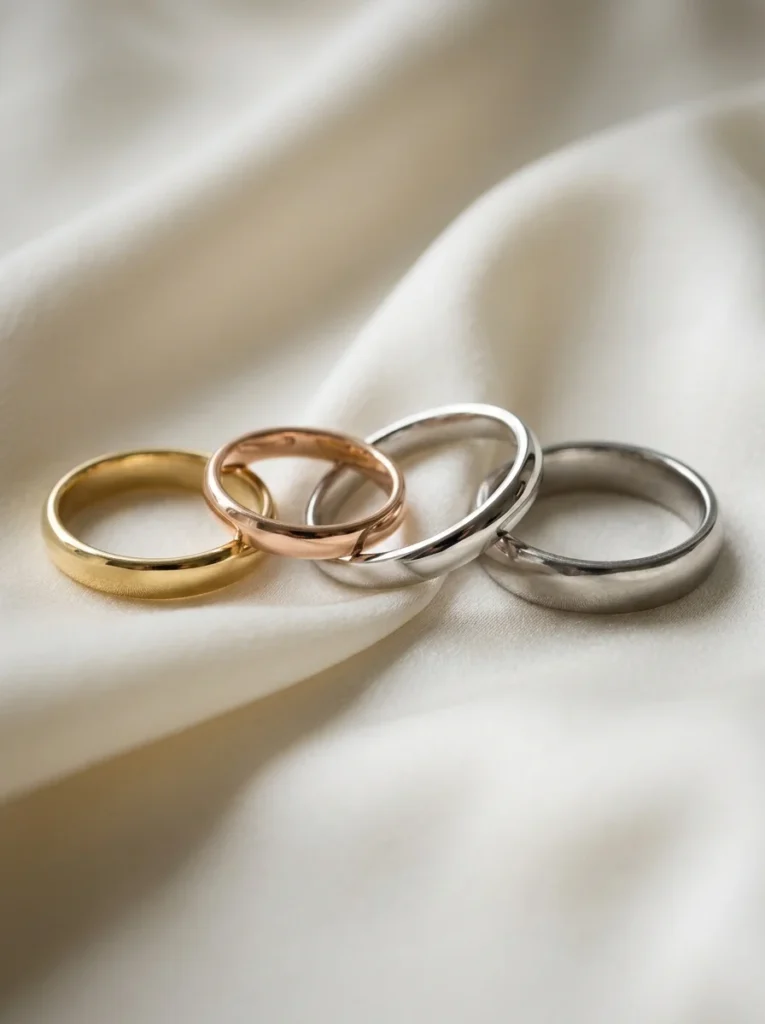
Platinum has a naturally white appearance. It can be especially appealing if you want a cool-toned metal without choosing a colored gold alloy.
Is Platinum Whiter Than White Gold?
Platinum and white gold can look very similar when new, but they are not the same material.
White gold is created by alloying gold with other metals and is often finished with rhodium plating. That coating can wear over time and may require periodic maintenance to restore the bright white appearance.
Platinum does not need rhodium plating to create its naturally white color. Its surface can change toward a softer, more muted appearance as the ring develops its patina.
Gold vs. Platinum Price
Platinum wedding bands are usually more expensive than comparable gold bands. Several factors contribute to the price, including platinum’s high purity and greater density.
Gold rings can contain different levels of gold, such as 14K or 18K, which affects their material value. The final price also depends on the ring’s weight, width, design, finish, gemstones, brand, and craftsmanship.
For that reason, it is better to compare similar rings rather than comparing metal names alone. A simple platinum band and a heavily detailed gold band may have very different prices for reasons beyond the metal itself.
Which Metal Needs More Maintenance?
Neither gold nor platinum is maintenance-free. Everyday wear can leave marks on both metals, so occasional professional inspection and cleaning can help keep a wedding band in good condition.
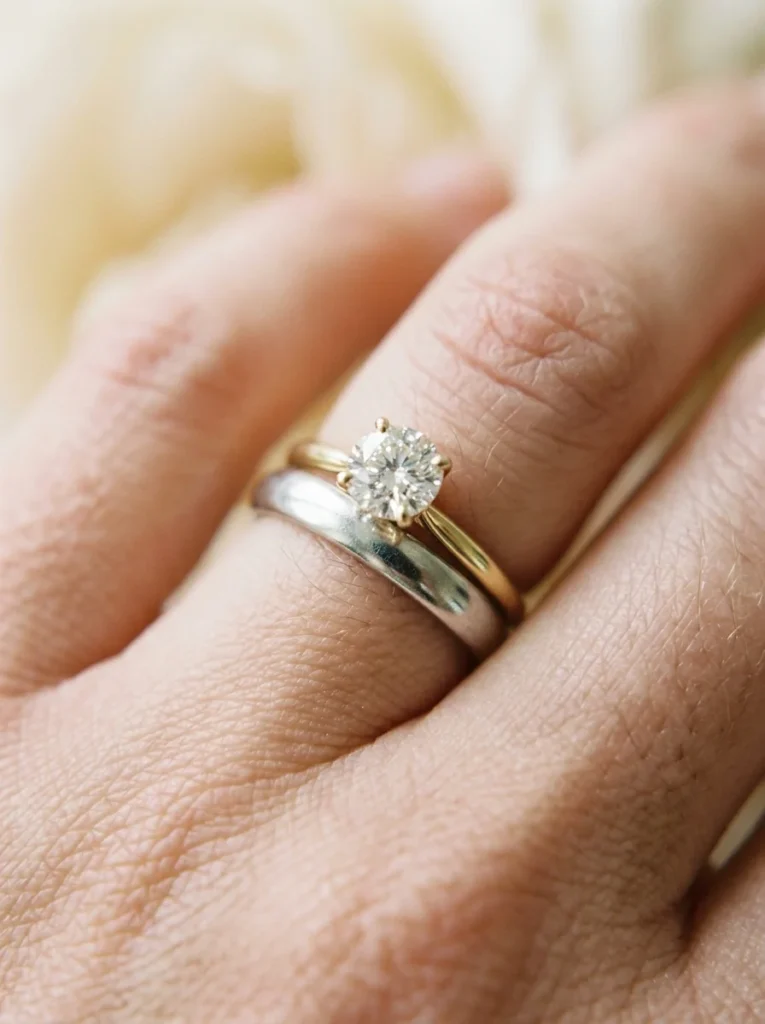
White gold can require additional maintenance if it has a rhodium finish. The coating gradually wears with use and may need to be reapplied to maintain its bright white appearance.
Platinum keeps its natural white color but develops a patina as it is worn. Some people like this softer finish, while others prefer the look of freshly polished platinum.
Gold vs. Platinum for Everyday Wear
Your daily routine should play a role in the decision.
If you work with your hands, exercise frequently, garden, handle tools, or regularly expose your ring to rough surfaces, think carefully about how you feel about scratches and surface changes.
If you prefer a lighter ring with several color options, gold gives you more flexibility. If you like a heavier white-metal feel and want a high-purity precious metal, platinum may appeal more.
Regardless of the metal, remove your ring when an activity could expose it to unnecessary impact, chemicals, or abrasion.
Gold vs. Platinum for Metal Sensitivities
Metal sensitivity depends on the exact alloy rather than simply the word “gold.”
Some gold alloys contain metals such as nickel, which can cause problems for people who are sensitive to them. Platinum jewelry can be attractive to shoppers looking for a high-purity metal, but you should still check the exact composition of the ring rather than relying only on the metal name.
If you have a known metal allergy, ask the jeweler for the complete alloy information before purchasing your wedding band.
Can Gold and Platinum Wedding Bands Be Resized?
Many traditional gold and platinum wedding bands can be resized, but the process depends on the ring’s design, construction, width, gemstones, and amount of adjustment needed.
Do not assume that every ring can be resized simply because it is made from gold or platinum. Ask the jeweler about resizing before you buy, especially if the band has engraving, gemstones, intricate patterns, or an unusual construction.
It is also important to get your ring size measured properly. A ring that fits comfortably should feel secure without being painfully tight.
How to Choose Between Gold and Platinum Wedding Bands
Choose Gold If You Want More Color Choices
Gold gives you three major color directions: yellow, white, and rose. This makes it easier to coordinate your wedding band with an engagement ring, jewelry collection, or personal style.
Yellow gold works especially well for couples who love a traditional warm-metal appearance. Rose gold offers a softer romantic tone, while white gold creates a classic white-metal look.
Choose Platinum If You Prefer a Naturally White Metal
Platinum is worth considering if you want a naturally white precious metal without depending on rhodium plating for its basic color.
Its substantial weight can also appeal to people who enjoy a more solid feeling on the finger.
Consider Gold If You Want More Budget Flexibility
Gold gives you more ways to adjust the material choice to your budget. You can compare 14K and 18K gold, different colors, widths, finishes, and designs.
Remember that the total price depends on much more than the metal. Ring weight, gemstones, craftsmanship, and brand can all change the final cost.
Consider Platinum If High Purity Matters to You
If you value a high percentage of precious metal in the ring, platinum can be an appealing option. A ring labeled simply as platinum in the United States should contain at least 95% pure platinum.
Always check the metal marking and product details so you know exactly what you are buying.
Gold vs. Platinum Wedding Bands: What Should You Look At?
Before choosing your ring, compare these practical factors:
- Metal color: Decide whether you prefer yellow, rose, white gold, or platinum.
- Weight: Try both metals to see which feels comfortable.
- Purity: Check the karat of gold or platinum content of the band.
- Daily wear: Think about your work, hobbies, exercise, and lifestyle.
- Maintenance: Consider whether you are comfortable with polishing or periodic refinishing.
- Budget: Compare complete rings rather than metal prices alone.
- Matching: Consider how the band will look beside your engagement ring.
- Fit: Try the actual width and profile you plan to wear.
- Alloy: If you have metal sensitivities, ask what other metals are included.
- Long-term appearance: Decide whether you prefer polished surfaces or the natural patina that develops with wear.
Common Mistakes to Avoid
Choosing Only by Appearance
A ring may look beautiful in a display case but feel different when worn every day. Weight, width, surface finish, and comfort can all affect your experience.
Assuming All Gold Is the Same
14K yellow gold, 18K yellow gold, 14K white gold, and rose gold do not have identical compositions or appearances. Check the karat and alloy information before comparing prices.
Assuming Platinum Cannot Scratch
Platinum is durable, but it is not scratch-proof. Its surface can develop a patina through everyday wear, so choose it because you like how platinum ages rather than because you expect it to remain mark-free.
Ignoring the Ring’s Width
Two bands made from the same metal can feel very different when one is narrow and the other is wide. Try the width you actually plan to purchase before deciding.
Forgetting About Metal Allergies
Do not assume that a gold or white-gold ring will automatically work for sensitive skin. Ask about the alloy, especially if you already know that you react to a particular metal.
Frequently Asked Questions
Is platinum better than gold for a wedding band?
Neither metal is universally better. Platinum offers a naturally white, high-purity metal with a substantial feel, while gold offers more color and karat choices and is usually available at a lower price than comparable platinum.
Is platinum more durable than gold?
Both can provide years of everyday wear when properly cared for. Gold’s durability varies with its karat and alloy, while platinum is dense and develops a patina as it wears.
Does platinum scratch more easily than gold?
Platinum can develop visible surface marks from everyday wear, just like gold. The important difference is how the metals respond to that wear, with platinum commonly developing a soft patina.
Is 14K or 18K gold better for a wedding band?
It depends on your priorities. 14K gold contains more alloy metals and is commonly chosen for everyday jewelry, while 18K gold contains more pure gold and offers a richer gold content.
Does platinum need to be replated?
Platinum does not need rhodium plating to create its natural white color. Its surface can develop a patina with wear, and you can have it polished if you prefer a brighter finish.
Does white gold need more maintenance than platinum?
White gold may need periodic rhodium replating when its surface coating wears. Platinum does not require rhodium plating for its naturally white appearance, although it can still benefit from cleaning and polishing.
Can I wear a platinum wedding band with a gold engagement ring?
Yes. Mixed-metal wedding jewelry is a common styling choice. The contrast can create a deliberate look, although you should consider the fit, profile, and way the two rings sit together.
Final Thoughts on Gold vs. Platinum Wedding Bands
The choice between gold and platinum comes down to the features that matter most to you. Gold offers color variety, different karat options, and more flexibility when building a ring around a particular budget.
Platinum offers a naturally white appearance, high precious-metal content, greater density, and a distinctive patina as it ages. Neither choice is automatically right for every couple.
Before you buy, compare the actual rings you plan to wear. Pay attention to metal composition, width, weight, comfort, maintenance, and how the band looks beside your engagement ring. That practical comparison can make the final decision much easier.
Join the Conversation